
1. Geometry Optimization and Stress Distribution
Traditional 5-hole probe manufacturing usually relies on machining. While machining can produce precise shapes and hole diameters, it often struggles to achieve ideal stress distribution in complex structures, which can lead to local stress concentration and reduce probe stability and durability. Stress concentration can lower performance under high-pressure or high-temperature conditions, affect measurement accuracy, and even damage the probe.
With 3D printing, WINDTUNER can precisely control the geometry and structural design of a 5-hole probe to achieve better stress distribution. In high-stress regions, for example, the structure can be optimized to reduce stress concentration and improve overall strength and reliability. In external load testing, a 3D-printed 5-hole probe made by WINDTUNER showed almost no obvious deformation at 340 N, while a traditionally machined probe showed clear deformation under a lower load. WINDTUNER's 3D-printed 5-hole probe did not deform until 900 N, demonstrating a clear advantage in strength and durability.
2. Better Mechanical and Thermal Performance
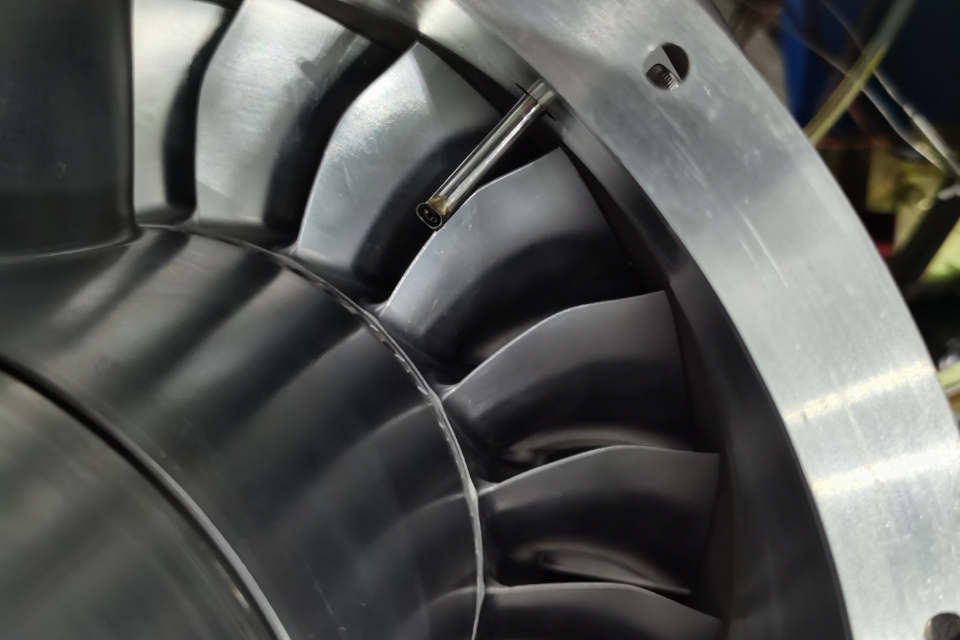
3D printing gives WINDTUNER much more flexibility in material selection for 5-hole probes. Depending on the application, the company can choose from dozens of printable materials, including advanced options with strong mechanical properties, thermal performance, and corrosion resistance. WINDTUNER's 3D-printed 5-hole probes can maintain stable measurement accuracy in extreme environments, preventing deformation or material degradation under demanding high-temperature and high-pressure test conditions and meeting the need for high-performance probes in aero engine testing, wind tunnel testing, and related fields.
Beyond mechanical performance, 3D printing also allows WINDTUNER to tailor thermal behavior for different operating conditions. In high-temperature applications, for example, the company can select heat-resistant materials to ensure long-term stable operation in extreme airflow environments. Through these material optimizations, 3D-printed 5-hole probes offer clear advantages over traditionally manufactured probes in durability, stability, and reliability.
3. Manufacturing Complex and Micro-Scale Structures
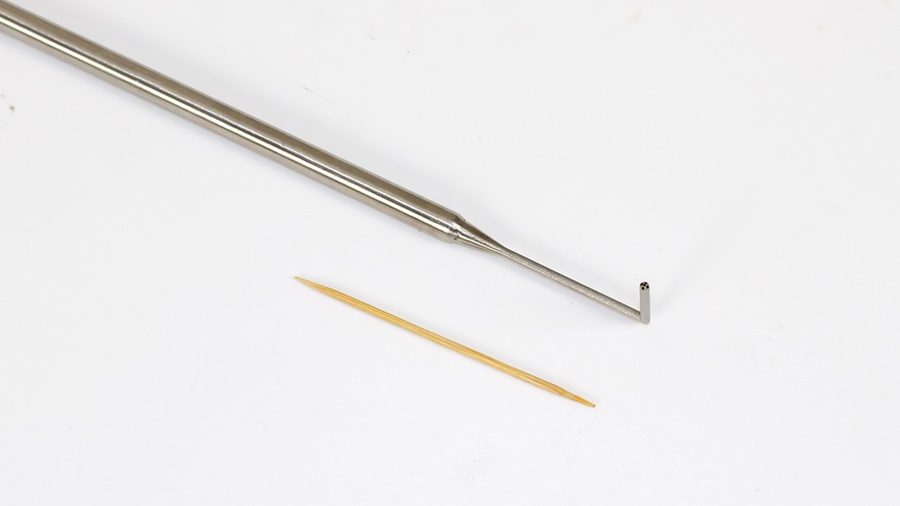
Another major advantage of 3D printing is its ability to produce complex geometries and micro-scale features that are very difficult to achieve with traditional machining. 5-hole probe designs often require highly precise port locations and fine structural features to meet different flow-field measurement needs. Conventional methods usually need multiple processing steps to produce complex shapes, which increases lead time and cost and can also affect probe accuracy.
By contrast, 3D printing can complete the complex structure and micro-hole design of a 5-hole probe in a single build. WINDTUNER's 3D-printed 5-hole probes can achieve minimum hole diameters below 0.2 mm, position accuracy of 2 to 5 um, and surface roughness as fine as Ra 0.8 to 1 um, significantly improving aerodynamic performance. This precision manufacturing of tiny holes and complex structures enables high-accuracy pressure measurement even under subtle flow variations, providing reliable support for high-precision fluid measurement applications in aerospace, UAVs, and beyond.
4. Custom Design and Fast Delivery
The introduction of 3D printing makes customization far easier for WINDTUNER's 5-hole probes. Unlike traditional manufacturing, which depends on mold design and batch production, 3D printing can begin directly once the design is complete, dramatically shortening production cycles. WINDTUNER can quickly customize 5-hole probes for specific flow-field measurement conditions and deliver them in a much shorter time.
This custom service allows WINDTUNER to provide high-precision probes with fast response to different experimental needs, avoiding the long tooling cycles and high production costs that often make traditional methods slower to meet customer requirements. WINDTUNER's 3D-printed 5-hole probes not only deliver accurate measurement data, but also meet the personalized demands of different aerodynamic tests, improving both test efficiency and precision.
5. The Advantages of WINDTUNER's Custom 5-Hole Probes
WINDTUNER's use of 3D printing in custom 5-hole probe development offers several standout advantages:
Precise geometry optimization and stress-distribution design: 3D printing makes it possible to optimize the probe's geometry and stress distribution, significantly improving strength and reliability.
Wide material selection: WINDTUNER can choose different printing materials based on test needs, providing strong mechanical and thermal performance for demanding environments.
High-precision micro-structure manufacturing: 3D printing can produce complex shapes and fine structures in a single build, ensuring precise port placement and strong aerodynamic performance for the 5-hole probe.
Customization with fast response: 3D printing allows WINDTUNER to tailor 5-hole probes to customer needs, shorten production cycles, and deliver quickly.
By combining the flexibility of 3D printing with precision manufacturing capability, WINDTUNER's custom 5-hole probe service significantly improves design freedom, production efficiency, and probe performance. As 3D printing continues to advance, WINDTUNER will keep expanding the role of 5-hole probes in high-precision aerodynamic measurement and provide more advanced, dependable tools for research and industrial projects.