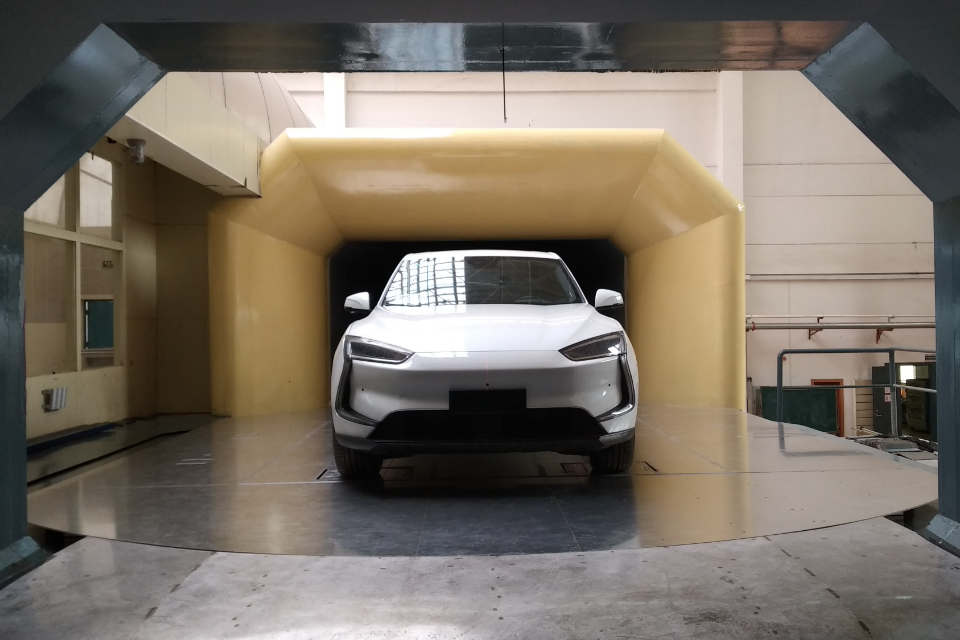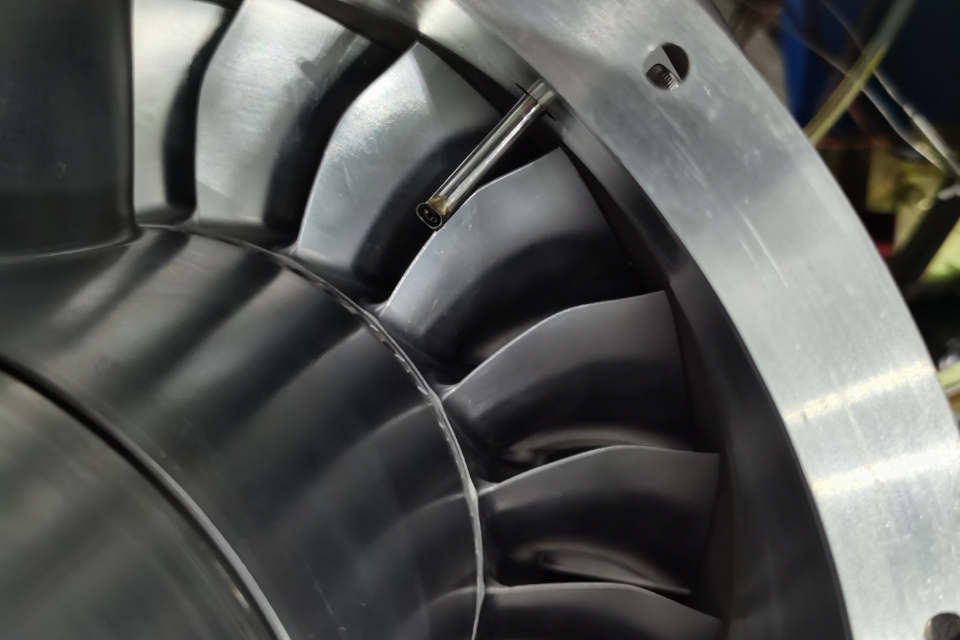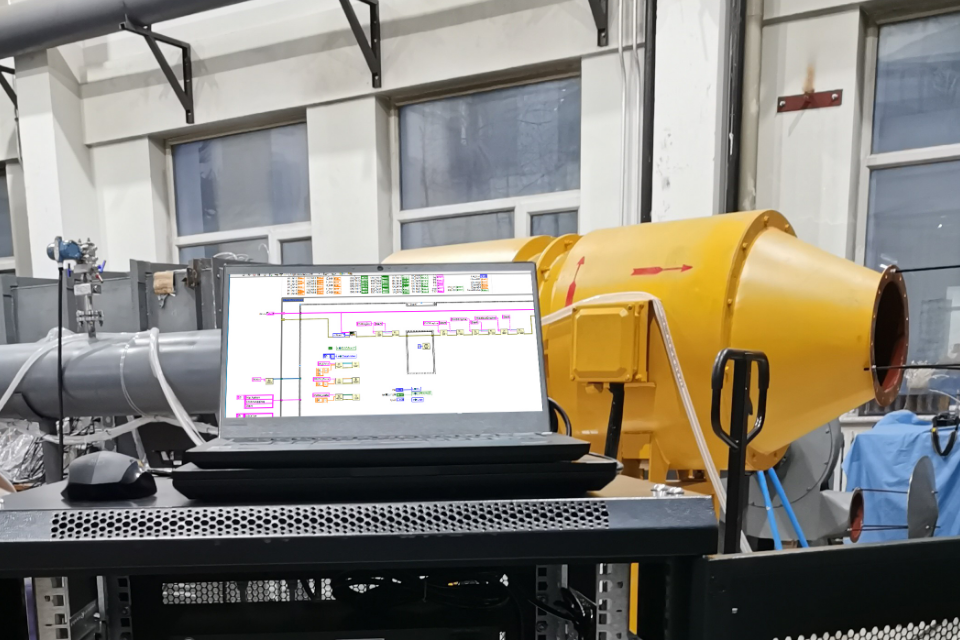

The stakes have never been higher for measurement instruments. As aerospace and energy companies push toward higher compressor ratios, faster combustion cycles, and lighter structures, the aerodynamic environment inside modern engines has become extraordinarily demanding. The days of characterizing a flow path with a handful of pressure taps are over. Engineers now map three-dimensional velocity fields, capture transient pressure oscillations across dozens of channels simultaneously, and correlate every data point with sub-millisecond precision across distributed test systems. The instruments that make this possible define the boundary between a credible dataset and an educated guess.
The Measurement Challenge Behind Modern Turbomachinery
Turbomachinery testing presents one of flow measurement discipline's most unforgiving problems: complex, three-dimensional, time-varying flow fields inside confined spaces where sensor access is severely limited. A single compressor stage may require hundreds of pressure measurements at different spatial locations and operating conditions to build a complete performance picture. Five-hole probes have long served as the workhorse tool for this task, capable of resolving both flow angle and velocity magnitude in three dimensions. Seven-hole probes extend this capability further, capturing flow yaw and pitch angles with greater spatial resolution. Yet the raw ability to measure a complex flow is only half the challenge. The other half is ensuring that what the probe measures is accurate, repeatable, and traceable.
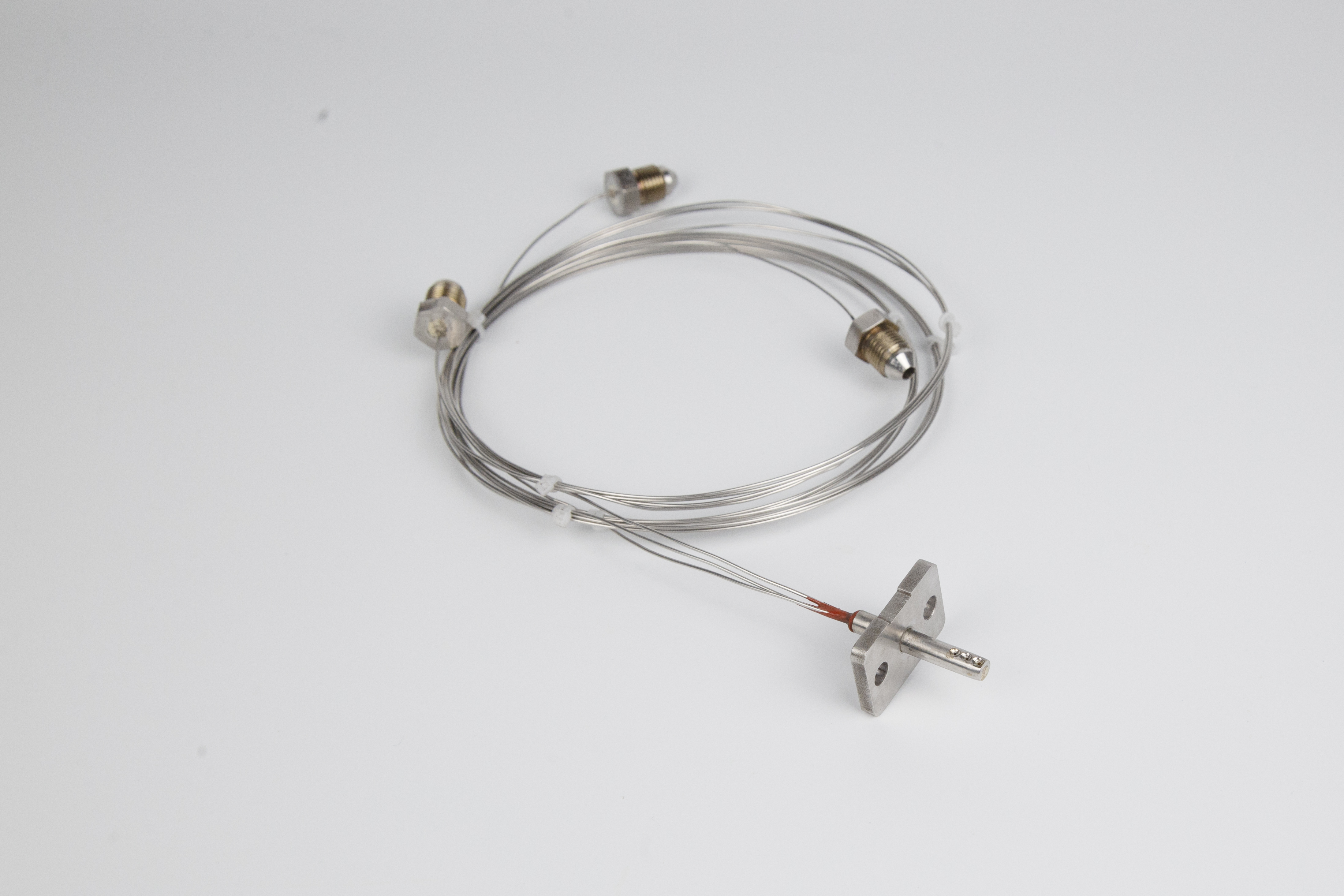
An Interesting Combination of Pressure and Thermocouple Probes, Our Customized Product
This is where measurement hardware forms the backbone of a research program. In a turbomachinery test, a pressure scanner must acquire data from multiple probes across dozens of channels at hundreds of hertz, synchronized to a common time base so that data from all sensors can be meaningfully correlated. Any drift, mismatch or timing error degrades the resulting flow map. At the highest performance levels, even a fraction of a millisecond of synchronization issue can corrupt transient pressure measurements enough to invalidate the test.
The response from the measurement community has been a decisive shift toward ethernet-based architecture. By migrating pressure scanners from legacy serial or proprietary bus systems to TCP/IP and UDP/IP networks, test facilities gain a level of scalability and timing precision that older architectures simply cannot match. The IEEE1588 Precision Time Protocol, now embedded in leading pressure scanners, distributes a common clock across the entire test system over standard Ethernet infrastructure, synchronizing all acquisition channels to within microseconds of each other. For test programs running multi-probe, multi-section mappings of compressor or turbine stages, this capability is foundational.
Windtuner Brings Promise to the Test Center
Windtuner designs its measurement systems around a straightforward premise: researchers doing serious aerodynamic work deserve instruments that do not compromise. Our ethernet intelligent pressure scanner delivers accuracy of ±0.05% FS across 16 channels per unit, with 24-bit A/D resolution and sampling rates up to 500 Hz per channel. Built-in IEEE1588V2-2008 support means the scanner timestamps every data point against a common clock, enabling true transient analysis across distributed probe arrays. An integrated pneumatic valve system handles zero and full-scale calibration autonomously, removing a significant source of operational overhead during multi-run test campaigns.
Complementing the scanner hardware, Windtuner's five-hole probe and seven-hole probe families provide the aerodynamic sensing front end. The company manufactures these probes using micron-level additive manufacturing, a process that produces geometrically complex probe heads with accuracy that machined probes cannot consistently achieve, particularly for demanding multi-hole configurations. The 3D printing process also enables Windtuner to produce custom probe geometries—unconventional head shapes, non-standard hole counts, extended reach rods, and high-temperature materials—without the prohibitive tooling costs that typically limit probe customization. Engineers designing tests for novel blade row configurations or compact internal flow paths should always prefer purpose-built probes, because inaccurate geometries can compromise measurement quality.
WindLabX, Windtuner's measurement and control software platform, ties the hardware together. The software runs probe calibration routines in accordance with JJG875-2019 metrology standards, manages data acquisition from networked pressure scanners, and generates flow field maps from raw multi-point pressure data. Its distributed architecture supports multiple scanners on a single network, allowing test facilities to scale channel count without restructuring their data systems.
A Calibrated Foundation for Engineering Confidence
Measurement tools only inspire confidence when their results are traceable to recognized standards. Windtuner operates the first private calibration wind tunnel in China accredited by CNAS, using it to calibrate the company's own pressure scanners and multi-hole probes before they leave the factory. This is not a courtesy calibration—it is a metrologically rigorous process that establishes traceability for every instrument and provides clients with documentation they can use in formal validation reports. When a research institution or OEM incorporates Windtuner data into a design qualification package, the calibration record backs the measurement chain from sensor to published result.
Aerodynamic testing at the frontier has always been a discipline where the quality of the answer depends directly on the quality of the question you ask—and on the instruments that answer it. Windtuner's pressure scanners, multi-hole probes, and WindLabX software give researchers the tools to ask better questions and trust the answers they get.