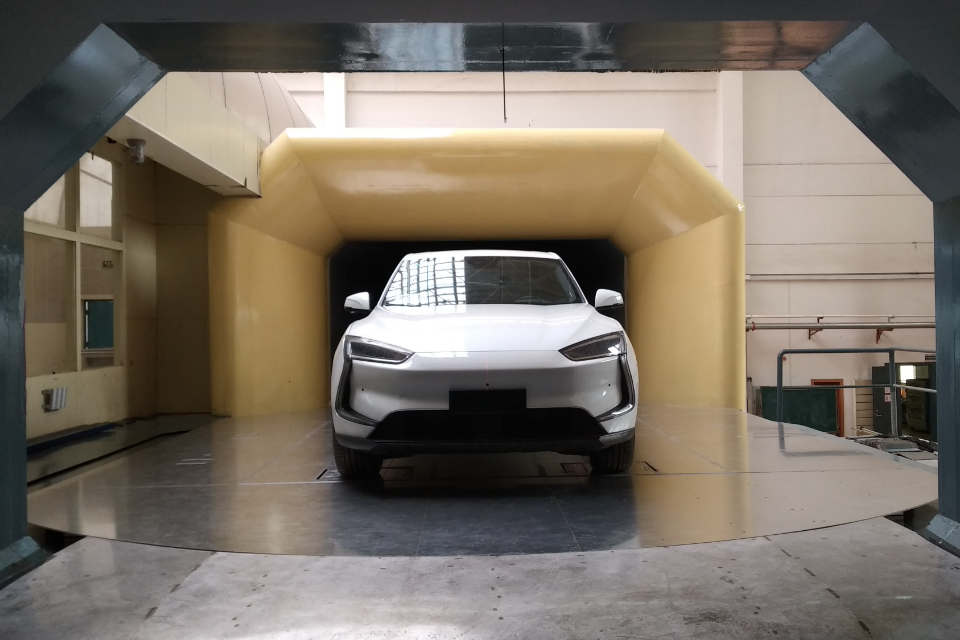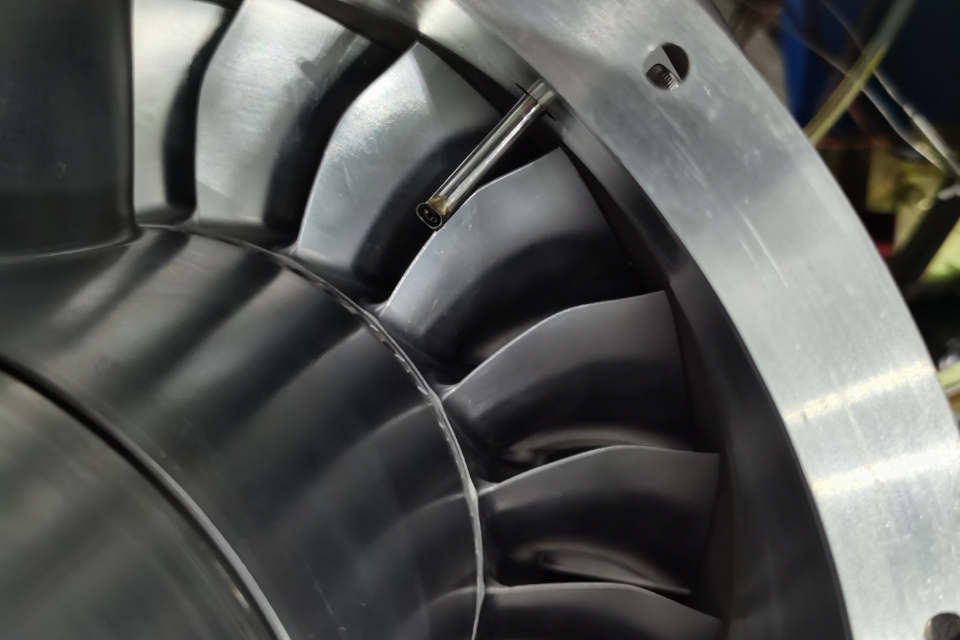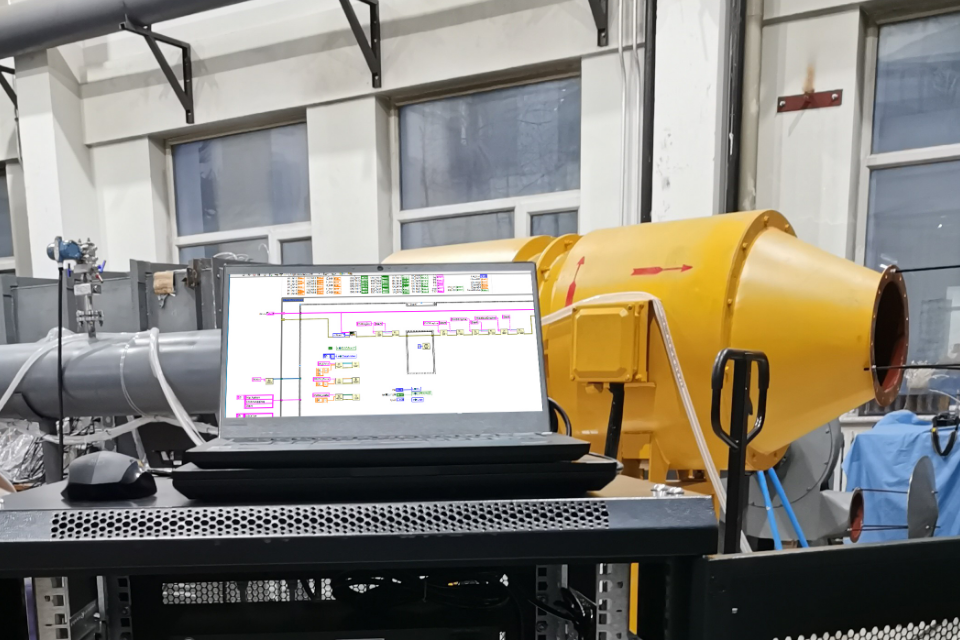

Five-hole probes have served this role for decades. They resolve three-dimensional flow by measuring pressure at five sensing ports on the probe tip, from which yaw angle, pitch angle, and velocity magnitude are calculated using established calibration coefficients. The principle is straightforward. Getting it right in practice is harder, particularly when probe geometry must be adapted to specific test configurations—narrow blade passages, tight clearances, or non-standard measurement locations where off-the-shelf probes simply do not fit.
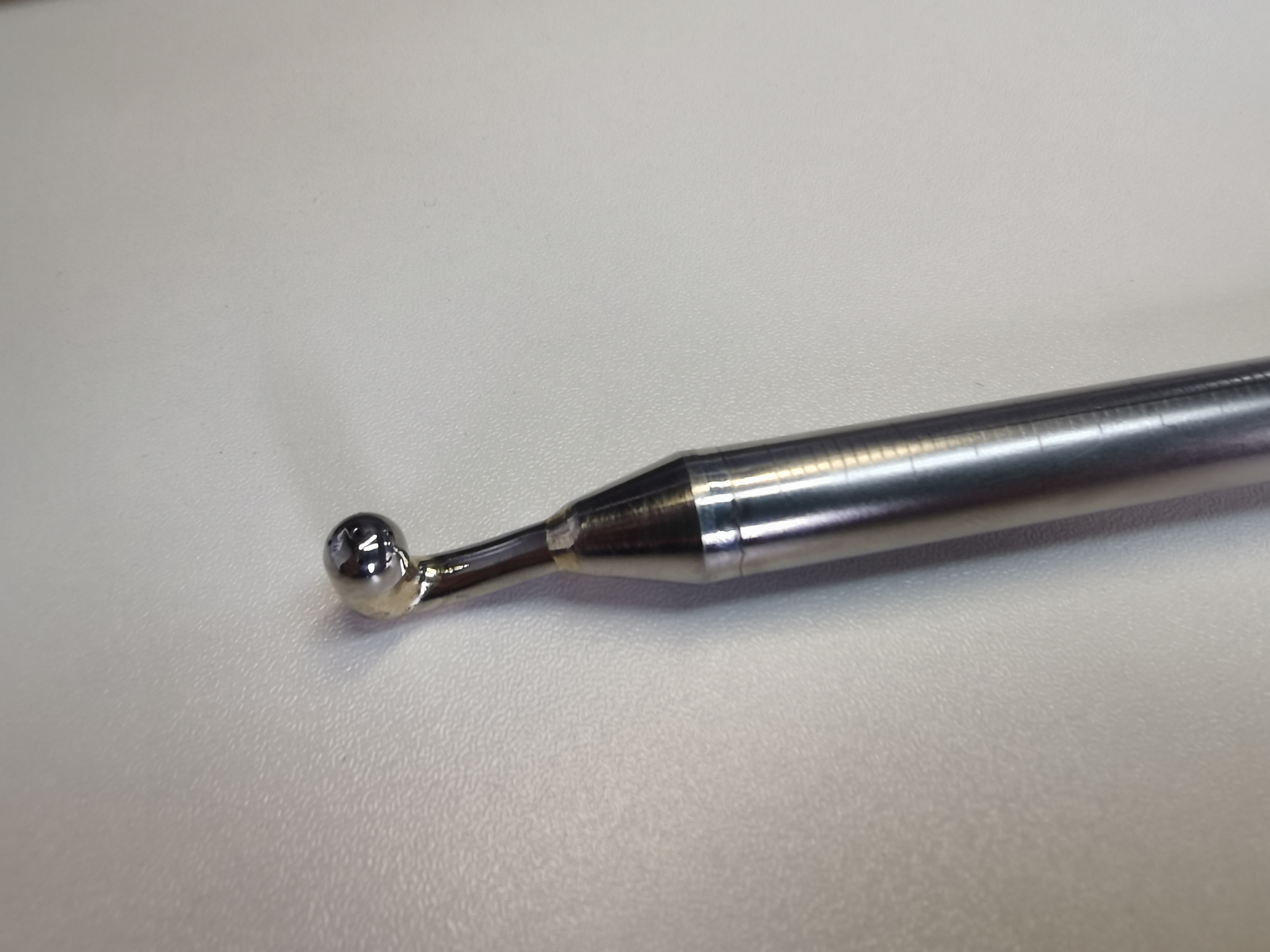
A Trusty Windtuner Five-Hole Probe
The Manufacturing Constraint That Additive Printing Solves
Traditional five-hole probes are machined from solid bar stock. The process works well for conventional geometries, but it imposes hard limits on what a probe can look like. Hole positions are constrained by tool access angles. Internal pressure channels must follow straight paths. Complex head shapes that would improve aerodynamic performance become impractical or too expensive to produce. For a research group that needs a probe with unusual dimensions, non-standard hole spacing, or a customized tip geometry, the lead time can stretch into months, and the cost often discourages experimentation.
Micron-level additive manufacturing eliminates these constraints. Windtuner produces five-hole probes using 3D metal printing, building each probe layer by layer from stainless steel, high-temperature alloy, titanium alloy, or nickel-iron alloy. The process forms complex internal pressure channels, precise hole positions, and optimized head geometries in a single build cycle. Probes that would be impossible to machine conventionally—compact tips for tight blade passages, L-shaped configurations for constrained test sections, or probes with integrated mounting features—come off the printer ready for calibration.
The performance difference shows up in calibration data. At Mach 0.3, the angular calibration curve of a 3D-printed five-hole probe outperforms its machined counterpart, with higher angular sensitivity and better orthogonality between calibration points. In mechanical terms, the advantage is even more striking: for probes with identical external dimensions, machined versions deform under 340 N of load, while 3D-printed probes withstand 900 N before deformation. That is a 2.6x improvement in structural integrity, which matters when a probe must survive in high-velocity or high-turbulence environments without bending.
Calibration Gives Weight to Parameters
A probe is only as credible as its calibration. Windtuner calibrates every five-hole probe in-house at its wind tunnel laboratory, the first private facility in China accredited by CNAS for probe calibration. The laboratory operates under ISO/IEC 17025 quality management and covers subsonic, low-speed, and supersonic calibration environments. Each probe receives a calibration certificate with traceable measurement data before it leaves the factory.
This approach gives clients something that matters in practice: documentation that certification authorities, peer reviewers, and internal quality teams recognize as valid. When a research institution submits compressor performance data based on five-hole probe measurements, the calibration record backs the entire measurement chain from sensor to published result.
The Case for Purpose-Built Probes
Engineers working on turbomachinery face a persistent tension between wanting perfect probe geometry and accepting what is available off the shelf. A probe designed for a generic test configuration will work adequately in many cases, but it will not match what a purpose-built probe achieves in a specific application. When blade spacing is tight, when the measurement plane sits in a region of strong secondary flow, or when the test demands an unconventional approach angle, a custom probe makes the difference between usable data and data that leads to a design decision.
Windtuner's additive manufacturing capability shortens the path from requirement to hardware. With over 10,000 probe designs completed and more than 100,000 calibration data points accumulated, our engineering team handles the full cycle from requirement clarification, aerodynamic design to 3D printing and CNAS-accredited calibration. We wish to provide you with a five-hole probe that excels in demanding conditions and produces data that stands up to scrutiny.