
1. Pressure Scanner: The Foundation of Pressure Measurement
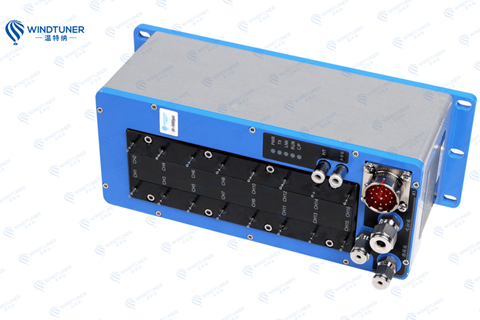
In aero engine development and testing, pressure measurement accuracy directly affects aerodynamic performance evaluation. Traditional pressure measurement equipment often falls short because of limited accuracy, too few acquisition points, and poor stability, making it hard to meet the demands of complex airflow environments. A pressure scanner overcomes these limitations, and its biggest advantage is outstanding multi-point synchronized measurement. A traditional single-point pressure sensor can measure airflow pressure at only one location, while a pressure scanner can collect data from multiple points at the same time, delivering a more complete set of aerodynamic parameters and a more accurate picture of internal and external pressure distribution in the engine.
A pressure scanner is typically equipped with multiple sensors and high-precision measurement channels, allowing synchronized multi-point pressure measurements at key engine locations such as the compressor, combustor, turbine, and exhaust system. This multi-point capability provides more complete flow-field data and captures pressure fluctuations in complex flows more effectively, improving overall measurement accuracy.
2. High Accuracy and Automatic Calibration
Under different operating conditions, aero engines experience dramatic changes in temperature, pressure, and airflow velocity. That means the pressure measurement system must deliver high accuracy and high stability to keep results reliable. Fluctuations in temperature and humidity, as well as unstable airflow, can all degrade the accuracy of traditional sensors and introduce measurement error.
With its built-in automatic calibration system, the pressure scanner addresses this problem effectively. Automatic zeroing, full-scale calibration, and custom multi-point calibration can all be performed in real time during engine testing, ensuring that the system maintains high accuracy in any operating environment. This technology sharply reduces the need for frequent manual calibration while improving long-term stability and reliability. Even in extreme conditions such as high temperature, high pressure, and high humidity, a pressure scanner can still provide accurate data and meet the demanding measurement requirements of aero engine testing.
3. Real-Time Data and Time Synchronization
Airflow changes rapidly and dynamically during engine operation. To evaluate aerodynamic performance in real time under different conditions, a pressure scanner can provide real-time pressure data acquisition. Just as important, WINDTUNER pressure scanners support the IEEE 1588v2 Precision Time Protocol, ensuring precise synchronization of data from different measurement points when multiple sensors are operating together.
In engine testing, synchronized multi-point data are essential for analyzing pressure changes throughout the airflow path. A pressure scanner precisely aligns data from different sensors, removes errors caused by time offsets, and preserves data consistency in complex flow fields. With time synchronization, test engineers can obtain more accurate aerodynamic performance data, optimize engine design, and improve fuel efficiency and emissions control.
4. Higher Test Efficiency and Lower Maintenance Costs
Traditional pressure test equipment usually requires regular calibration and maintenance, which increases upkeep costs and can allow errors to accumulate during testing. By comparison, the pressure scanner's automated calibration and maintenance-free design greatly reduce maintenance needs and improve test efficiency. Users do not need to perform frequent manual calibration or routine maintenance, which saves substantial time and labor.
In addition, the pressure scanner's high stability and long-duration operating capability allow it to maintain high-precision measurements throughout extended tests, reducing interruptions and data loss. For aero engine development teams, that means higher productivity and more reliable test data.
5. Driving Engine Optimization and Safety Evaluation
One of the central goals of aero engine testing is to use accurate pressure data to evaluate aerodynamic performance and safety. By providing high-precision pressure data, a pressure scanner helps engineers assess critical engine sections and identify potential performance bottlenecks and safety risks.
For example, by accurately measuring pressure changes in the compressor, combustor, and turbine region, engineers can determine whether airflow distribution is uniform, whether combustion efficiency meets target, and whether overheating or pressure imbalance is present. Based on these data, the development team can further optimize the design, improve fuel efficiency, reduce emissions, and ensure engine reliability and safety under extreme operating conditions.
As a core instrument in aero engine testing, the pressure scanner addresses many of the limitations of traditional pressure measurement through high accuracy, multi-point synchronized measurement, automatic calibration, and time synchronization. In complex aerodynamic environments, it provides reliable data support for engine development, performance evaluation, and safety analysis, significantly advancing design optimization and performance improvement. As the technology continues to evolve, the pressure scanner will play an even larger role in future aero engine testing and help move the aviation industry toward greater efficiency, safety, and environmental responsibility.