
Unlike fixed-wing aircraft and helicopters, eVTOLs impose unique technical demands on atmospheric data systems across their flight envelope. Airspeed approaches zero during takeoff and landing; in hover, rotor downwash creates severe turbulence in the flow field around the airframe; across the transition phase, the angle of attack can swing to ±30° in a matter of seconds. This combination of operating conditions exceeds the working boundaries of a conventional Pitot tube: at extremely low dynamic pressure, the signal-to-noise ratio at static ports deteriorates sharply, and under high angles of attack, airflow separation at a single-hole probe leads to serious distortion in total pressure capture. Airspeed, angle of attack and sideslip angle are precisely the core inputs the flight control computer relies on for lift management, stall warning and attitude correction—when the measurement chain loses accuracy, there is no foundation for flight safety.
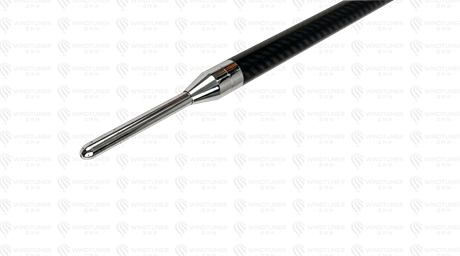
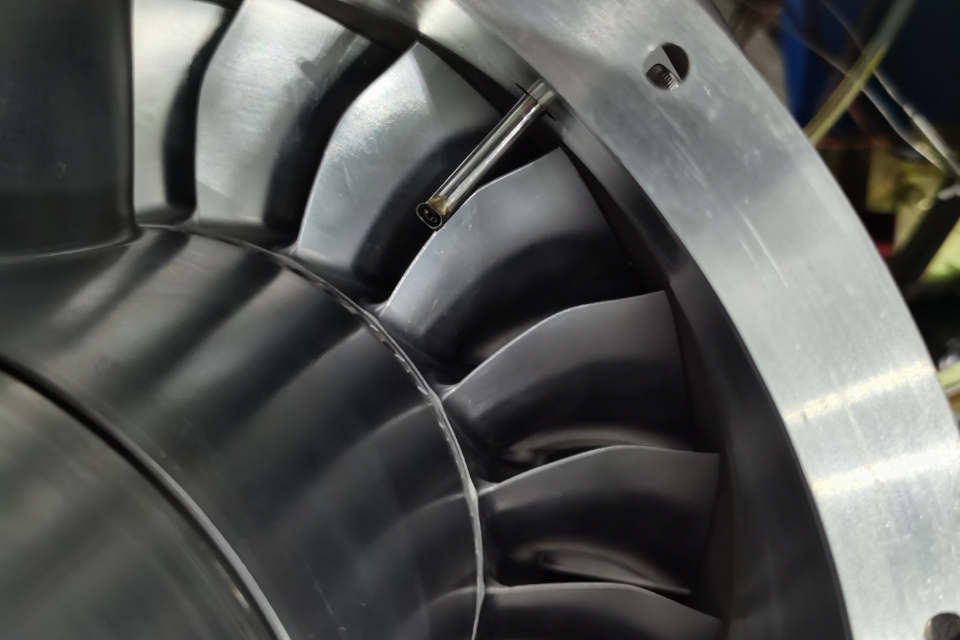
Windtuner has developed the WTN-5DP200 five-hole differential pressure airspeed probe to address this technical gap. The product uses a precision symmetric five-hole probe configuration, with a flow rectifier ring that pre-conditions the incoming flow field before an air data computer performs real-time resolution of three-dimensional flow parameters. The system simultaneously outputs five primary parameters—dynamic pressure, static pressure, angle of attack, sideslip angle and total air temperature—and derives calibrated airspeed and barometric altitude from these. According to technical specifications disclosed by Windtuner, the probe covers an angle measurement range of ±30°, achieves angle accuracy better than ±0.5°, keeps velocity measurement accuracy within 0.015 Mach, and operates across a Mach range of 0.1 to 0.9, with further customization available for specific airframe configurations.
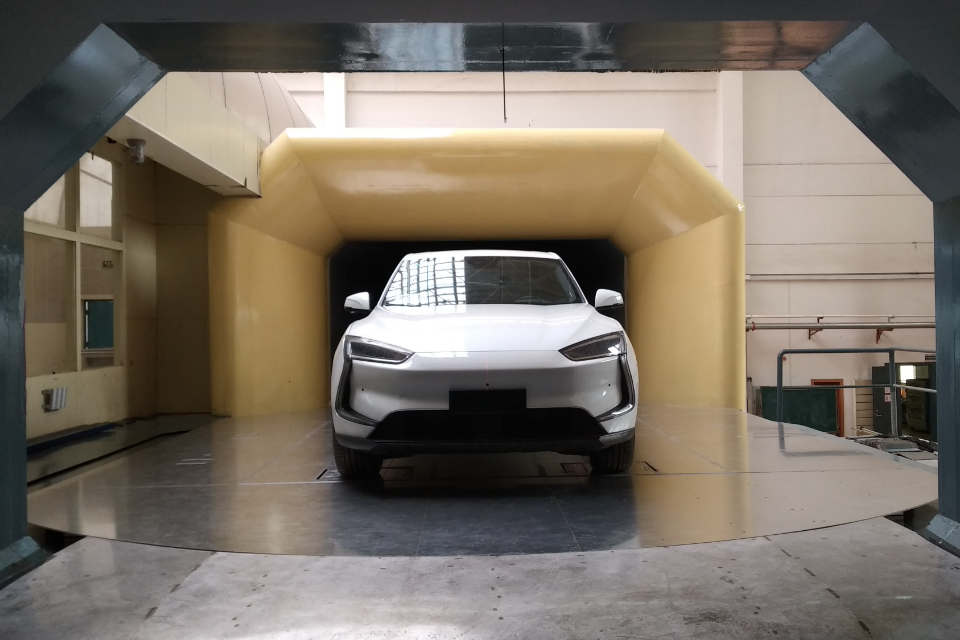
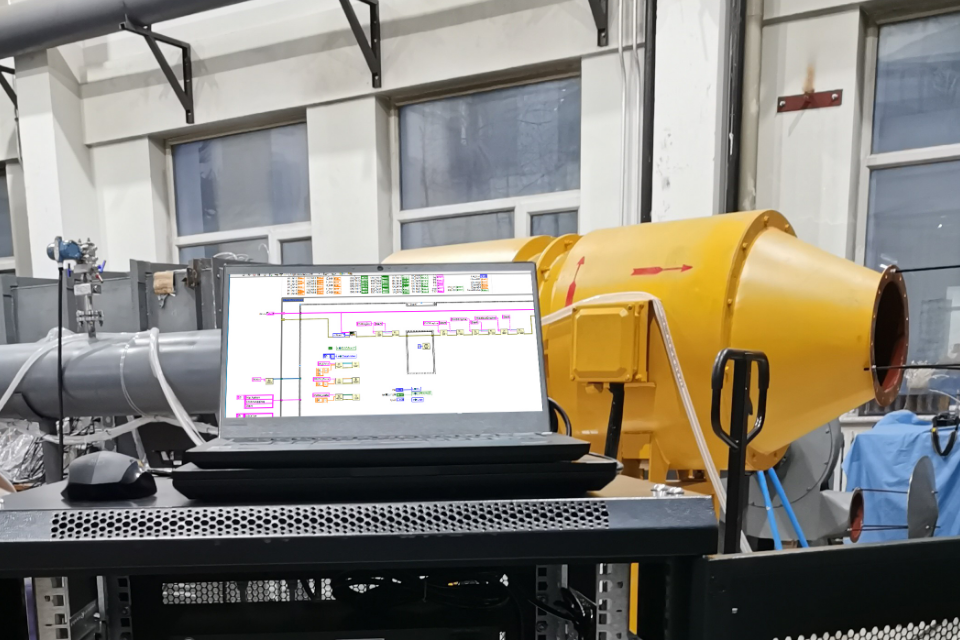
The accuracy of this system is grounded in Windtuner's in-house calibration wind tunnel. Each five-hole probe undergoes full-range calibration in the calibration wind tunnel before leaving the factory, followed by compensation verification across the full temperature range in a thermal test chamber. Private-sector airspeed probe manufacturers in China with their own wind tunnel calibration capability are few in number; most rely on CFD simulation combined with iterative flight testing to validate product performance—a route that falls measurably behind in both calibration completeness and iteration efficiency.
The WTN-5DP200 probe tip diameter is φ6 mm, and its ogive aerodynamic profile has been specifically optimized to maintain streamline integrity under low dynamic pressure conditions. The probe uses a straight-shank layout with a minimum protrusion footprint of 67×127 mm, suited to the compact nose geometry of eVTOL airframes. Stainless steel and aluminum alloy material options are available to match each client's actual requirements for weight and structural strength. The pressure port inner diameter of Φ2.5 mm balances response speed against plumbing damping.
Environmental adaptability runs as a second technical thread through the product's design. eVTOLs operate in low-altitude, high-humidity environments with frequent takeoff and landing cycles, and airspeed probe icing is a latent hazard with direct implications for flight safety. The WTN-5DP200 integrates a temperature sensor and heating element that automatically adjusts heating power based on ambient temperature, maintaining the probe's operating temperature while achieving low-power operation—a feature of genuine engineering value for electric aircraft where battery capacity is always at a premium.
At the integration level, the WTN-5DP200 supports ARINC 429 and CAN bus interfaces, both standard aviation data protocols. New-development airframes can connect directly to the avionics bus, while retrofit programs can achieve integration through modular adaptation. Windtuner does not offer a one-size-fits-all standard product; we work from each client's actual flight envelope, installation constraints and performance requirements to deliver end-to-end customization—from aerodynamic profile optimization and material selection, to pressure port specification and operating speed range.
Several eVTOL types, industrial UAVs and HAPS high-altitude platforms are already flying with Windtuner five-hole differential pressure airspeed probes and associated measurement solutions. On the road toward electric aviation, China's supply chain depth and engineering iteration speed represent a compounding structural advantage. In the airspeed measurement segment, Windtuner's methodology of continuous innovation is building a solid foundation, one step at a time.