
That matters because ground speed is not airspeed. Satellite navigation shows how quickly an aircraft moves over the ground, while a pitot tube measures its motion relative to the surrounding air. When wind changes, the difference can affect flight control, energy consumption and operational safety.
Low-Altitude Flight Creates a Difficult Air-Data Problem
Airflow near the ground is rarely uniform. Buildings generate wakes and turbulence, terrain redirects wind, and local weather can produce rapid changes over short distances. Lightweight unmanned aircraft are particularly sensitive to these disturbances.
The challenge becomes greater for multirotor and eVTOL aircraft. Rotor downwash, propeller slipstreams and changing flight attitudes can alter the airflow at the probe. During the transition from vertical to forward flight, the local flow may approach the aircraft from different directions.
A conventional pitot tube measures total pressure effectively when it is properly aligned with the airflow. In more complex conditions, however, airspeed alone may not provide enough information. Engineers may also need to know the direction of the local flow.
The Advantage of a Five-Hole Probe
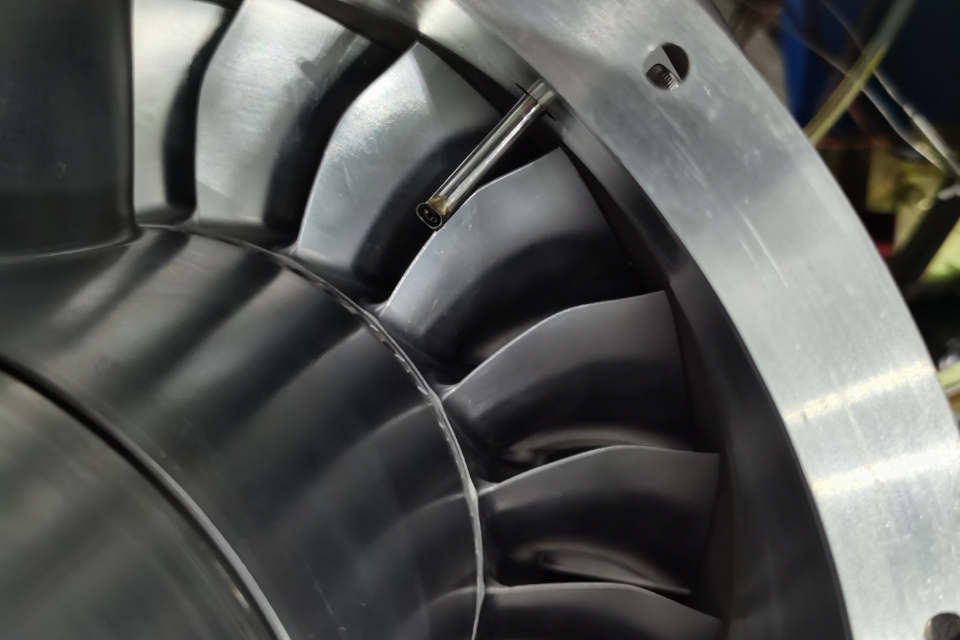
A 5-hole differential pressure airspeed probe uses five pressure ports arranged around the probe head. The differences among these pressures contain information about both airflow speed and direction.
When combined with an atmospheric data computer and an appropriate calibration model, the probe can provide airspeed and airflow-angle data in real time. This makes it useful for UAVs and eVTOL aircraft operating through gusts, maneuvers and flight-mode transitions.
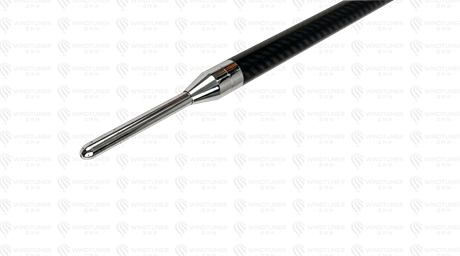
WINDTUNER’s five-hole differential-pressure system can incorporate dynamic compensation to correct errors associated with acceleration and rotational motion. Straight and bent probe configurations are available for different installation requirements.
The system can also integrate automatically controlled heating. This helps prevent ice, moisture and water accumulation from obstructing the small pressure passages—an important consideration for aircraft operating in changing weather with limited time for inspection between flights.
Applications Across Low-Altitude Aviation
For fixed-wing delivery drones, accurate airspeed data can support speed control, wind estimation and stall-margin management. Two flights over the same route may have similar ground speeds while experiencing very different aerodynamic conditions.
For eVTOL aircraft, airspeed and airflow-angle measurements can support control-law development and transition-flight testing. The relationship between aircraft attitude and local airflow changes as the vehicle moves between hover and forward flight.
Inspection and surveying aircraft often operate near buildings, bridges, transmission lines or uneven terrain. These environments can contain disturbed airflow that is difficult to understand from ground speed alone.
In each case, the pitot system gives the flight controller a more complete picture of the aircraft’s aerodynamic environment.
Reliable Airspeed Requires a Complete System
The probe is only the first link in the air-data chain. Pressure signals must reach suitable sensors, be converted into electrical data and be processed using the correct aerodynamic relationships. Static pressure and atmospheric temperature may also be needed to calculate accurate air-data parameters.
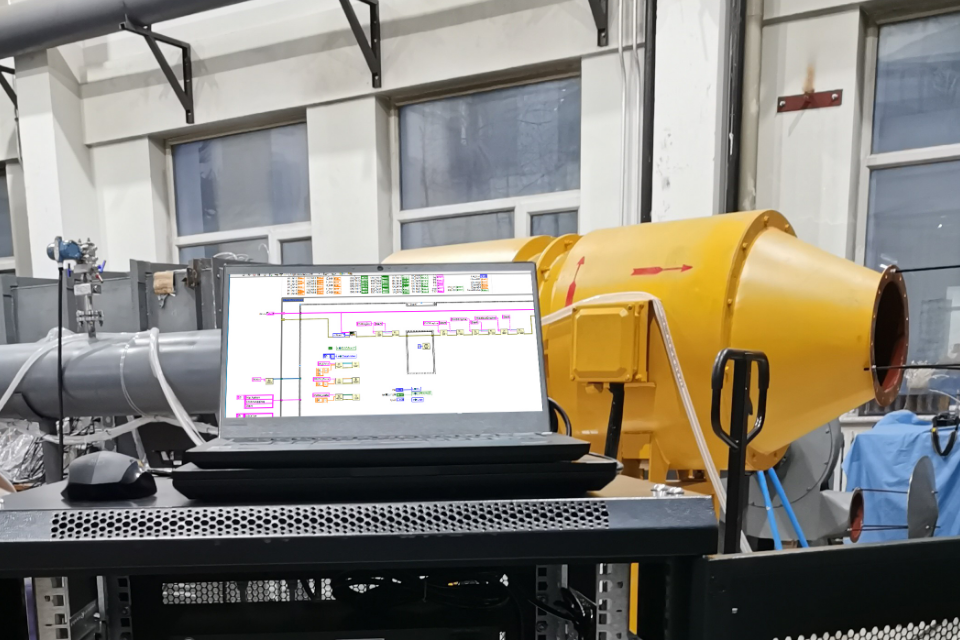
WINDTUNER combines the five-hole probe with pressure and temperature measurement and an atmospheric data computer. This system-level approach is important because an advanced probe cannot compensate for a leaking pneumatic line, an unsuitable sensor or an incorrect calculation model.
Calibration is equally important. Five pressure ports do not automatically produce accurate flow-angle measurements. Their response must be recorded under known velocities and angles so that the system can establish the relationship between pressure, airspeed and flow direction.
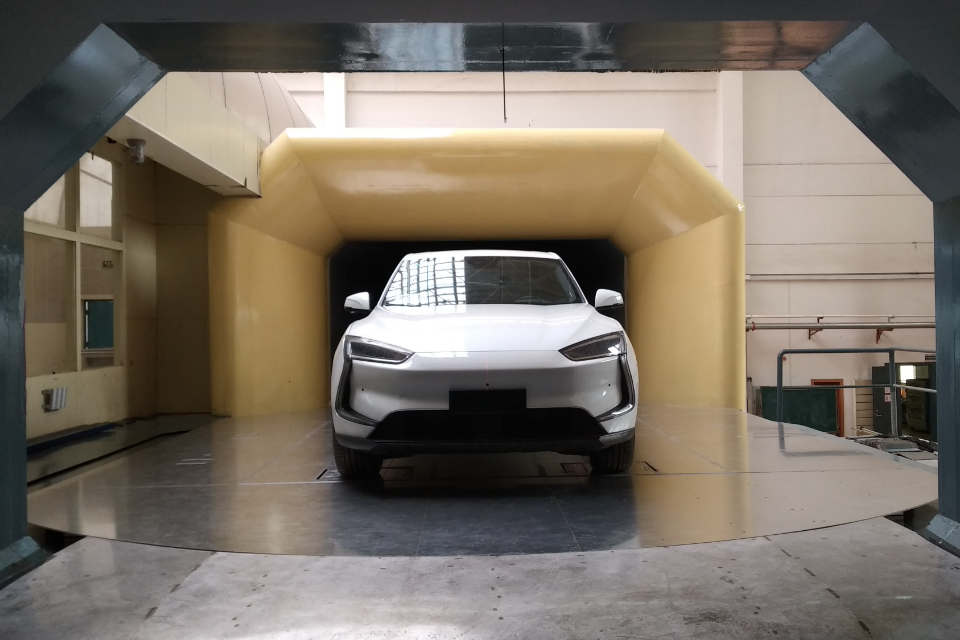
WINDTUNER supports this process through pneumatic-probe design, manufacturing and wind-tunnel calibration. Its low-speed, subsonic and supersonic test capabilities allow probes to be evaluated for different operating regimes.
Small Instrument, Important Data
As low-altitude aviation moves toward routine commercial operation, aircraft will depend increasingly on reliable sensor data. The pitot tube may appear modest beside electric propulsion systems and flight-control computers, but the quality of its measurements can influence how those systems perform.
WINDTUNER’s 5-hole differential pressure airspeed probe is designed around this wider measurement task. By combining airflow sensing, dynamic compensation, heating, data processing and calibration, the system turns changing local airflow into information that an aircraft can use.In the low-altitude economy, reliable flight begins with an accurate understanding of the air—not just the ground below.