
What a Pitot Tube Measures
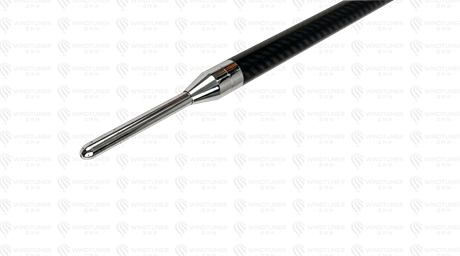
A Pitot tube’s forward-facing opening collects total pressure, also called stagnation pressure. In a steady flow, total pressure combines the local static pressure with the pressure associated with the fluid’s motion. The probe therefore gives the test team a pressure signal, not a direct velocity signal. A separate static-pressure reference is required before the pressure data can represent flow speed.A Pitot-static tube places a static pressure opening alongside the forward-facing total pressure opening. The two signals produce a pressure difference that represents dynamic pressure. In other installations, the static reference can come from a wall tap or a separate pressure probe. The measurement principle stays the same: the total-pressure reading needs a suitable static-pressure reference.
From Differential Pressure to Velocity
For low-speed flow where air density can be treated as constant, dynamic pressure follows the relation q = 1/2 rho V². The same relationship can be written as V = sqrt(2q/rho), with q equal to total pressure minus static pressure. The formula is simple, but each term carries a measurement decision. The Pitot tube supplies total pressure, the static reference supplies the baseline, and air temperature and ambient pressure affect the density used in the calculation.That low-speed relation does not cover every test condition. As Mach number rises, compressibility changes the relation between total pressure, static pressure, and velocity. A high-speed test therefore needs the appropriate compressible-flow equation and a calibration that covers the operating range. Applying a low-speed formula outside its valid range can produce a clean-looking velocity value with the wrong physical meaning.
Position and Alignment Set the Reading
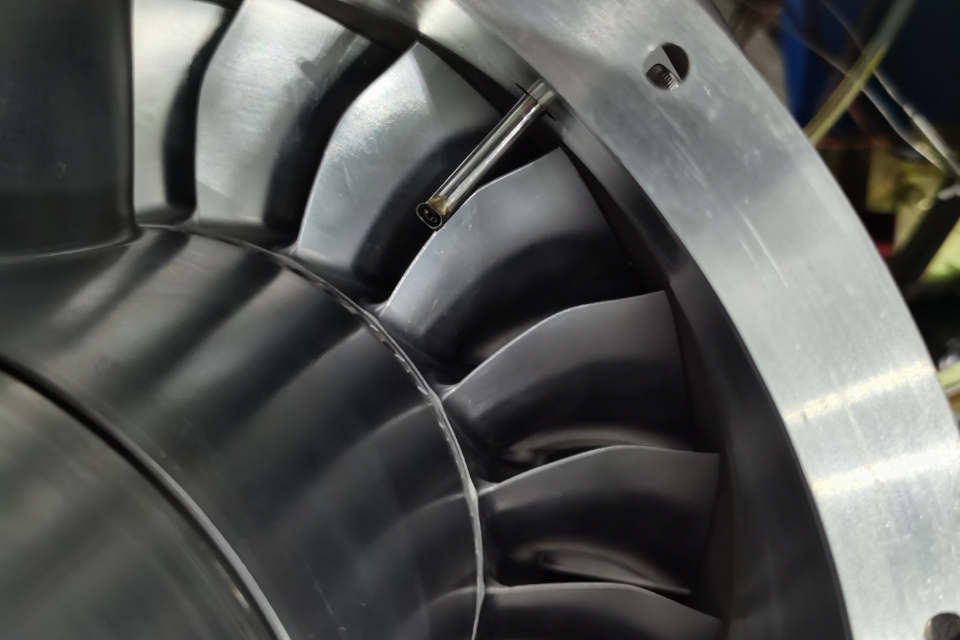
A Pitot tube works best when its opening faces the local flow. Yaw or pitch between the probe axis and the flow changes the pressure at the opening. The error can become more noticeable when the probe sits in a boundary layer, wake, separated region, or strong pressure gradient. A probe positioned a few millimeters away from the intended location may sample a different part of the flow field, even when the test stand has not moved.The surrounding pressure DAQ hardware matters as well. A support, model surface, tubing connection, or nearby probe can disturb the local flow before it reaches the opening. Tubing leaks, blockage, moisture, and excessive pneumatic volume can change the pressure response or delay a transient. Stable readings do not prove that the Pitot tube is correctly aligned or that the measured pressure represents the intended flow, thus requiring extra care and examination before beginning experiments.
Calibration Turns Pressure into Usable Data
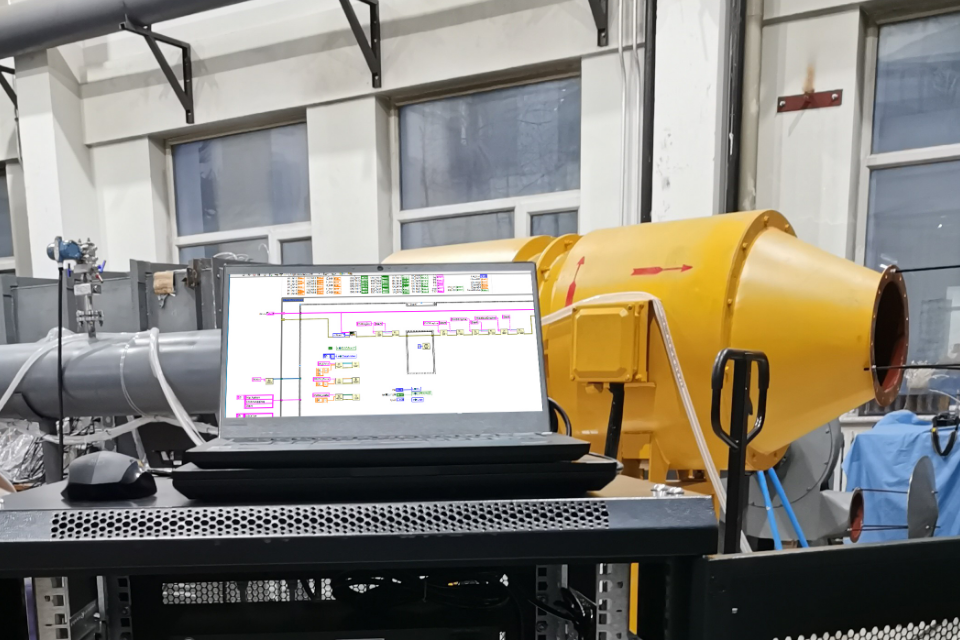
Calibration establishes how the Pitot tube responds across the speed, pressure, and angular conditions relevant to the test. A useful calibration examines repeatability and the effect of probe alignment, then records the corrections needed for the measurement range. The result is more than a single conversion factor. It connects the probe geometry, the reference pressure, the installation angle, and the data reduction method.In terms of systematic pressure acquisition, WINDTUNER pressure scanners can collect the total-pressure and static-pressure signals as test channels, while WindLabX measurement and control software keeps the channel configuration and acquisition task with the run. That arrangement does not replace correct probe placement or calibration. It gives the test team a consistent path from pressure inputs to a documented velocity calculation.
A Pitot tube remains a geometrically straightforward form of pressure probe, but its pressure measurement quality is only as sound as the pressure difference it can guarantee. When the Pitot tube faces the flow, the static reference is appropriate, the density model matches the speed range, and calibration covers the installation, the Pitot tube provides a defensible starting point for velocity data. WINDTUNER builds the acquisition around that pressure measurement so clients can trace the final airspeed result back to the conditions that produced it.