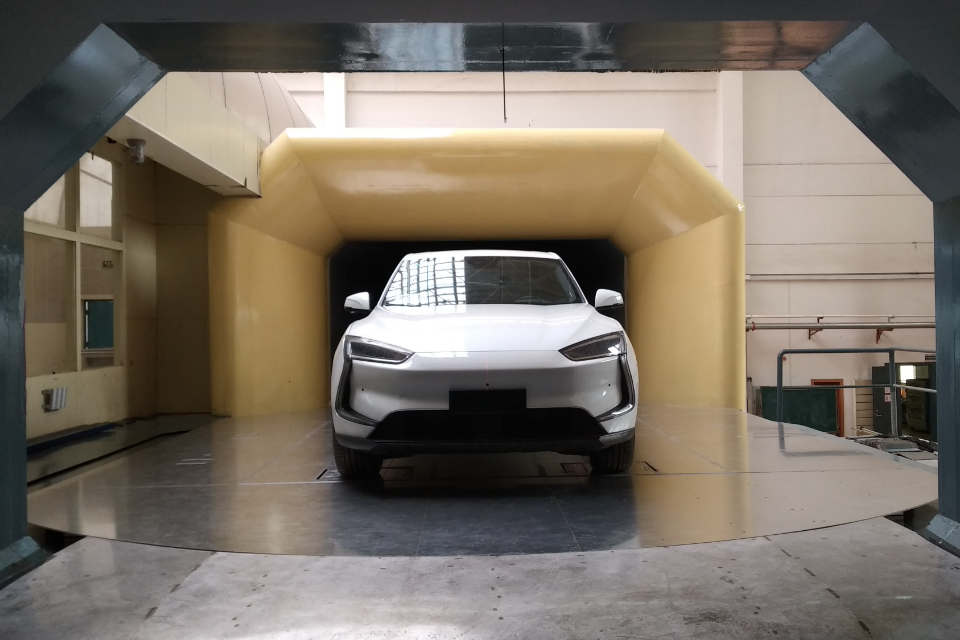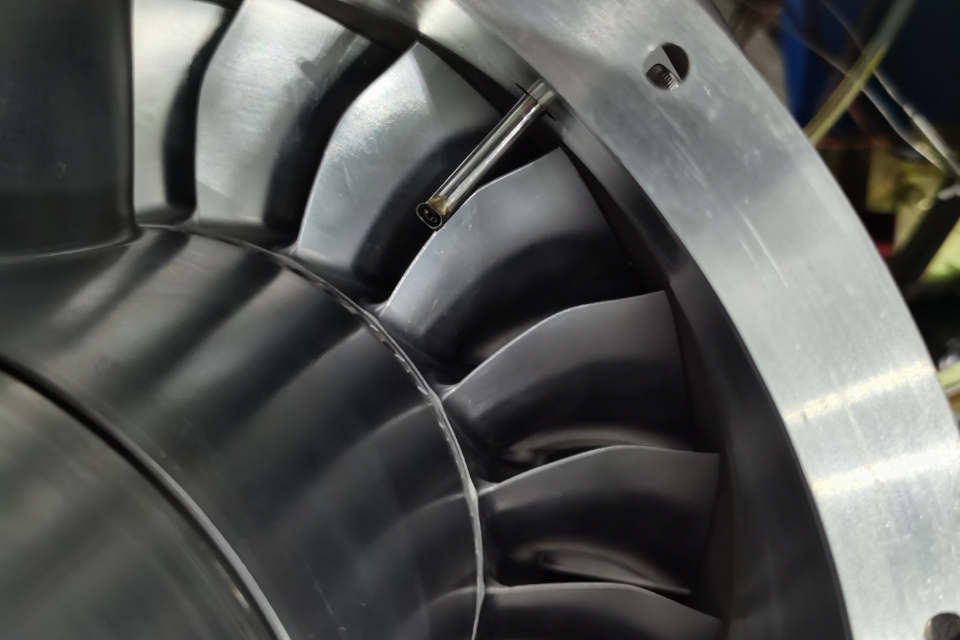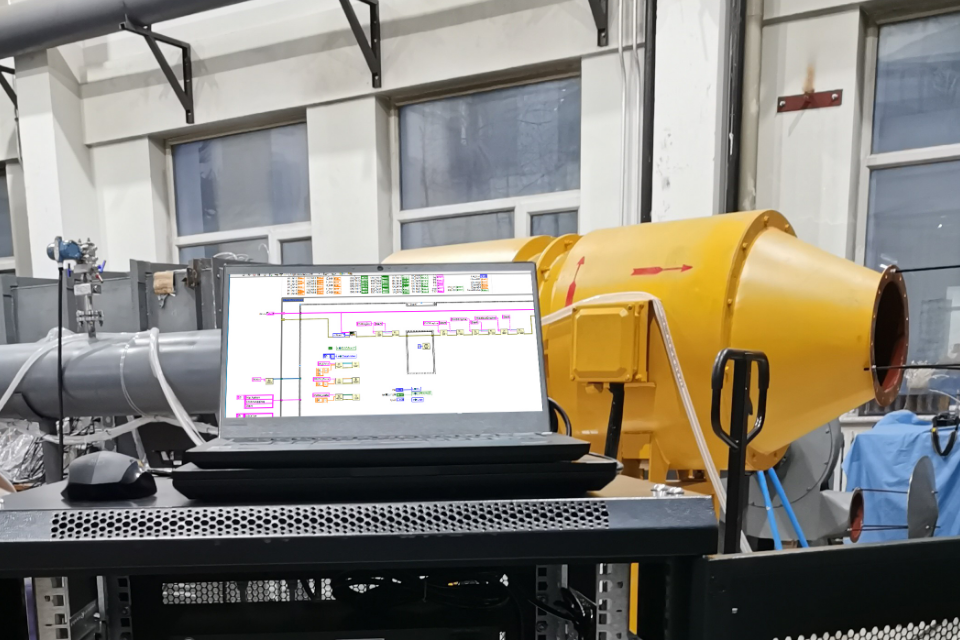

In a modern wind tunnel, the intelligent pressure scanning valve often performs its most important work far from the model under test. Thin tubes run from dozens—or hundreds—of pressure taps to a compact instrument that translates moving air into synchronized pressure data. For engineers trying to understand why a wing stalls, a compressor loses efficiency or a turbine stage falls short of its target, those numbers are not a supporting detail. They are the evidence on which the next design decision rests.
That has made the intelligent pressure scanning valve an increasingly consequential part of aerodynamic development. The instrument replaces a patchwork of individual gauges with coordinated, multi-channel measurement. WINDTUNER’s intelligent pressure-scanner platform brings 16 pressure channels into a single unit, with sampling rates of as much as 500 hertz. Standard, differential and barometric versions are designed for different test architectures, from three-dimensional flow measurement to atmospheric reference monitoring.
The business case is easy to miss because the device is typically smaller than the machinery it evaluates. Yet a test campaign can be compromised when channels drift, measurements are not synchronized or calibration interrupts the schedule.
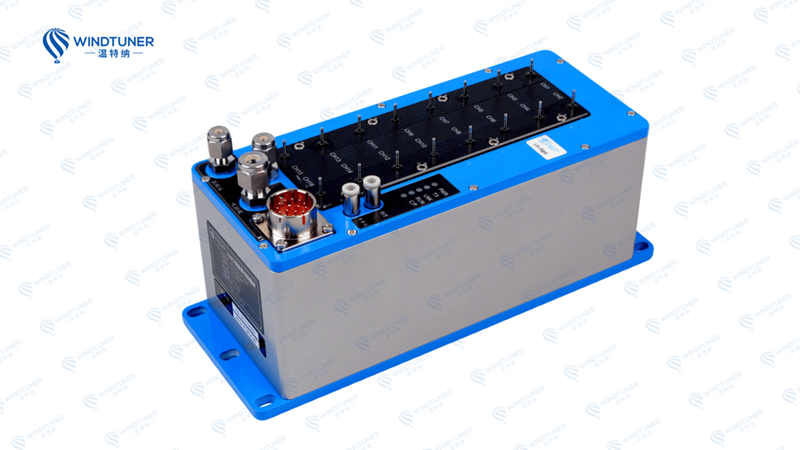
In turbine and aircraft programs, the cost of repeating a test may dwarf the cost of the acquisition hardware. The scanner’s value therefore lies not only in its stated accuracy—WINDTUNER offers an accuracy class as high as 0.05—but also in whether it can keep a large experiment coherent.
Coherence matters most when pressure is changing across both space and time. A gas-turbine test stand may need readings at multiple stations to calculate pressure ratios and diagnose losses. An aircraft-engine inlet-distortion test may combine a rake of probes with a positioning system to map a full cross-section. A wind-tunnel team may traverse a five-hole probe across the outlet to evaluate flow uniformity.
In each case, isolated readings tell only part of the story. The useful result comes from comparing multiple channels on the same clock.
WINDTUNER says its newer systems support IEEE 1588 V2 precision time synchronization, allowing multiple devices to be networked for distributed acquisition. The approach is particularly relevant to large test rigs, where positioning measurement hardware near the pressure source can shorten tubing and simplify wiring.
Ethernet communication also makes it easier to integrate pressure acquisition with automated positioning, triggering and data-analysis software.
Calibration and maintenance are the less glamorous half of the equation. Temperature changes can shift a sensor’s output, while a blocked line can silently corrupt a channel. WINDTUNER integrates functions for zeroing, full-scale or multi-point calibration and, on extended configurations, purging.
Its signal chain combines pressure-sensor modules, high-resolution conversion and compensation algorithms designed to correct offset, span, nonlinearity and thermal effects.
For research institutes and manufacturers, the strategic question is no longer whether to collect more data. It is whether the data can be trusted quickly enough to influence a development program.
An intelligent pressure scanning valve that shortens setup, detects problems earlier and supports repeatable calibration can turn pressure measurement from a laboratory bottleneck into part of an automated engineering workflow.
The applications extend beyond aviation. Automotive aerodynamics, fan and compressor development, bridge wind-tunnel studies, marine propulsion and wind-energy research all depend on pressure distributions that are difficult to observe directly.
In those markets, the same instrument may move between a compact component rig and a facility-wide test network. That makes selectable ranges, interfaces and software adaptation as important as headline specifications.
This is the quiet economics of measurement: better evidence reduces the number of expensive guesses.
The intelligent pressure scanning valve will never be the largest machine in a test hall. But as development cycles tighten and performance margins narrow, it is becoming one of the devices that determines whether engineers truly understand what their machines are doing. By transforming many small pressure signals into synchronized and actionable data, WINDTUNER’s intelligent pressure scanning valve gives researchers a clearer foundation for every design decision that follows.