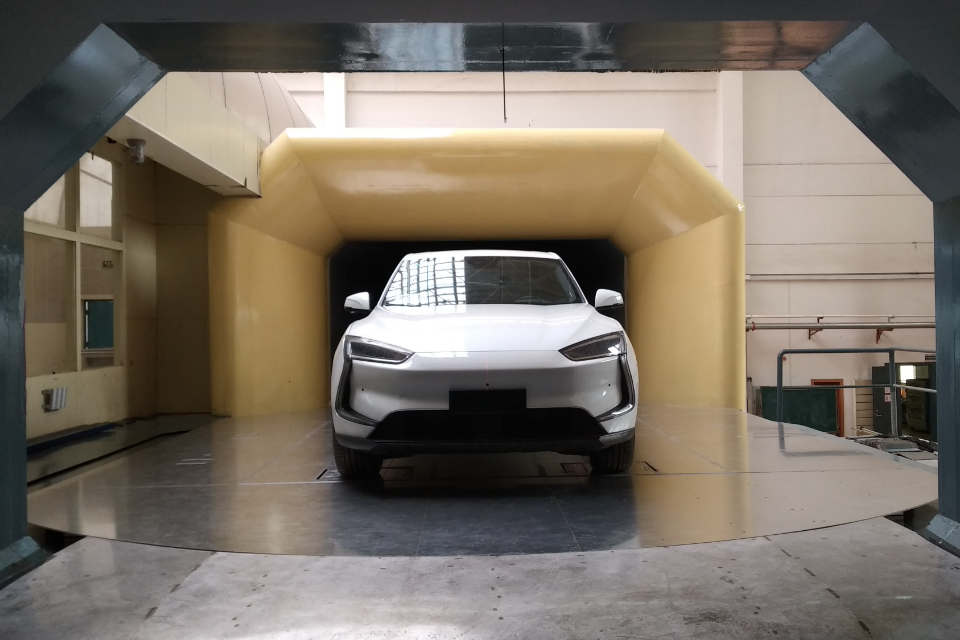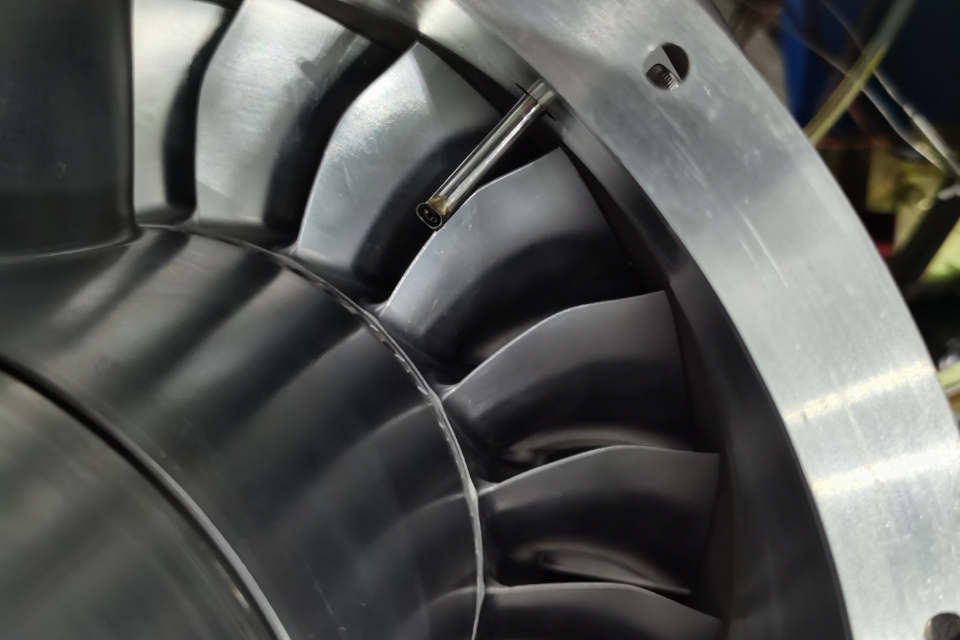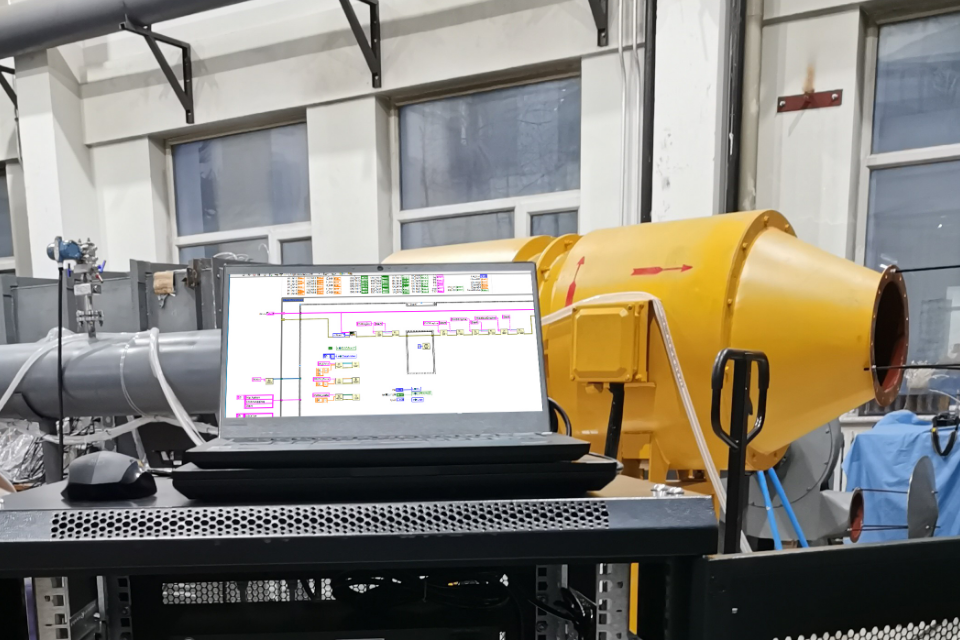

Turbomachinery testing does not tolerate gaps. When a research team runs a compressor stage or maps the pressure distribution across a turbine rotor, every channel fires at the same instant — or the data is useless. Windtuner ethernet intelligent pressure scanners run at up to 500 Hz with IEEE 1588V2 precision time synchronization, matching the demands of multi-point flow field experiments where a few microseconds of skew distort the whole picture.
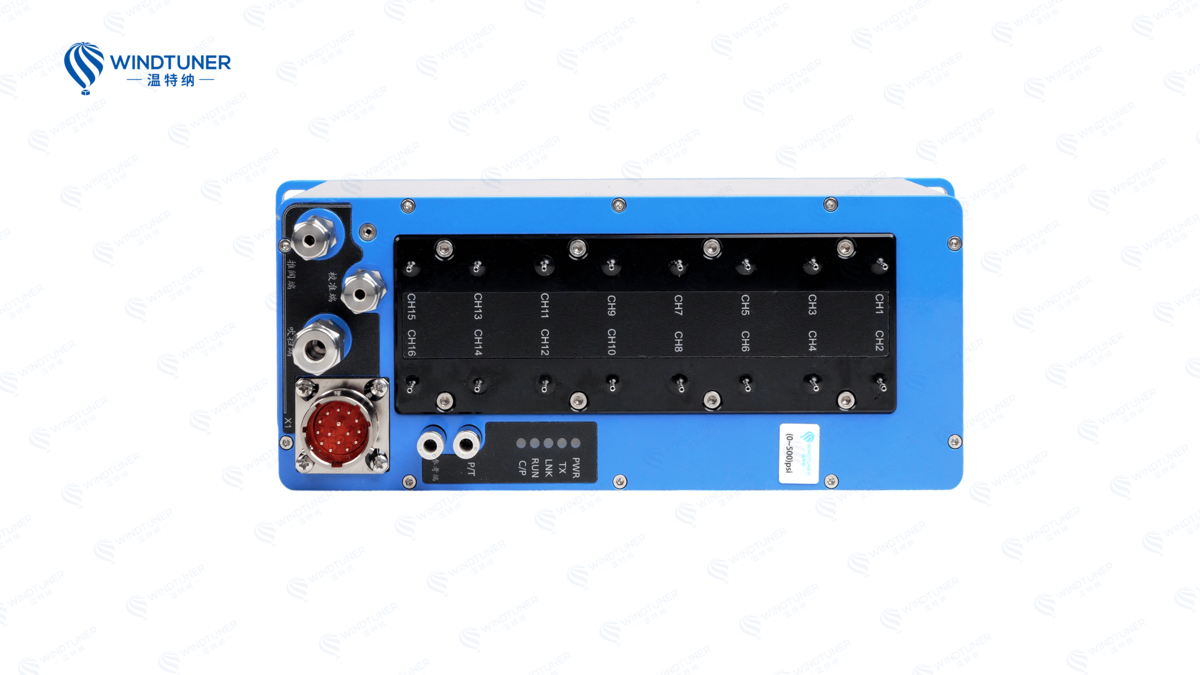
Windtuner on Pressure Scanner Machinery
Why Synchronization Matters More Than Raw Channel Count
A 100-port test setup with poor synchronization produces worse results than a well-synchronized 32-channel system. Timing skew introduces phase error between measurement points, and in rotating machinery that error maps directly onto false pressure gradients. The Windtuner pressure scanner uses IEEE 1588V2-2008 Precision Time Protocol to align all channels across every connected module, so when the acquisition system triggers — whether by software command, hardware signal, or timed schedule — each sensor reads at the same moment.
That alignment is what makes multi-module configurations practical. A single Windtuner pressure scanner delivers 16 channels at ±0.05% FS accuracy. Add modules and the channel count scales while timing stays locked. Teams running inlet distortion surveys, blade passage mapping, or wake rakes across compressor faces can stack the hardware without rebuilding their synchronization architecture.
Scaling from the Bench to the Full-Stage Test
Single-stage compressor tests start small: a few taps on the casing wall, a few probes behind the rotor. As the test matrix expands — adding shroud-to-hub rakes, secondary flow taps, and inter-stage surveys — so does the port count. Windtuner designed the pressure scanner’s modular architecture around this reality. The WTN-TX-M communication module and multi-channel connectors let the system grow with the test, not ahead of it.
Sampling frequency matters here as well. Most pressure-field surveys in turbomachinery run at frequencies well below the scanner’s 500 Hz ceiling, but the ceiling matters when the team needs transient data during ramp events or surge detection. The scanner supports software, hardware, and timed trigger modes, so it integrates cleanly into existing test cell control systems without extra signal conditioning hardware.
What ±0.05% FS Means at the Blade Scale
Turbomachinery flow fields are tight. Total-to-static pressure ratios across a compressor stage can span only a few percent of the absolute pressure. At those gradients, a pressure scanner that delivers ±0.05% FS accuracy is not a specification — it is the difference between resolving a real efficiency gain and measuring noise.
Windtuner pressure scanners support internal zero calibration, full-scale calibration, and multi-point calibration. The built-in pneumatic valve system handles calibration without disconnecting the measurement lines, which matters when a test rig takes days to reassemble. Every unit ships with CNAS-certified calibration data, and the 24-bit A/D resolution preserves that accuracy across the full dynamic range of the measurement.
Putting Multi-Channel Pressure Measurement to Work
For teams running compressor maps, turbine stage surveys, or engine inlet characterization, the practical question is always the same: how do we trust the data across all those channels simultaneously? Windtuner pressure scanners answer that question with a combination of tight timing, ±0.05% FS accuracy, and a modular design that scales to the test. From 16 channels on the bench to multi-module arrays in the full-scale facility, the hardware runs the measurement without requiring a new architecture at every project milestone.