
Sixteen Channels Connected to One Network Cable
Each Windtuner pressure scanner integrates sixteen calibrated pressure sensor modules into a single compact unit. The whole system talks over TCP/IP and UDP, so installing one on a test bench means running a single Ethernet cable. Need more channels? Windtuner pressure scanners support daisy-chain configurations through WTN-TX-M communication modules. A rig running 48 or 64 channels does not need 48 separate data lines. On the pneumatic side, a 2U15-channel connector (WTN-TX-1501) keeps tubing organized well enough that a technician can trace every line before a test starts.
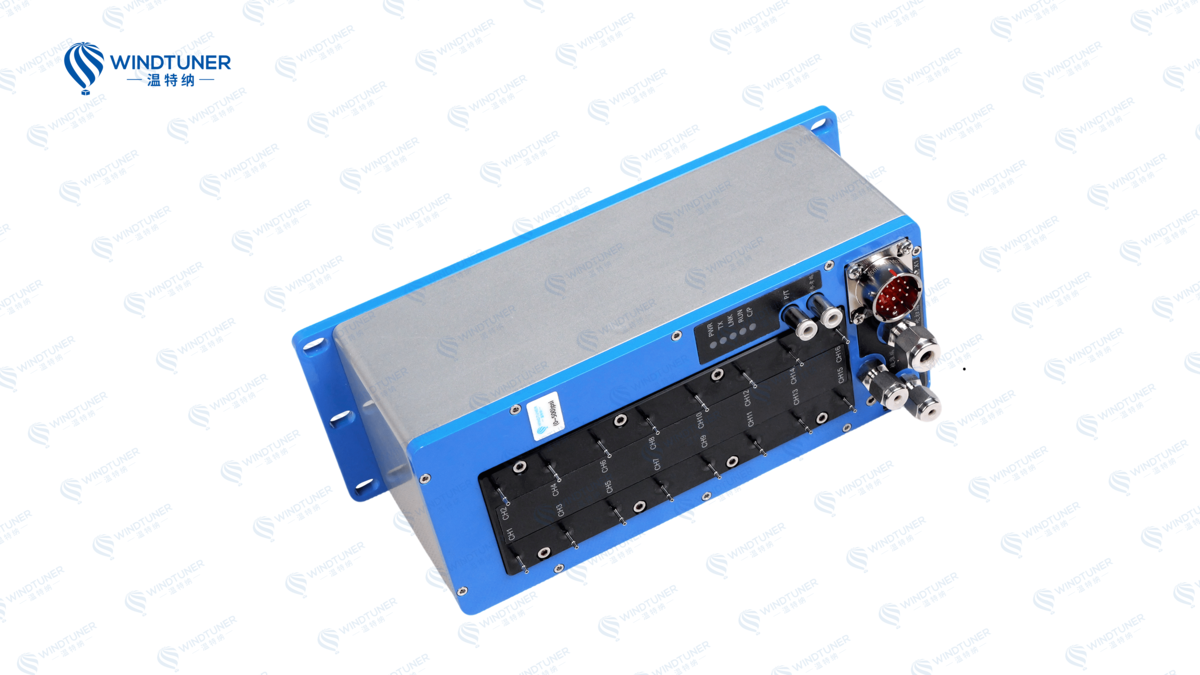
Windtuner's Ethernet Intelligent Pressure Scanner
A/D conversion runs at 24-bit resolution. Sampling frequency goes up to 500 Hz, and the engineer picks whatever rate the test demands. A low-speed calibration check works fine at 10 Hz. A transient blowdown that needs 200 Hz or more falls within the same hardware range. Software trigger, hardware trigger, and timed trigger modes cover most sequences a compressor facility runs on a normal week.
Calibration That Stays Accurate
Windtuner rates the accuracy at ±0.05% FS from 0 to 60 degrees Celsius, with an extended option down to minus 30. The reason that number holds up is the calibration architecture inside the unit. Internal zero calibration, full-scale calibration, and multi-point calibration all run without pulling the scanner off the bench. An engineer working through a multi-day compressor campaign can check zero drift between runs and keep going. No trip to the metrology lab required.
Before Windtuner clears any pressure scanner for production, the unit goes through 10,000-plus hours of durability testing. Every scanner carries CE certification and gets validated in Windtuner's own CNAS-accredited calibration wind tunnel, the first private facility in China to earn that accreditation. Total temperature error stays within ±0.001%FS per degree Celsius, and that matters when the test section heats up during a long blowdown day.
Synchronized Acquisition Across the Rig
IEEE 1588V2-2008 Precision Time Protocol support is what separates Windtuner pressure scanners from most devices in this price range. When a test requires pressure data time-stamped to the same clock as the motion controller and the flow visualization system, PTP handles that alignment without custom wiring or external sync boxes. The scanner stamps each sample with a time code, which makes post-processing straightforward when multiple data systems need merging into one time base.
Firmware updates arrive over the network. No pulling units from the rack for a software patch. Windtuner ships replacement scanners on short lead times and provides after-sales support that actually responds, because a scanner stuck in a shipping crate during a two-week test window costs real money and delays the whole program.
Windtuner ethernet pressure scanners give test engineers the channel count, the calibration flexibility, and the time synchronization that real test programs depend on. That is the standard Windtuner holds itself to, and it is the performance every client expects from a pressure measurement partner.
When a wind tunnel runs a compressor map at three different Mach numbers in a single afternoon, the pressure scanner sitting on the rack needs to do two things: collect every channel without dropping samples, and report numbers the engineering team can sign off on. Windtuner built the Ethernet Intelligent Pressure Scanner around those two practical requirements from the start.
Sixteen Channels, One Network Cable
Each Windtuner ethernet pressure scanner integrates sixteen calibrated pressure sensor modules into a single compact unit. The whole system talks over TCP/IP and UDP, so installing one on a test bench means running a single Ethernet cable. Need more channels? Windtuner pressure scanners support daisy-chain configurations through WTN-TX-M communication modules. A rig running 48 or 64 channels does not need 48 separate data lines. On the pneumatic side, a 2U15-channel connector (WTN-TX-1501) keeps tubing organized well enough that a technician can trace every line before a test starts.
A/D conversion runs at 24-bit resolution. Sampling frequency goes up to 500 Hz, and the engineer picks whatever rate the test demands. A low-speed calibration check works fine at 10 Hz. A transient blowdown that needs 200 Hz or more falls within the same hardware range. Software trigger, hardware trigger, and timed trigger modes cover most sequences a compressor facility runs on a normal week.
Calibration That Stays Accurate
Windtuner rates the accuracy at ±0.05% FS from 0 to 60 degrees Celsius, with an extended option down to minus 30. The reason that number holds up is the calibration architecture inside the unit. Internal zero calibration, full-scale calibration, and multi-point calibration all run without pulling the scanner off the bench. An engineer working through a multi-day compressor campaign can check zero drift between runs and keep going. No trip to the metrology lab required.
Before Windtuner clears any pressure scanner for production, the unit goes through 10,000-plus hours of durability testing. Every scanner carries CE certification and gets validated in Windtuner's own CNAS-accredited calibration wind tunnel, the first private facility in China to earn that accreditation. Total temperature error stays within ±0.001%FS per degree Celsius, and that matters when the test section heats up during a long blowdown day.
Synchronized Acquisition Across the Rig
IEEE 1588V2-2008 Precision Time Protocol support is what separates Windtuner pressure scanners from most devices in this price range. When a test requires pressure data time-stamped to the same clock as the motion controller and the flow visualization system, PTP handles that alignment without custom wiring or external sync boxes. The scanner stamps each sample with a time code, which makes post-processing straightforward when multiple data systems need merging into one time base.
Firmware updates arrive over the network. No pulling units from the rack for a software patch. Windtuner ships replacement scanners on short lead times and provides after-sales support that actually responds, because a scanner stuck in a shipping crate during a two-week test window costs real money and delays the whole program.
Windtuner ethernet pressure scanners give test engineers the channel count, the calibration flexibility, and the time synchronization that real test programs depend on. That is the standard Windtuner holds itself to, and it is the performance every client expects from a pressure measurement partner.