
Pressure Scanners in Testing and Synchronization
Measurement Bottlenecks
CFD can now explore thousands of blade geometries in weeks. But those predictions still need validation against physical reality, and that validation happens in the test cell. The problem is that traditional pressure measurement systems were built for steady-state characterization, not the transient, multi-dimensional flow mapping that modern engine programs actually require.
Take a typical compressor stage test in which we need to install five-hole probes at multiple radial and circumferential positions to map the three-dimensional velocity field downstream of the rotor. Each probe connects to a pressure scanner at 500 Hz or higher to capture blade-passing frequency. All channels in this scanner must be time-synchronized within microseconds so that transient pressure oscillations correlate meaningfully across the array.
Serial or proprietary bus architectures connecting scanners to a central acquisition system were fine when channel counts stayed in the single digits. They introduce latency now, cap scalability, and make it painful to scale beyond a few dozen channels. Modern test facilities need a measurement architecture that grows with the complexity of what is being measured, keeps all channels on a common clock, and delivers data with traceability to recognized standards.
Ethernet is the Foundation of Synchrony
Migrating pressure scanners to TCP/IP and UDP/IP networks gave test facilities a scalability and timing precision that older architectures simply could not provide. The IEEE1588 Precision Time Protocol, now embedded in leading pressure scanners, distributes a common clock over standard Ethernet, synchronizing all acquisition channels to within microseconds.
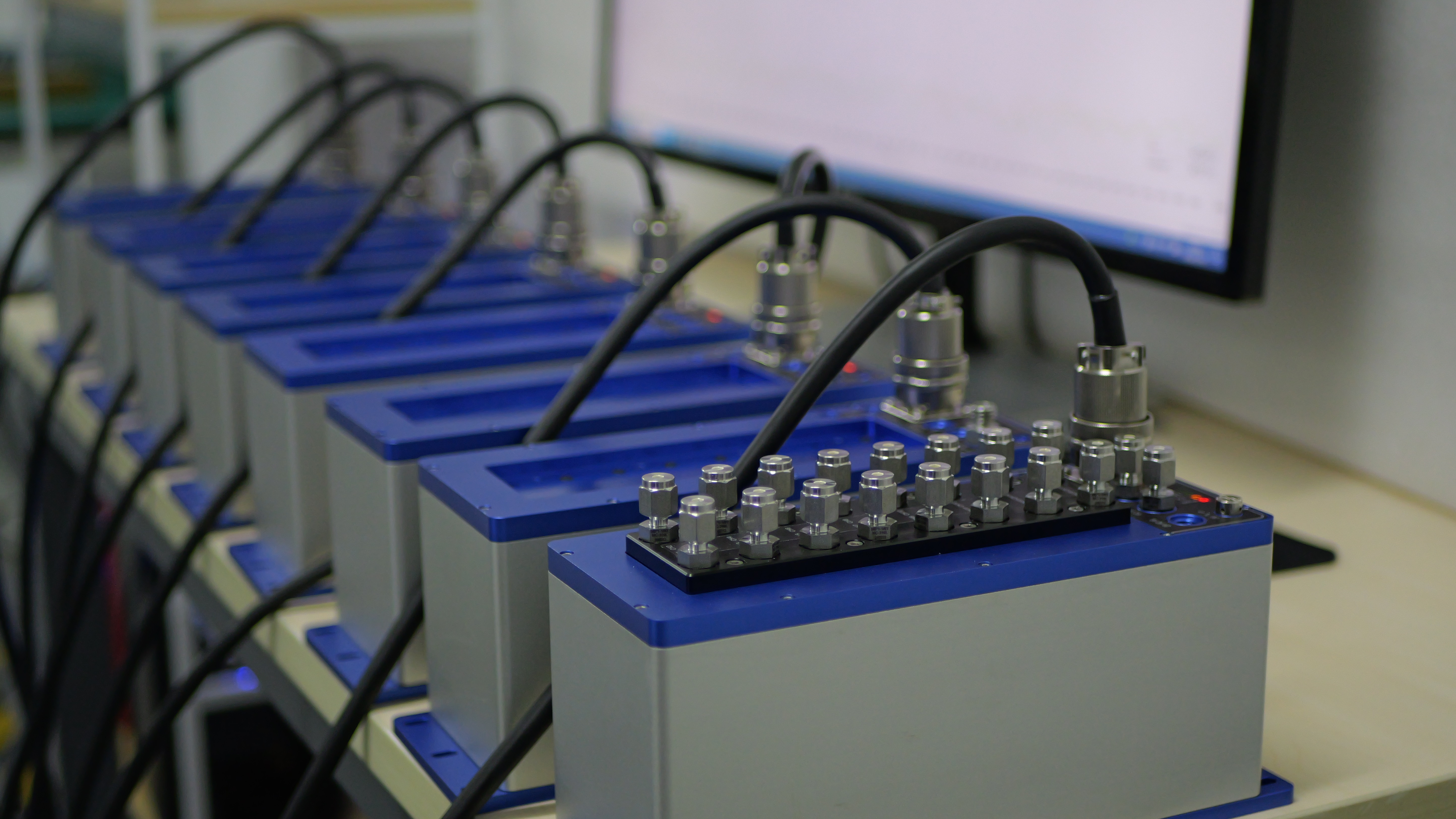
Windtuner's Ethernet Intelligent Pressure Scanner delivers accuracy of ±0.05% FS across 16 channels, with 24-bit A/D resolution and sampling rates up to 500 Hz per channel. IEEE1588V2-2008 support timestamps every data point against a common clock for transient analysis across distributed probe arrays. A built-in pneumatic valve system runs zero and full-scale calibration on its own, eliminating a significant operational bottleneck during multi-run test campaigns.
The practical effect is straightforward. A test facility deploys multiple Windtuner pressure scanners on a single Ethernet network, acquires synchronized data from 50+ channels simultaneously, and processes flow field maps in real time. What used to require custom integration and proprietary software now runs on standard network infrastructure.
Multi-Hole Probes: Manufacturing Matters
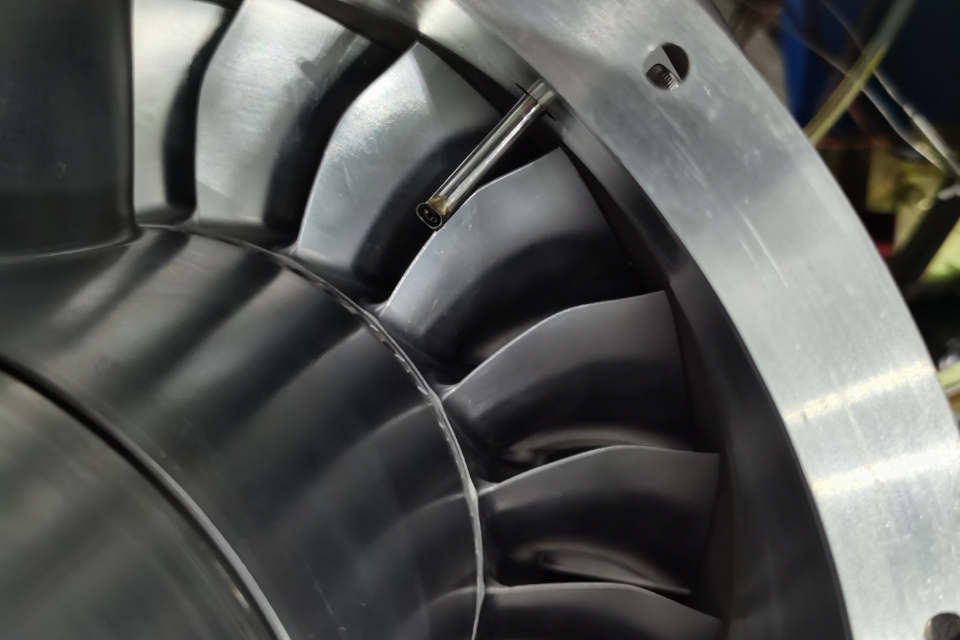
The probe sits at the front end of any flow measurement system. Its quality determines the quality of everything downstream. Windtuner manufactures five-hole probes, seven-hole probes, and custom multi-hole geometries using micron-level additive manufacturing, producing probe heads with hole-position accuracy that traditional machining cannot reliably match.
The difference shows up in demanding applications. A seven-hole probe measuring three-dimensional flow in a compressor blade passage needs precise hole placement so that calibration curves stay orthogonal and the probe's sensitivity to flow angle stays uniform. Machined probes, limited by cutting tool geometry, often carry asymmetries that hurt measurement quality. 3D-printed probes can be optimized for aerodynamic performance without those compromises.
The numbers from Windtuner's own testing back this up. Angular calibration curves are more consistent, with higher sensitivity and better orthogonality between calibration points. For probes with the same external dimensions, machined versions deform at 340 N while 3D-printed probes hold until 900 N. That is a 2.6x improvement in structural strength, and it matters in high-velocity rotor wakes where probe deflection would otherwise degrade data quality. The manufacturing process also shortens the path to custom geometries. Engineers testing novel blade row configurations or working in compact internal flow paths can get purpose-built probes instead of adapting off-the-shelf designs that were never intended for that application.
Calibration That Carries Weight
Measurement tools earn trust when their results trace back to recognized standards. Windtuner operates three CNAS-accredited wind tunnel laboratories covering supersonic, subsonic, and low-speed calibration environments, which means the company can calibrate scanners and probes across the full range of conditions clients encounter in the field.
Every Windtuner pressure scanner goes through 10,000+ hours of durability testing before mass production. Every probe ships with calibration documentation that traces the measurement chain from sensor to published result. When a research institution or OEM folds Windtuner data into a design qualification package, that calibration record backs every number in it.
WindLabX: From Raw Numbers to Flow Maps
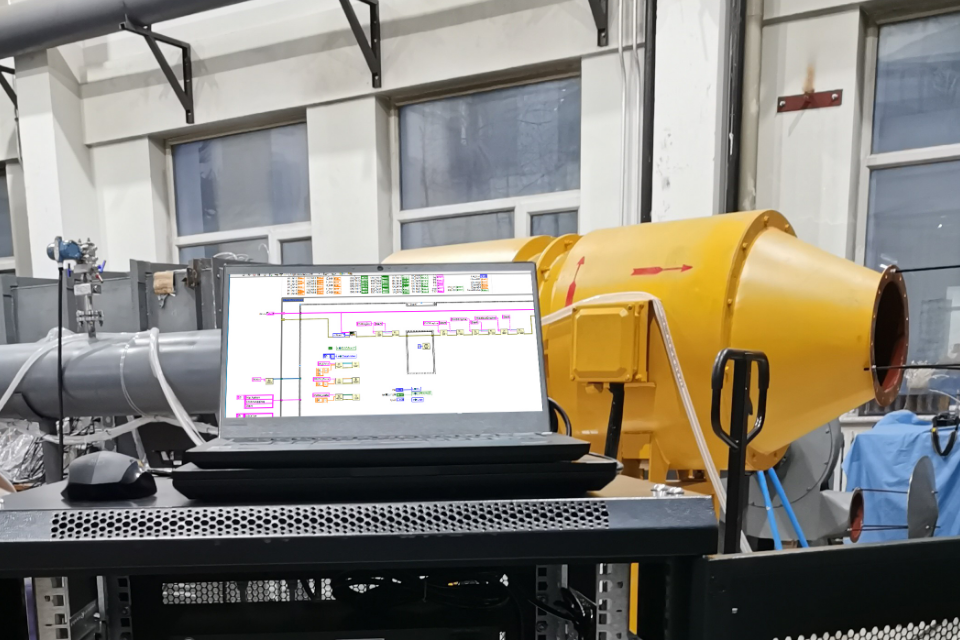
Hardware collects the data. Software makes it usable. Windtuner's WindLabX measurement and control software runs probe calibration routines per JJG875-2019 metrology standards, manages data acquisition from networked scanners, and generates flow field maps from raw multi-point pressure data. The distributed architecture supports multiple scanners on a single network, so test facilities can scale channel count without rethinking their data systems. Real-time flow field mapping turns raw pressure data into visual representations that engineers can act on immediately, shortening the loop between test execution and design decisions.
What Measurement Integration Actually Buys
Turbomachinery development has always rewarded organizations that measure well. Windtuner's pressure scanners, multi-hole probes, and WindLabX software give research teams the tools to get better data and trust what they get. The company's expansion into the US and European markets reflects a straightforward reality: advanced measurement infrastructure is no longer optional for any organization developing high-performance turbomachinery. Engine designs are pushing toward higher pressure ratios, higher temperatures, and tighter tolerances, and the margin for error in aerodynamic characterization keeps shrinking.
CFD can predict thousands of designs. Physical testing validates them. The organization that measures most intelligently, not most extensively, is the one that wins. Windtuner's approach to pressure measurement, probe design, and data analysis is built around that idea.