
Engine testing produces two kinds of data that do not work in isolation. A compressor map needs total pressure ratios, but those ratios mean nothing without the corresponding total temperature at each station. Windtuner pressure scanners and total temperature probes run on the same measurement chain, capturing both quantities with the timing alignment and accuracy that engine test cells demand.
Why Temperature and Pressure Cannot Be Measured Apart
In a gas turbine, total temperature and total pressure define the thermodynamic state at every stage. The compressor designer needs the temperature rise across each rotor to calculate efficiency. The turbine analyst needs the pressure drop across each stator to verify expansion ratios. These measurements come from different sensors. Total temperature probes read thermal state; pressure scanners read aerodynamic state. Both must arrive at the same timestamp or the efficiency calculation falls apart. A pressure scanner reading ±0.05% FS and a total temperature probe calibrated to the same wind tunnel standard give engineers data they can combine directly.
The Hardware Chain Behind the Data
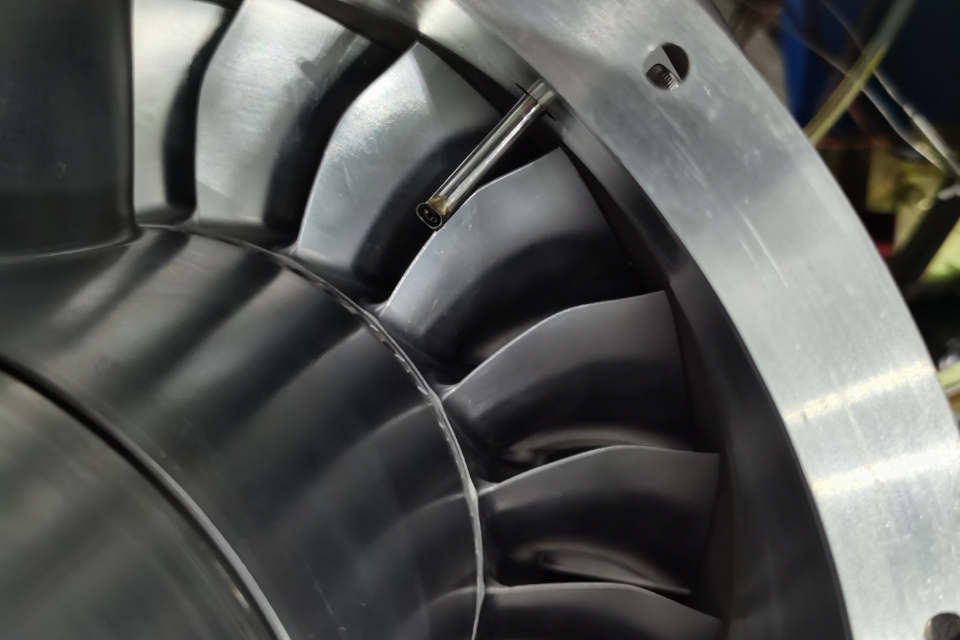
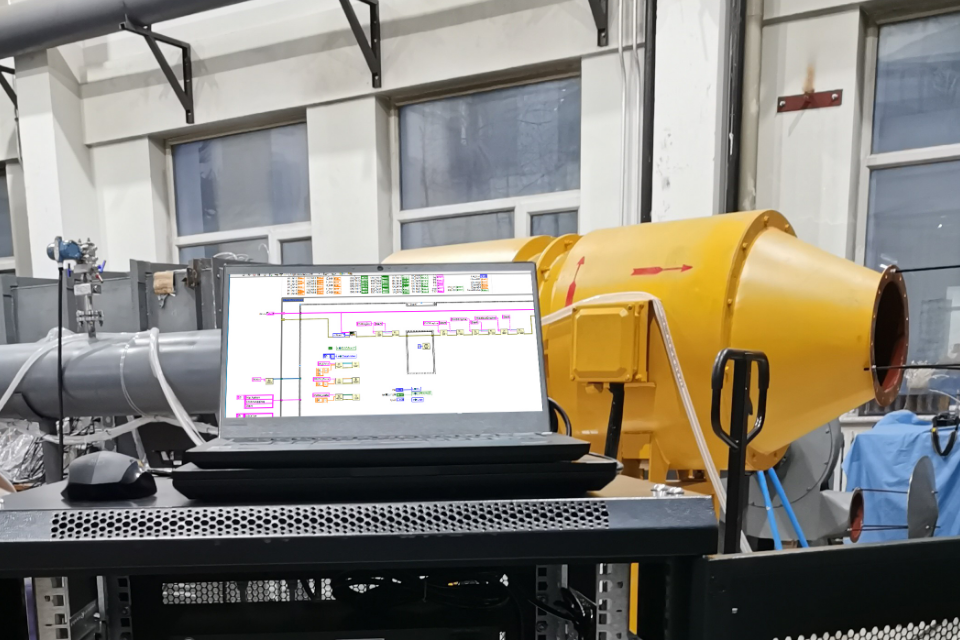
Windtuner manufactures the full sensor set. Our total temperature probes use stainless steel and high-temperature alloy construction to survive the thermal environment inside an engine test rig. Each pressure scanner module runs 16 channels at 500 Hz. IEEE 1588V2 locks every temperature reading to its matching pressure sample. The WTN-TX-M module streams both datasets through one Ethernet backbone. The test cell sees unified data, not two disconnected feeds. That integration matters on tight schedules. When multiple operating points stack into one day, the team has no time to realign data files afterward.
Calibration That Validates Both Measurements
Every probe and scanner ships with calibration data from Windtuner wind tunnel laboratories, accredited by CNAS. Total temperature probes undergo recovery characteristic calibration in subsonic and supersonic calibration wind tunnels. Pressure scanners receive zero-point and full-scale calibration on the same pneumatic valve systems, with multi-point checks where needed. Both sensor types pass through the same calibration infrastructure. The test engineer knows the temperature and pressure datasets share one metrological foundation. The 24-bit A/D resolution in the pressure scanner and the matched calibration certificates for the temperature probes cut the uncertainty that comes from mixing instruments from different vendors.
Scaling From Component Rigs to Full Engine Tests
Component tests start with a single total temperature probe behind a compressor stage and a few pressure taps on the casing. As the program matures, the test matrix expands into multi-stage rigs with rake arrays measuring temperature and pressure profiles across the annulus. Windtuner designed the modular architecture for this progression. A single pressure scanner module adds 16 pressure channels, and total temperature probes mount on the same rake hardware. The system grows without requiring a new data acquisition architecture at every milestone. Whether the test is a single compressor map or a full engine inlet distortion survey, the chain runs the same way.
For clients running engine performance maps, stage matching analysis, or inlet distortion characterization, the practical challenge is never the individual sensor. It is the integration. Windtuner pressure scanners and total temperature probes solve that challenge by running on one chain — one time base, one calibration standard, one data stream. The hardware delivers both thermal and aerodynamic data with the accuracy and synchronization that engine tests require.