
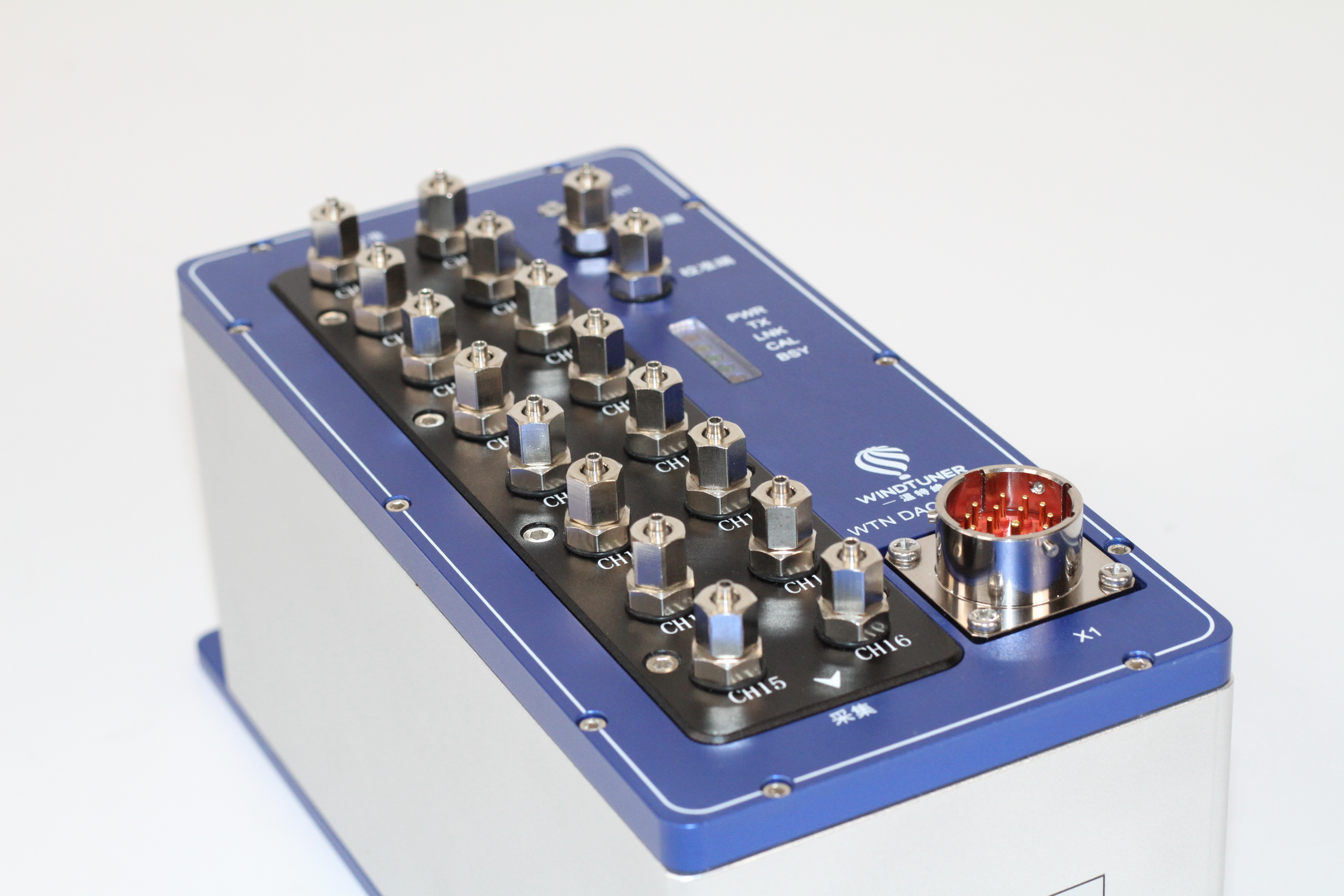
Our Pressure Scanner with 16 High Accuracy Channels
The Functionality of Pressure Scanners
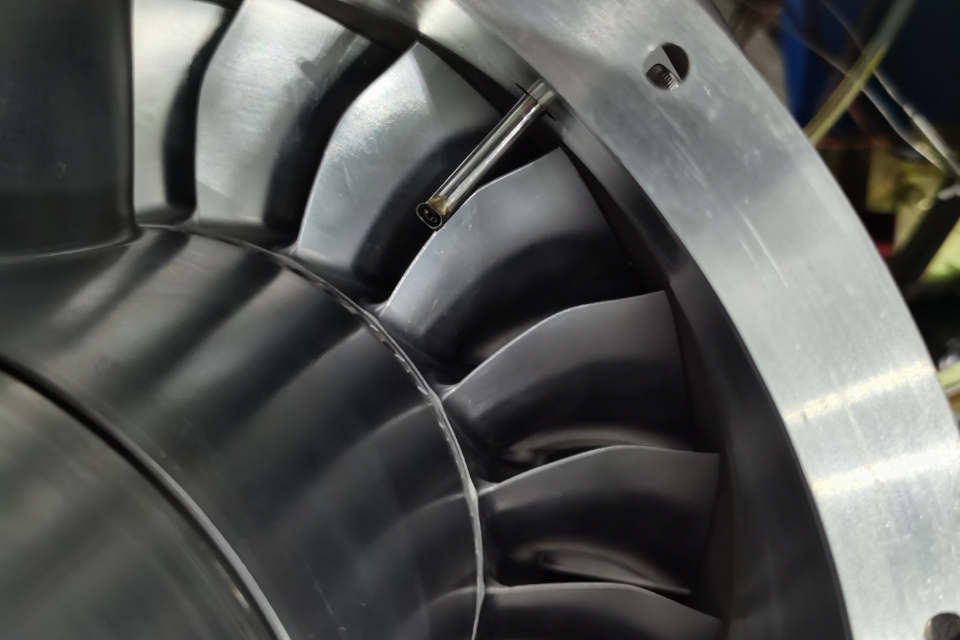
A pressure scanner integrates multiple pressure sensors into a single enclosure, each channel connected to a measurement port on a probe or test article. When paired with a five-hole or seven-hole probe, the scanner measures the pressure distribution across the probe tip, from which flow angle, velocity magnitude, and static pressure can be calculated. The result is a three-dimensional velocity field at the measurement plane, the result of many probes installed in key points and connected to pressure scanners.
Flow fields in practical engineering applications are not uniform. Pressure varies across a blade span, along duct walls, through rotor wakes. A scanner acquiring all channels at once captures that spatial structure in a single snapshot, avoiding the inconsistencies that pile up when measurements are taken one after another over time.
Important Key Specifications
Accuracy determines whether the data means anything. For serious aerodynamic work, ±0.05% FS is the baseline. That translates to 0.5 mbar on a 1000 mbar scanner—tight enough to resolve the small pressure gradients that define boundary layers and secondary flows.
Sampling rate sets the ceiling for what phenomena the scanner can actually see. Steady-state tests do not demand much. Transient flows do. Blade-passing pressure fluctuations, inlet distortion dynamics, unsteady separation events all happen over milliseconds. A scanner that cannot keep up with the physics will smear those features into noise.
Modularity has become an expectation rather than a luxury. Test requirements shift in channel count, pressure range, communication interface. Fixed configurations force compromises. Modular designs let engineers match the scanner to the test. Ethernet connectivity is now standard for the same reason: it simplifies multi-unit networks and plugs into existing data infrastructure without custom adapters.
Calibration infrastructure is the part nobody wants to think about but everyone has to. Sensors drift. Temperature coefficients shift. A scanner that met spec on delivery may not stay there unless recalibrated against a known reference. The practical question is whether that happens on-site, automatically, or whether the unit goes back to the manufacturer. Built-in pneumatic valve systems for zero and span calibration remove a real operational headache.
Durability is a function that shows value in the long run. Industrial test campaigns run for weeks. Engine test stands expose instruments to vibration, temperature swings, contamination. A scanner that works in the lab but dies in the field is a liability, not a piece of capital equipment.
Integration Into Test Systems
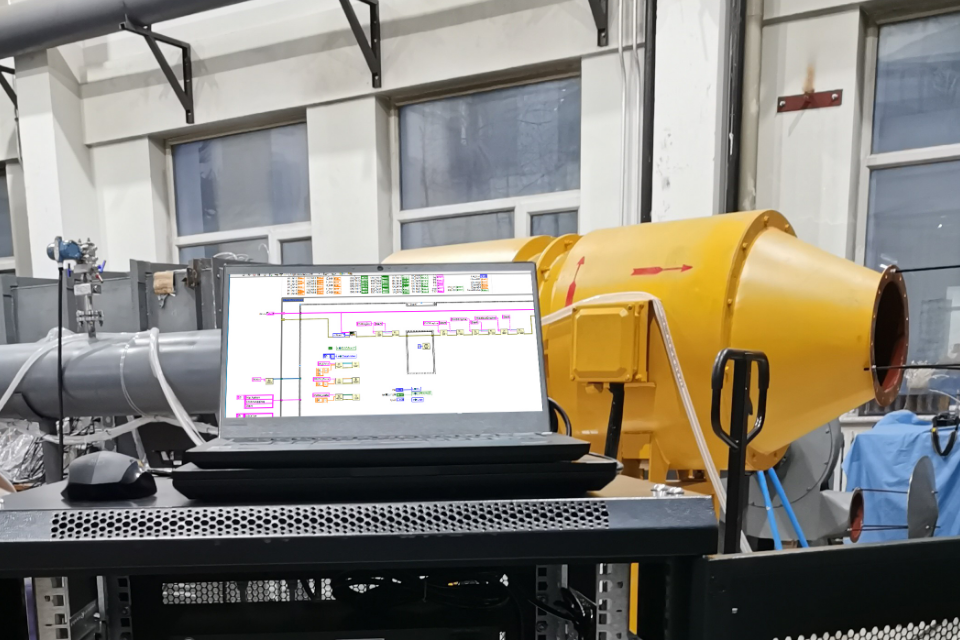
A pressure scanner is not isolated in the measurement system. It occupies the core position in a measurement chain: probes that sense the flow report to it, software coordinates its timing and movement, and analysis pipelines turn raw voltages into flow maps. The scanner's job is to collect synchronized readings from all probe ports and deliver them as time-aligned digital data.
Modern test systems employ full automation. Software commands actuators to move the probe through a pre-defined grid, triggers the scanner at each point, aggregates the results. For a complex geometry, that might mean thousands of individual measurements across multiple operating conditions, all without manual logging. The data volume grows, but so does repeatability.
The Market Landscape
Pressure scanners are a specialized instrument class. A handful of established manufacturers have supplied the field for decades. Newer entrants compete on cost, flexibility, integration support. The technical direction is not mysterious: higher channel counts, faster sampling, tighter synchronization, better software compatibility.
What has shifted is buyer expectations. Sensor accuracy on a datasheet is no longer enough. Engineers evaluating a scanner want to know about calibration convenience, software ecosystem compatibility, long-term support, and whether the manufacturer can deliver custom configurations for non-standard applications.
The Practical Perspective
Pressure scanners are not glamorous equipment. They are infrastructure—the measurement backbone that makes modern aerodynamic development possible. When they perform to specification, they disappear into the workflow. When they fail or drift, the whole test campaign comes into question.
Engineering tolerances keep tightening. Test campaigns run longer, capture more channels, demand tighter accuracy. The scanners have to keep pace. For any organization doing serious flow measurement, the choice of scanner is not a peripheral procurement decision. It determines what the data is actually worth.