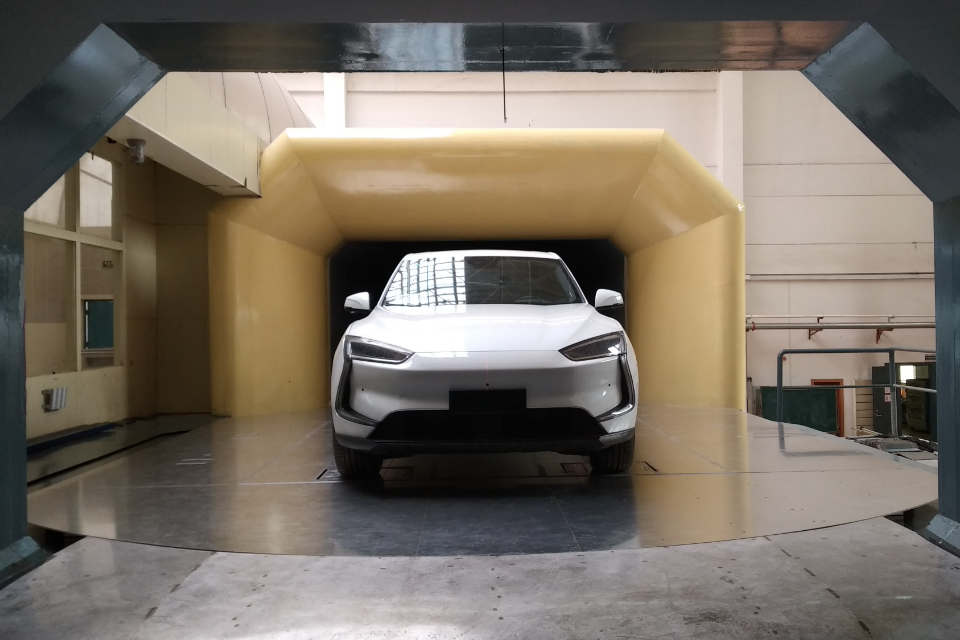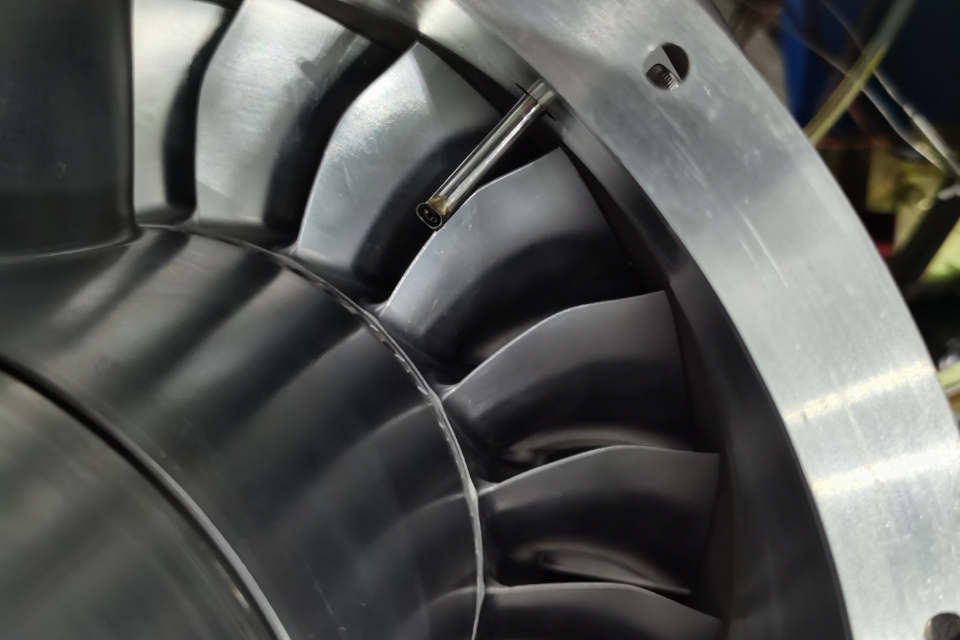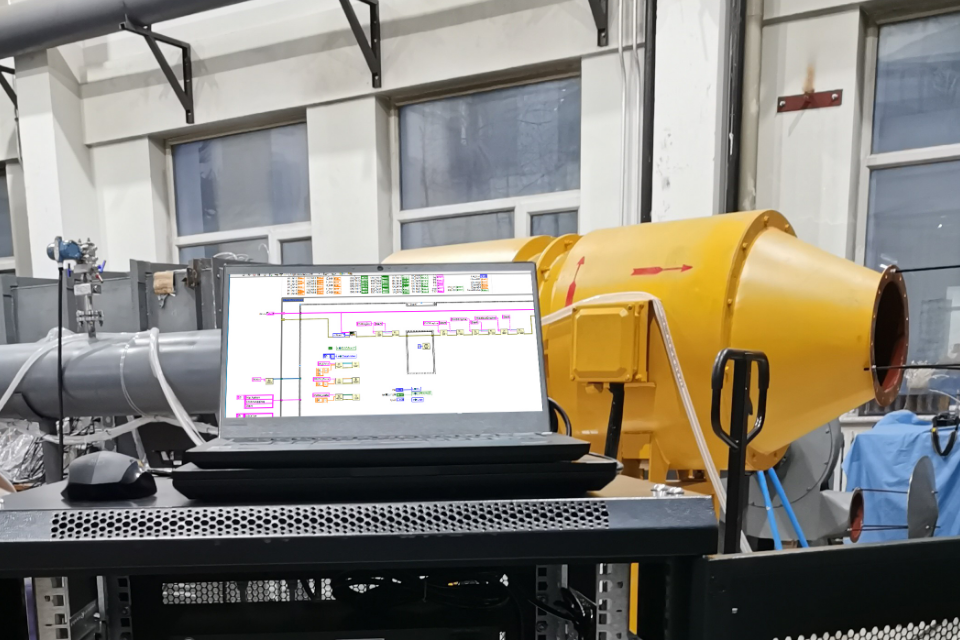

As a specialist in pressure scanner customization, Windtuner has developed a complete technical framework for multi-device operation. By combining Ethernet interfaces, standard 10/100M network switches, and dedicated dual-ended communication cables, Windtuner pressure scanners form an efficient measurement network that maximizes data throughput while maintaining long-term stability. This architecture supports large-scale testing tasks without sacrificing accuracy or reliability.
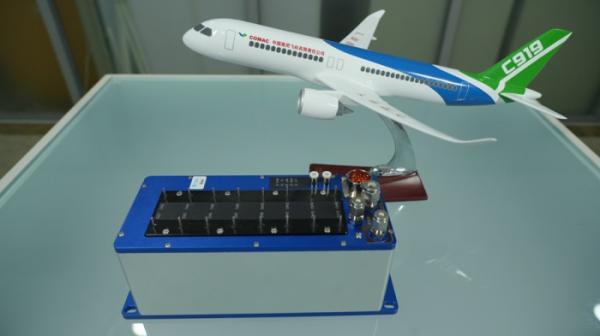
A Windtuner Ethernet Intelligent Pressure Scanner
Building an Efficient Measurement Network with Multiple Pressure Scanners
Windtuner pressure scanners connect to standard 10/100M Ethernet switches through integrated Ethernet interfaces, forming a star-topology measurement network. Each pressure scanner communicates directly with the switch, while the switch links the entire system to a central computer running measurement and control software. This structure streamlines device management and avoids the data conflicts and congestion often associated with traditional point-to-point connections.Ethernet communication has become the backbone of modern industrial and aerospace testing thanks to its high bandwidth, robustness, and wide compatibility. For pressure scanner systems that require high sampling rates and low latency, Ethernet delivers the performance needed to transmit large volumes of data in real time. This capability is especially critical in applications such as aerospace experiments, energy systems, and engine and gas turbine testing, where synchronized, high-frequency pressure data directly impacts analysis quality.
Dual-Ended Communication Cables for Seamless Device Integration
At the core of Windtuner’s multi-device solution is the dual-ended communication cable, designed to link pressure scanners with multi-channel connectors and auxiliary devices efficiently. One end of the cable connects directly to a Windtuner pressure scanner, while the other interfaces with Windtuner multi-channel connectors such as the WTN-TX-0701 or WTN-TX-1401. This configuration supports clean, reliable signal transmission across complex setups.The dual-ended design offers strong flexibility and scalability. Test engineers can configure multiple pressure scanners based on actual measurement requirements while maintaining stable communication across the network. The same cabling system supports different pressure scanner models, including devices comparable to PSI9216- and DSA3217-class scanners, allowing mixed configurations within a single measurement network. This adaptability is particularly valuable in large experimental platforms where different ranges, channel counts, or device generations must operate together.
From Laboratories to Industrial Test Sites
Windtuner’s multi-device pressure scanner connectivity scheme adapts naturally to a wide range of application scenarios. In aerospace testing, multiple pressure scanners operate in parallel to monitor distributed pressure points on aircraft or components, streaming data in real time for flight performance evaluation. In gas turbine and engine test benches, the same network architecture collects pressure data from multiple sections of the system, supporting detailed performance analysis and optimization.The solution extends seamlessly into wind tunnel experiments, automotive engine testing, and energy equipment monitoring. Once connected through the Ethernet switch, each pressure scanner delivers data to the host computer, where dedicated measurement and control software performs visualization, analysis, and storage. The result is a unified, efficient workflow that keeps complex tests manageable and repeatable.
Star Network Architecture for Stability and Expansion
Windtuner adopts a star network architecture as the foundation of its multi-device pressure scanner systems. With the network switch acting as the central node, each pressure scanner maintains an independent communication path to the computer. This design minimizes signal interference and data congestion, improving overall system stability compared with parallel or daisy-chain configurations.Scalability is another defining advantage. When test requirements grow, engineers can add new pressure scanners simply by connecting them to the existing network switch. The system expands without redesigning the entire setup, protecting prior investment while supporting future testing demands.
By integrating dual-ended communication cables, Ethernet interfaces, standard network switches, and multi-channel connectors, Windtuner delivers a robust multi-device connectivity solution for pressure scanners. Whether deployed in research laboratories or industrial test facilities, this architecture drives accurate data transmission, efficient device management, and straightforward scalability—providing clients with a dependable foundation for high-density pressure measurement tasks.