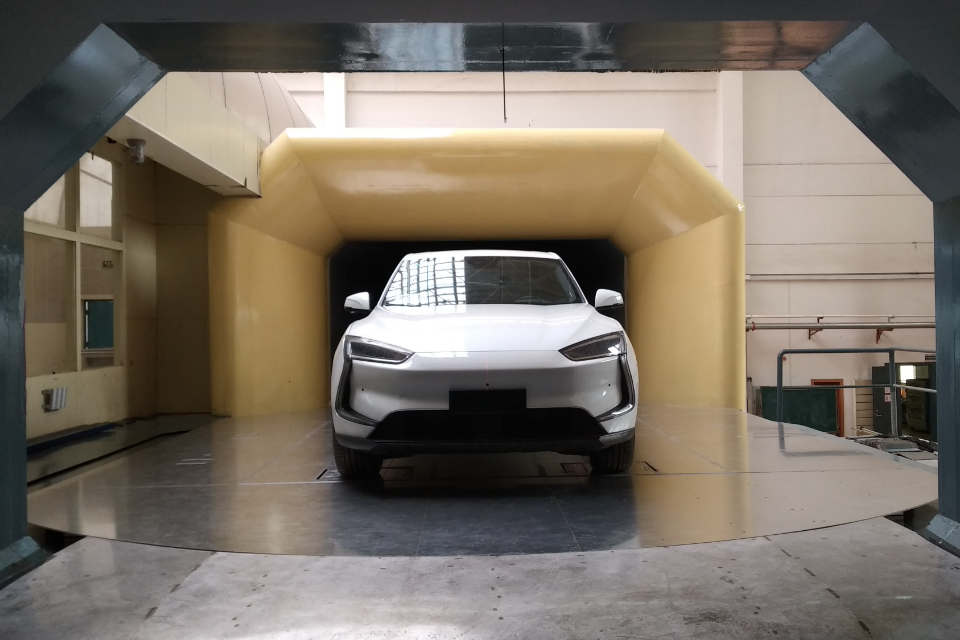
A wind tunnel is a ducted test facility that generates controlled airflow to simulate the way air moves around an aircraft or other object, allowing engineers to measure aerodynamic effects and observe physical phenomena. It remains one of the most widely used and effective tools in aerodynamic testing because the flow conditions can be controlled with precision. But a high-quality wind tunnel test depends on more than hitting the target airspeed or placing the model correctly. What matters even more is the uniformity of the wind tunnel exit plane: whether the velocity field, pressure field, and flow direction remain consistent and stable across the entire section. Exit-plane uniformity determines how trustworthy the test results are, and uniformity testing is the technical method used to verify that foundation. The pressure scanner is one of the key instruments in that process.
From an industry standpoint, wind tunnel uniformity testing is a required self-check before a tunnel is put into service and a routine verification item throughout operation, because it directly affects flow quality. In this context, uniformity means whether pressure distribution is consistent across the test section or exit plane under steady operating conditions, whether velocity variation remains under control, and whether flow angularity stays within allowable limits. If uniformity falls short, every downstream model test can be distorted, from lift, drag, and side-force measurements to vortex-structure assessment. That is why wind tunnel uniformity testing is not just a measurement technique; it is part of a broader engineering standard for reliability.
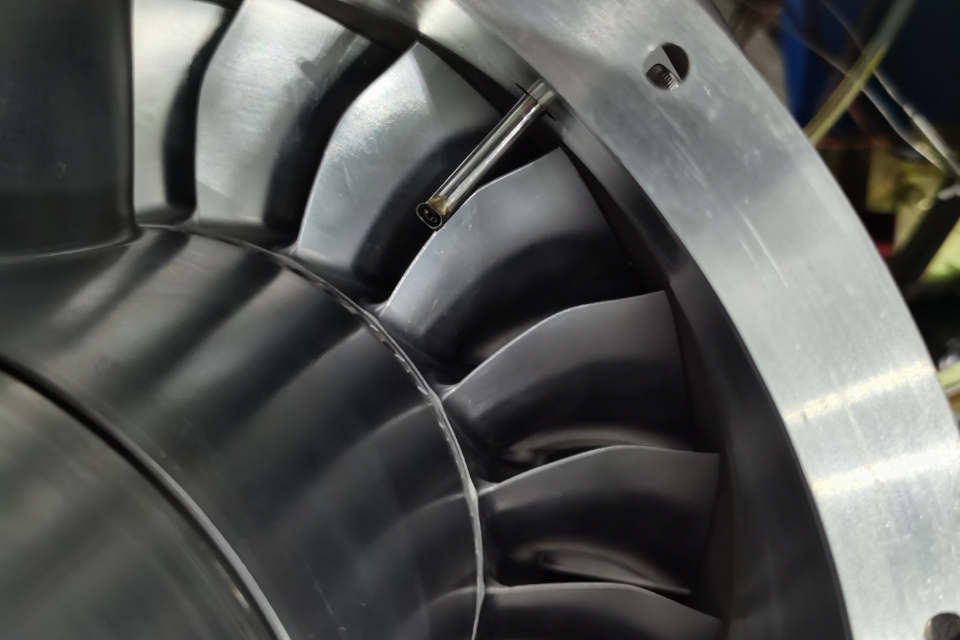
Uniformity testing inevitably involves pressure measurement, which is where the pressure scanner begins to show its value. Another commonly used instrument is the 5-hole probe, which can reconstruct flow velocity, angle of attack, and sideslip angle, in other words three-dimensional flow direction, from multi-port differential pressure signals. But the probe is only the sensing interface. To build a high-density, multi-point, high-accuracy data grid across the entire wind tunnel exit plane, you need a complete measurement system that is stable, repeatable, and calibratable, including the motion system, pressure scanning system, data acquisition system, and control system.
That is exactly where WINDTUNER brings its strengths in measurement and control. As one of the few companies in China with both wind tunnel measurement-and-control equipment R&D capabilities and a CNAS-recognized calibration system, WINDTUNER delivers a complete, engineering-ready solution for exit-plane uniformity testing, including 5-hole probes, high-precision electric displacement mechanisms, motion controllers, intelligent pressure scanners, and the WindLabX measurement and control software. Within this system, the pressure scanner plays the critical role of protecting pressure measurement accuracy.
Pressure Scanner: The Core Data Device in Uniformity Testing
In wind tunnel uniformity testing, the pressure scanner is responsible for acquiring the raw data for the pressure field, and those pressure signals ultimately determine the quality of the velocity and flow-direction results. In this type of test, the sensor layout, scan positions, and pressure range all place extremely high demands on the pressure measurement hardware. With high channel-to-channel consistency, +/-0.05% FS accuracy, automatic calibration, and a maintenance-free pneumatic switching system, WINDTUNER's intelligent pressure scanner has become one of the best-matched tools in the industry for wind tunnel uniformity testing.
In practical uniformity testing, the wind tunnel exit plane is scanned on a grid, for example a 21 x 21 matrix or even denser. That means the 5-hole probe must measure five pressure channels at every point, while the pressure scanner has to maintain data consistency through long-duration operation, frequent switching, and continuous sampling. WINDTUNER pressure scanners integrate 16 independent calibration pressure modules, each with EEPROM compensation, temperature correction, and linearity correction, so channel-to-channel sampling differences are removed at the system level and truly stable, synchronized output is achieved in real engineering use.
Humidity, fine dust, and changing test conditions in the wind tunnel can also cause drift in conventional pressure measurement equipment. WINDTUNER's scanner addresses this with three operating modes: RUN for normal acquisition, CAL for unified calibration to keep a common reference, and PURGE for clearing residuals from the tubing. This keeps the pressure channels in their best condition throughout the test. As a result, long-duration uniformity scans are far less vulnerable to environmental interference, and test engineers can work with repeatable, traceable data.
Just as important, uniformity testing typically requires large-scale positioning systems to stay synchronized with pressure data. WINDTUNER pressure scanners support hardware triggering, timed triggering, and the IEEE 1588 Precision Time Protocol, ensuring strict synchronization between pressure acquisition and axis position data and eliminating the problem of 'the position is right, but the data is out of sync.'
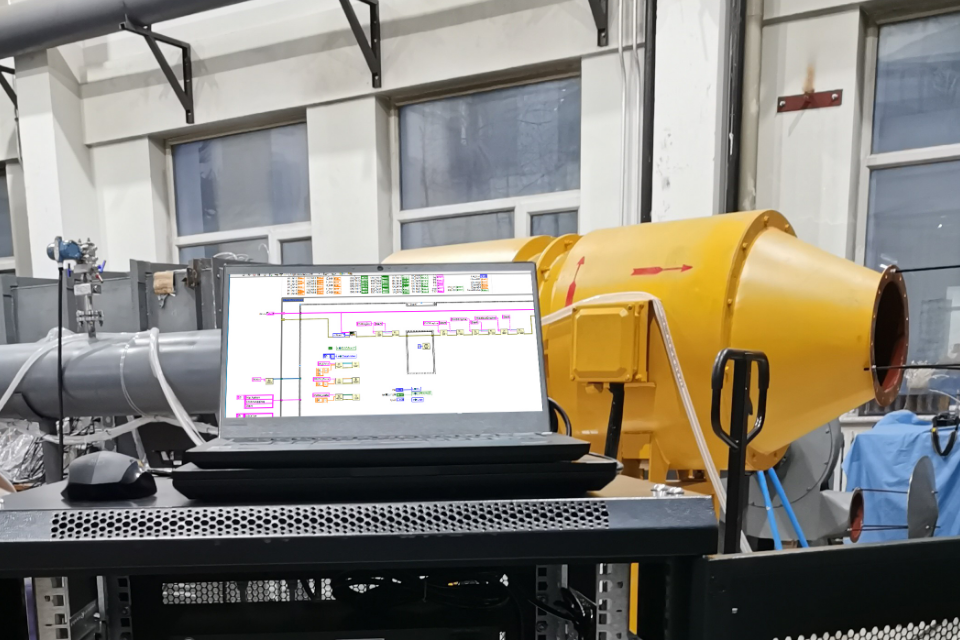
What WINDTUNER provides is not a single piece of hardware, but a fully deployable wind tunnel uniformity testing system that covers the entire flow-field measurement and control chain. Built around high-precision scanning of the pressure field, velocity field, and flow-direction field across the wind tunnel exit plane, the system uses 5-hole probes, high-precision electric displacement mechanisms, motion controllers, intelligent pressure scanners, and supporting data acquisition software to deliver a complete workflow from sensing, motion, acquisition, and reconstruction to visualization. The full solution can be used directly for post-construction acceptance testing, periodic uniformity verification, before-and-after comparison testing during wind tunnel retrofits, and airflow consistency evaluation under special operating conditions. It helps researchers solve long-standing challenges in wind tunnel laboratories, including consistency of accuracy, maintenance complexity, data synchronization, and system integration.
- Popular Tags:Five-Hole Probe Anemometercalibration wind tunnelWhat is the stability test of Ethernet Intelligent Pressure Scannerslow-speed wind tunnelfive-hole Probesairspeed probefive-Hole ProbeEthernet Intelligent Pressure Scanners Special Toolethernet pressure scannersethernet pressure scanners measurePressure ScannersEthernet Intelligent Pressure Scanners5-Hole Probes3D-Printed 5-Hole Probe7-Hole Probe
From 5-Hole Probes to Pressure Scanners: How WINDTUNER Solves the Core Challenge of Wind Tunnel Flow Uniformity Testing
11 May 2026

Keyword:
5-Hole Probes
Related recommendations:5-Hole Probes