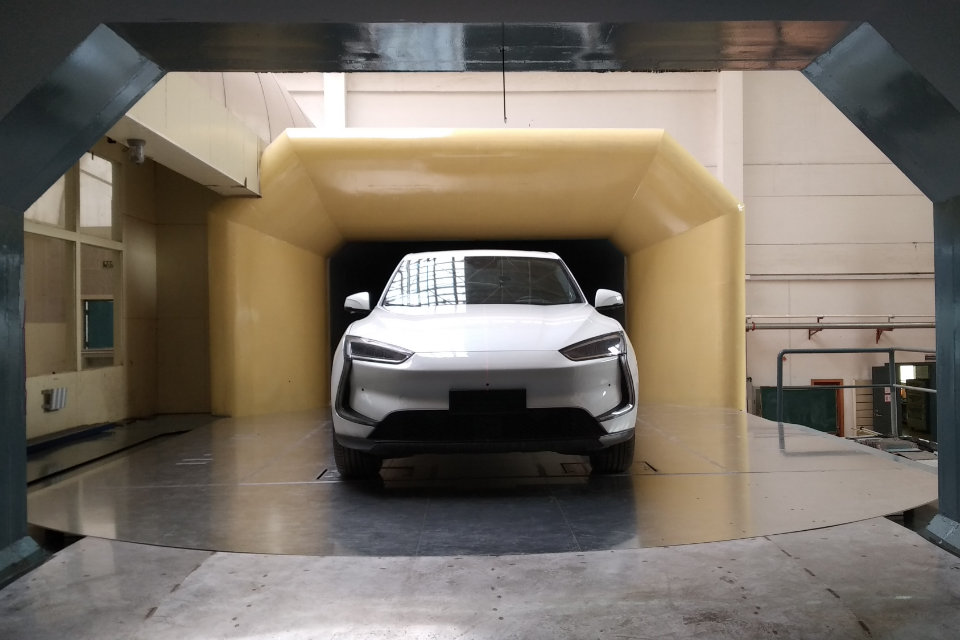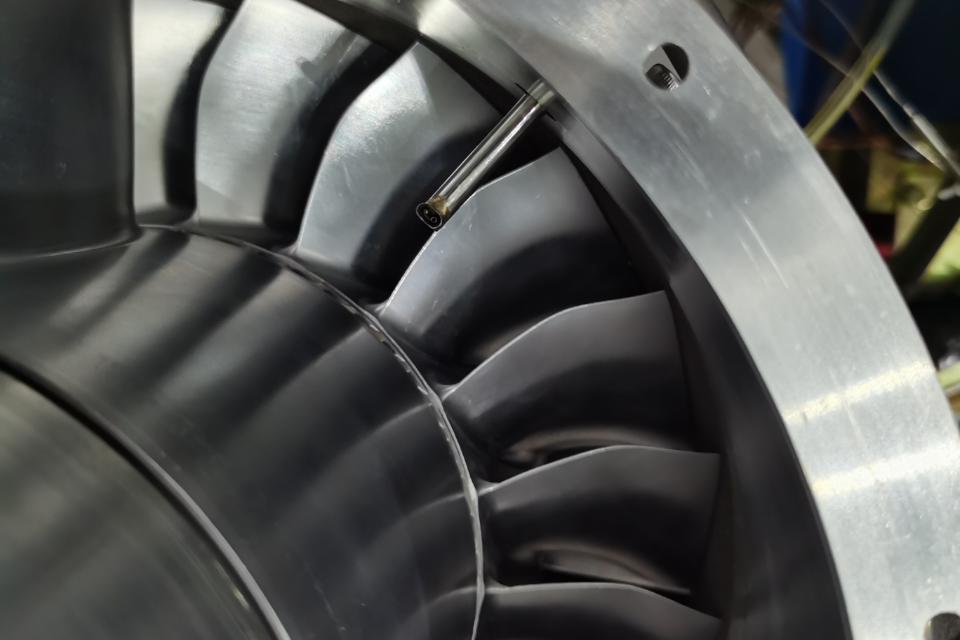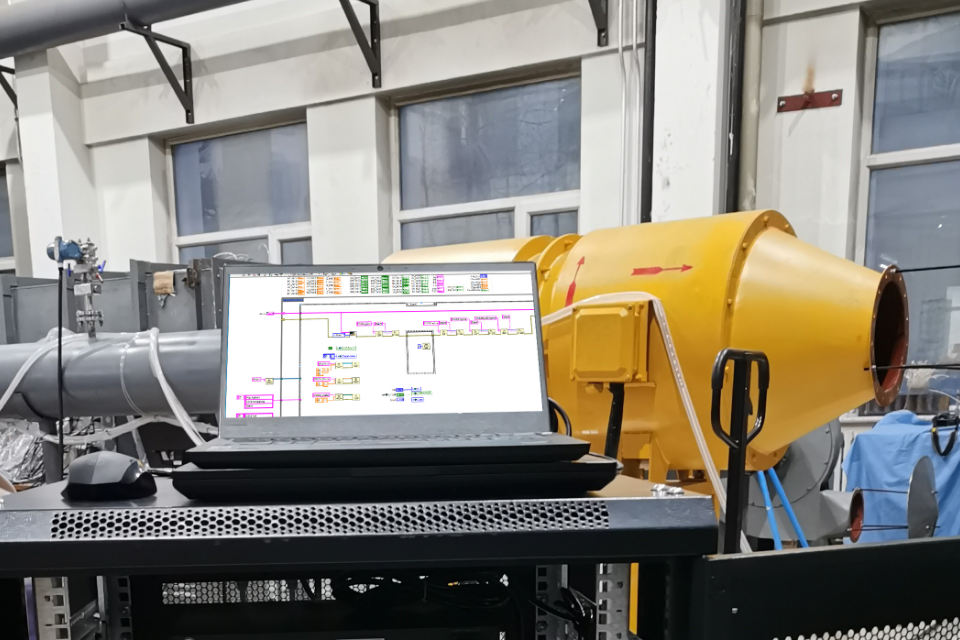

A five-hole probe can measure total pressure, static pressure, flow velocity, and the angles at which the flow turns up or down and left or right relative to the probe. It first senses pressure at separate ports. Those readings are then processed with wind tunnel calibration data to calculate the flow parameters. The five ports do not each measure a different parameter, and the five pressure readings alone are not the final result. For development tests that need local velocity and direction, the probe provides more information than a single pressure reading.
How the Five Ports Respond to Flow
A typical five-hole probe has a central port surrounded by four directional ports. As flow direction changes, the pressure distribution over the tip changes, altering the differences between the port readings. Calibration establishes how those differences relate to flow angle. During a test, measurement and control software uses the measured pressures and the relevant calibration data to calculate the flow direction relative to the probe.
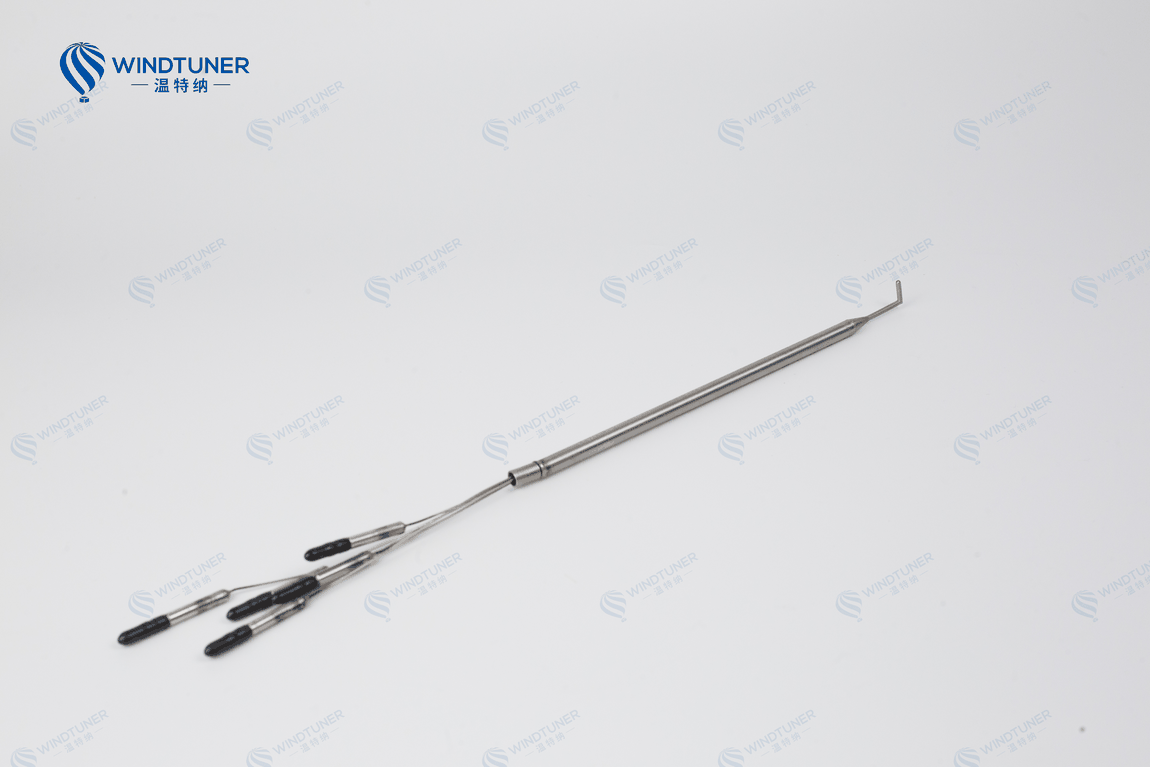
Tip geometry affects that response. Spherical and conical tips, for example, cannot simply share a calibration because they have the same number of ports. The central port provides information related to total pressure, but its reading may not equal the incoming total pressure when the flow is off-axis. The appropriate calibration method is still needed.
Tip geometry affects that response. Spherical and conical tips, for example, cannot simply share a calibration because they have the same number of ports. The central port provides information related to total pressure, but its reading may not equal the incoming total pressure when the flow is off-axis. The appropriate calibration method is still needed.
Using Total and Static Pressure to Calculate Velocity
Total and static pressure describe different pressure conditions in a flow. A five-hole probe uses the port readings and calibration relationships to calculate these values, then determines velocity using the gas conditions and an appropriate calculation method. The method must suit the test, including its velocity range and gas density. One simple formula will not cover every operating condition.
These parameters help engineers examine local flow when a test needs both pressure distributions and velocity comparisons between locations. In duct or turbomachinery development, for instance, measurements can show how the flow at a selected point changes with operating conditions. The probes discussed here are for product development and testing. They should be distinguished from five-hole differential pressure airspeed probes used on aircraft in flight.
These parameters help engineers examine local flow when a test needs both pressure distributions and velocity comparisons between locations. In duct or turbomachinery development, for instance, measurements can show how the flow at a selected point changes with operating conditions. The probes discussed here are for product development and testing. They should be distinguished from five-hole differential pressure airspeed probes used on aircraft in flight.
Two Angles Describe the Flow Direction
A five-hole probe normally measures flow angles in two perpendicular planes: up-and-down and left-and-right deflection relative to the probe. These are referred to here as flow angles, with the probe coordinates and mounting orientation providing the reference. Keep the coordinate definitions consistent when comparing tests. If the mounting orientation changes, account for that change when processing the data.
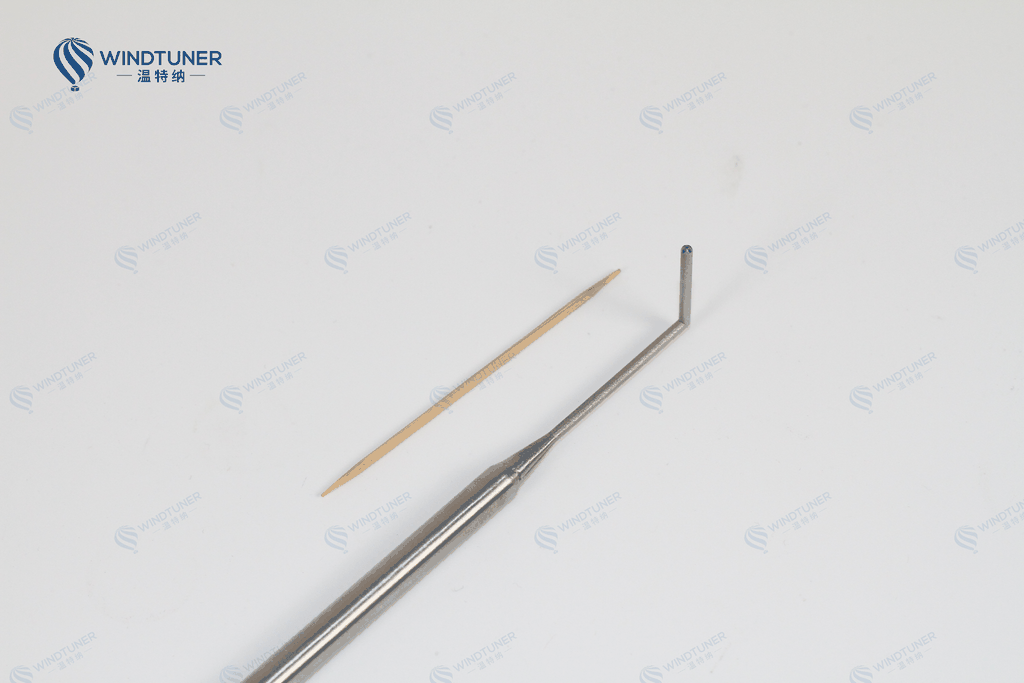
Velocity magnitude and the flow angles describe the local flow in the chosen coordinate system. A three-dimensional measurement at one point does not map the entire flow field. To examine the distribution across a test section, take measurements at multiple planned locations and associate each result with its position.
Velocity magnitude and the flow angles describe the local flow in the chosen coordinate system. A three-dimensional measurement at one point does not map the entire flow field. To examine the distribution across a test section, take measurements at multiple planned locations and associate each result with its position.
Match the Probe, Calibration, and Acquisition Equipment
WINDTUNER can customize five-hole probe materials, tip geometry, port diameter, stem length, and mounting arrangements, and provide wind tunnel calibration. The calibration range should cover the intended velocities and angles. In the test installation, check that the ports are clear, the tubing is sealed, and the acquisition channels correspond to the correct ports.
Pressure signals from a five-hole probe can be connected to a pressure scanner, with measurement and control software handling acquisition, processing, and recording. For measurements at different positions, a motorized traverse system and motion controller can also be used. The probe, calibration data, and acquisition configuration need to work together. A tip that fits the available space is only part of the setup.
When choosing a five-hole probe, start with the pressure, velocity, and direction data the test needs, then describe the operating conditions and installation space. WINDTUNER can use those requirements to discuss probe geometry, calibration coverage, and supporting acquisition equipment. A five-hole probe obtains local flow parameters from several pressure responses. Linking those parameters to the measurement locations makes them useful for development decisions.