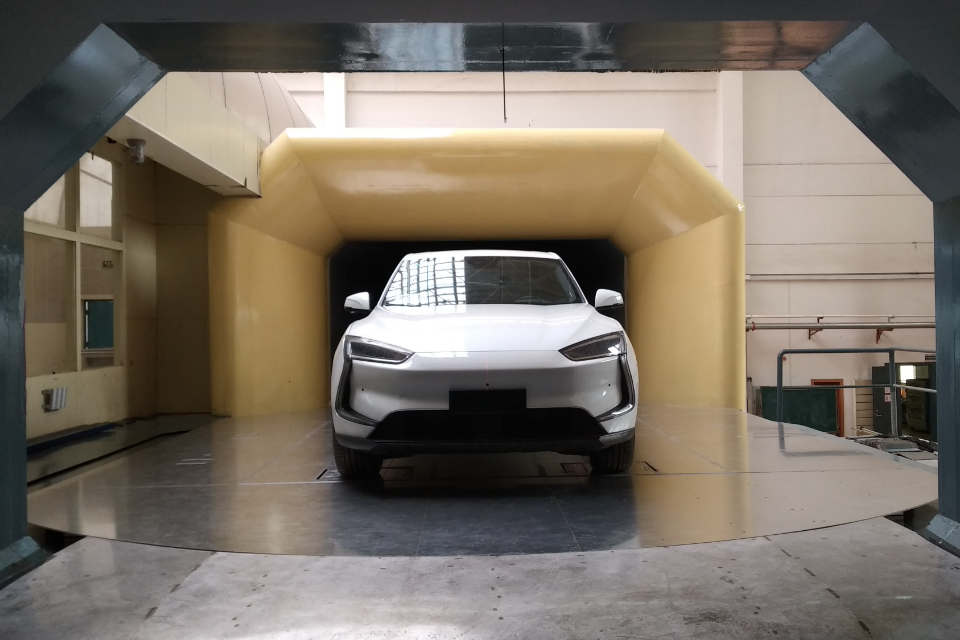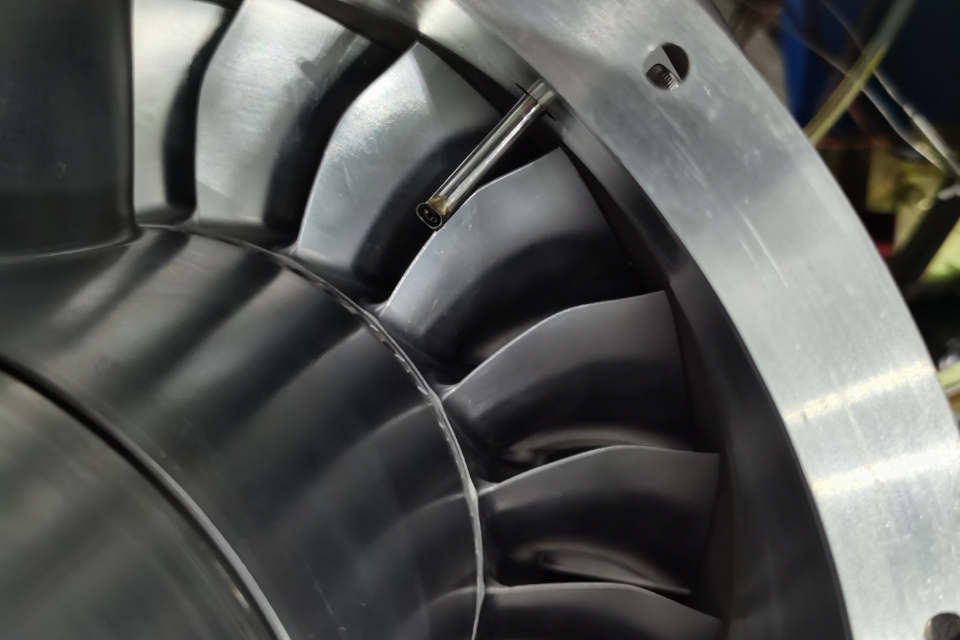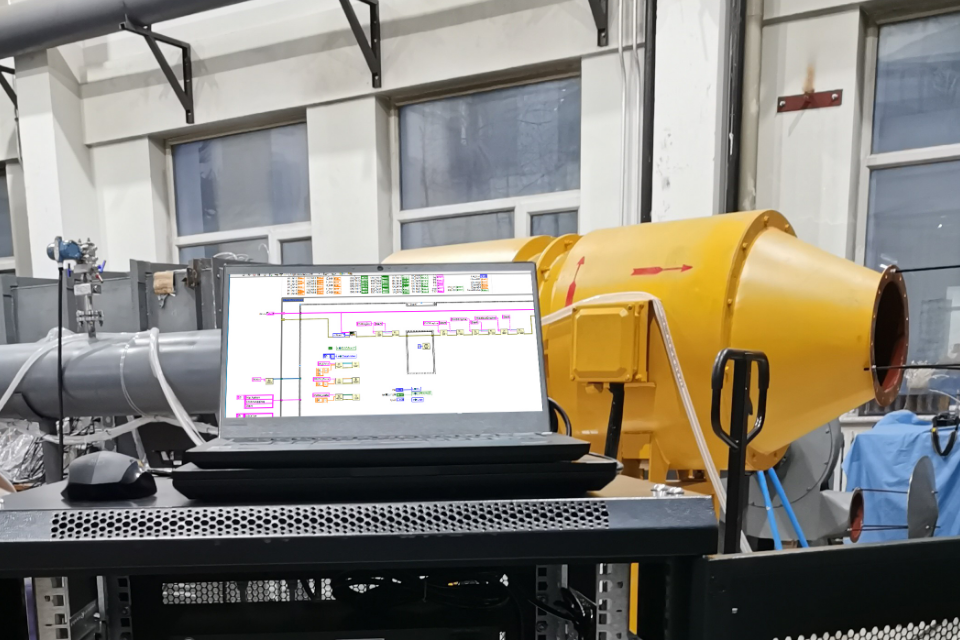

Aerospace engine development runs on data. Every compressor stage, every turbine blade passage, every inlet profile has to be validated against real pressure distributions before an engine can move from prototype to certification. WINDTUNER pressure scanner sit at the center of this process, converting physical pressure into digital data that engineers use to make design decisions. With ±0.05% FS accuracy across 16 channels per unit, these scanners give test teams the resolution they need to capture the pressure gradients that define engine performance.
Multi-Channel Acquisition for Compressor and Turbine Stages
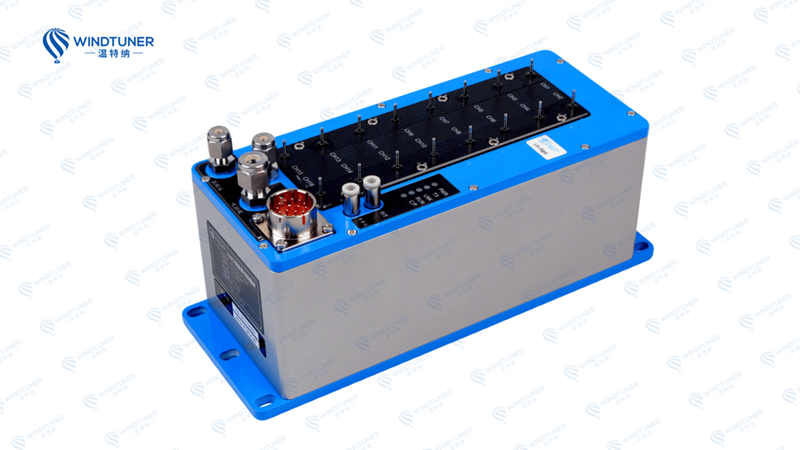
Engine test benches rarely run on a handful of pressure taps. A compressor test, for example, may need thirty or forty taps spread across the inlet, between stages, and at the exit plane — and they all have to record at once. WINDTUNER pressure scanner handle this through a modular setup. Each unit packs 16 calibrated sensor modules, and you can link multiple units over Ethernet to build a distributed system. The 24-bit A/D converters and the 0 to 500 Hz sampling range mean the same hardware can record steady-state pressures and short transients — no need to swap instruments mid-test.
Time alignment is where things get tricky. Once you have more than one scanner on the network, the pressure readings from different units have to share a common clock. WINDTUNER pressure scanner use IEEE 1588V2 precision time protocol for this. With it, every unit stays locked to the same time base, so when you reconstruct the flow field at a specific instant, the channels line up. Without that synchronization, you would be guessing at phase relationships between measurement planes — and those guesses show up in the data.
Pressure Scanner Performance in Inlet Distortion Testing
Inlet distortion testing is where scanner performance gets put to the test. These tests run during crosswind conditions, high-angle-of-attack maneuvers, and ground operations. The pressure field changes fast across both space and time, and a slow scanner will miss the pattern. WINDTUNER pressure scanner sample at 500 Hz per channel, which gives test teams enough temporal resolution to catch distortion signatures that a 50 Hz system would smooth out.
Compressor performance mapping is another application, and it works differently. Engineers mount multi-hole probes on a traverse and pull them through blade passages while the pressure scanner logs pressure at each point. The result is a 3D velocity field showing how the flow behaves inside the compressor. The ±0.05% FS accuracy of WINDTUNER pressure scanner means the pressure coefficients derived from this data carry the same uncertainty from run one to run hundred — you do not have to recalibrate your confidence in the numbers every time you change a test point.
WINDTUNER backs this accuracy with how it builds and ships the scanners. The scanners also carry CE certification, which matters for research labs and engine manufacturers working under European regulations. This is the kind of paperwork that does not make for exciting reading, but it is what makes the data defensible in an audit.
Building a Measurement System That Scales
Engine development programs rarely stand still. A test bench that starts with 32 channels today may need 128 channels next quarter as the program adds measurement planes. The modular design of WINDTUNER pressure scanner lets test teams expand channel count by adding units to the Ethernet network, with no rewiring of the acquisition backbone and no replacement of existing hardware. The built-in pneumatic valve system supports internal zero and full-scale calibration, so test teams can verify scanner performance between runs without disconnecting anything.
After the hardware delivers data, WINDTUNER WindLabX software turns raw pressure readings into mapped flow fields. The software interfaces directly with the scanners and with motion control systems, so probe traversal and data acquisition run as a single automated sequence. For engine test teams, this means less time spent on instrumentation setup and more time spent on the data that actually drives design decisions.
Engine R&D will keep pushing toward higher pressure ratios, tighter tolerances, and faster test cycles. WINDTUNER pressure scanner give engineers the acquisition hardware to meet those demands, accurate enough to trust, modular enough to scale, and calibrated against standards that hold up under audit.