
Windtuner's Wind Tunnel Laboratory
In advanced aerospace research, the limitations of wind tunnels reflect man’s ability to simulate extreme flow conditions. The HyperSpace Center of the University of Central Florida has just completed a hypersonic wind tunnel project:HADES. The new-constructed tunnel will be used to research hypersonic flight and propulsion, where shock waves, rapid pressure changes, and strong thermal effects dominate the flow field. Said environments need the combination of pressure sensors and airspeed probes under real flow conditions to validate pressure data, something that cannot be completed with CFD.
Also in the United States, Virginia Tech is using its Stability Wind Tunnel for international research collaboration programs, mainly to improve the correlation between wind tunnel testing and numerical simulation. In Minnesota, a new aerospace testing complex led by North Wind Test has received substantial public funding to support expanded wind tunnel and propulsion testing capabilities, targeting aerospace and defense applications. Such facilities rely heavily on calibrated pressure scanners and pressure probes, as aerodynamic performance assessments must withstand rigorous scrutiny.
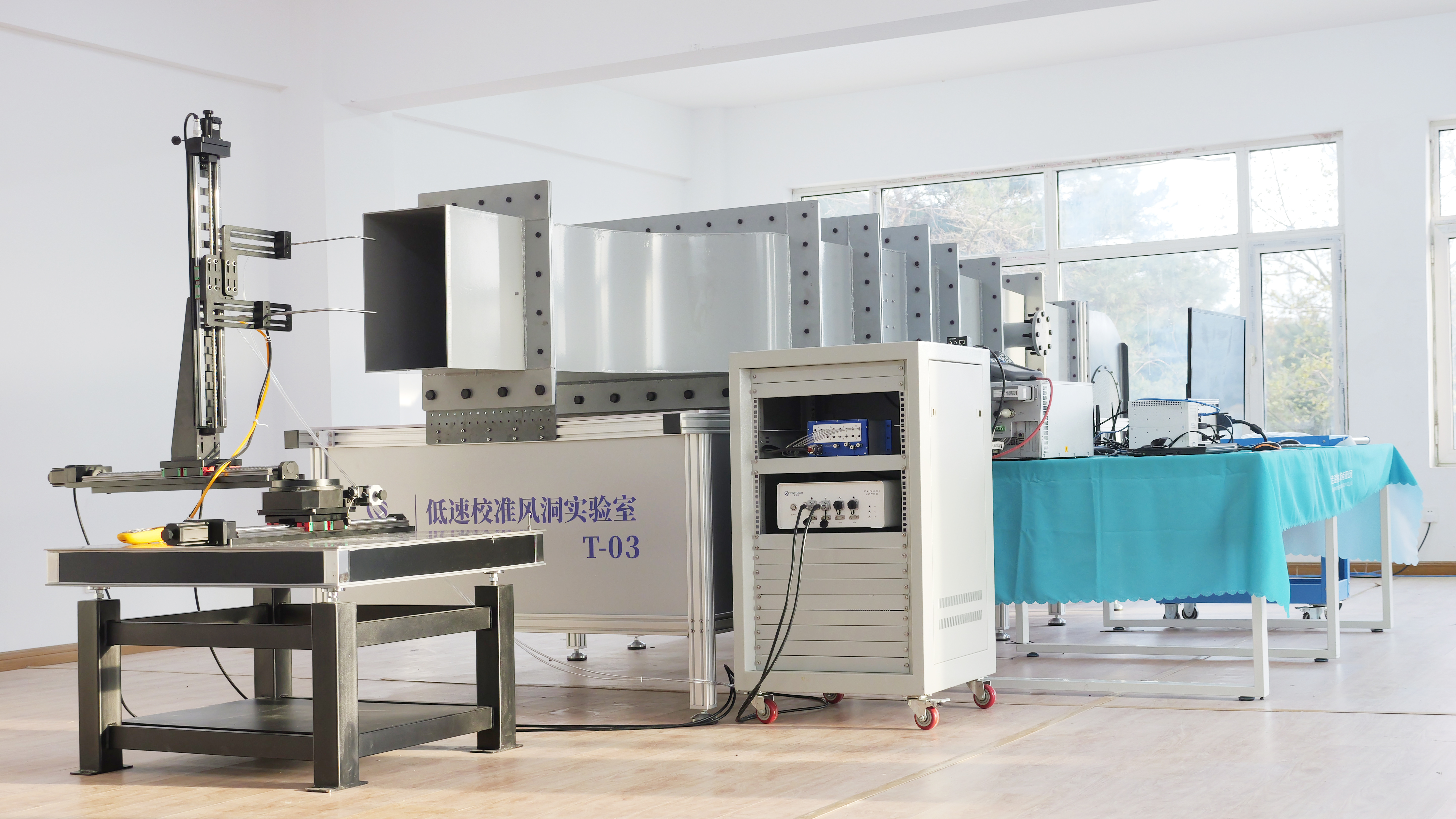
What we commonly see in these instances is the immense need for accurate simulated aerodynamic pressure measurement. On par with how other facilities use wind tunnels alongside other tools to develop their products, Windtuner uses wind tunnels to ensure the accuracy of pressure measurement itself. Windtuner runs three calibration wind tunnel laboratories accredited by CNAS, where pressure scanners and probes are calibrated in flowing conditions representative of real test environments. As more high-sensitivity problems, such as hypersonic research to marginal-gain sports testing, are put to test, we see strong demand for systematic instruments of pressure measurement.
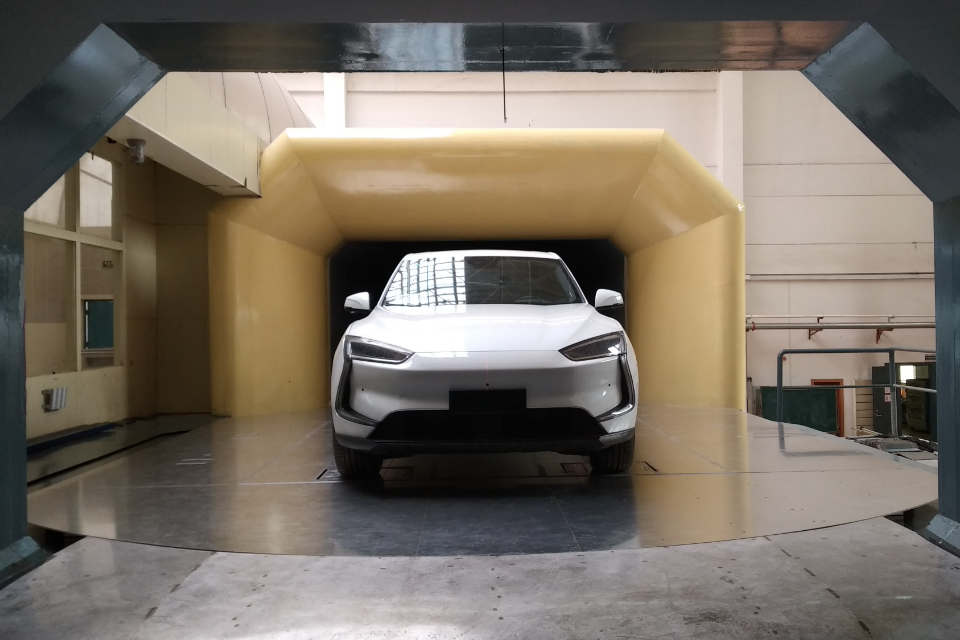
Outside aerospace, wind tunnels are widely used in professional motorsport, another field heavily reliant on aerodynamic research. In Formula 1, teams such as Aston Martin, McLaren and Red Bull have fresh wind tunnel projects. The motivation is not increased testing volume, but improved data quality and correlation. With limited wind-on hours allowed by regulation, inaccurate or poorly correlated pressure data can waste weeks of development. As a result, modern F1 wind tunnels place strong emphasis on pressure measurement accuracy, flow uniformity, and calibration stability.
Besides motorsports, Wind tunnels are also widely used in professional cycling. Cycling industry media regularly report wind tunnel tests where high-end racing bicycles, helmets, and rider positions are carefully compared, often differentiating only in a few watts. Due to the subtlety of the aerodynamic margins in the cycling field, the quality and accuracy of wind tunnels and its associated measurement tools need to be absolutely guaranteed to make sense of these marginal gains. Windtuner shares this philosophy as we put absolute effort into the calibration of our pressure scanners and multi-hole probes through the usage of our wind tunnels.
Pressure scanners used in wind tunnels must support multi-channel acquisition, maintain stability over long test campaigns, and handle environmental variation. Windtuner pressure scanners are suitable for wind tunnel laboratory use, with an accuracy of ±0.05% FS and support for internal zero calibration, full-scale calibration, and multi-point calibration. Our pressure scanners are practical, calibrated and designed for prolonged repeated use to maintain data consistency.
Multi-hole probes are also the product of wind tunnel calibration. Five-hole and seven-hole probes are widely used to measure three-dimensional flow direction and velocity in complex flow fields, including those found in aerospace research tunnels and sports aerodynamics facilities. These probes are calibrated in wind tunnels to before they take part in measurement campaigns. Windtuner designs and calibrates multi-hole probes within controlled wind tunnel environments, ensuring that probe behavior is characterized under realistic flow conditions.
In aerodynamic research, pressure measurement is formed by a complete system of instruments. Pressure data is most often collected through pressure scanners and multi-hole probes. The usefulness of wind tunnel results therefore also depends on how well these instruments are calibrated. This is why many wind tunnel laboratories also serve as calibration environments, besides their research properties mentioned above. Windtuner pressure scanners and five-hole probes undergo these kinds of rigorous calibrations in our advanced wind tunnels, making them accurate and high quality enough to provide solutions to our client’s various pressure measurement needs.