
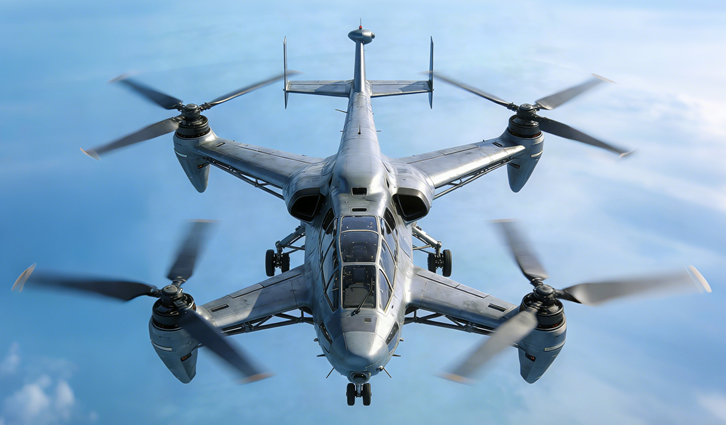
A demonstration of an eVTOL aircraft
Regardless of how rapidly the low-altitude economy expands, or how eVTOLs, UAVs, and general aviation aircraft evolve, we cannot tolerate rash launches and marketization. Flight safety is non-negotiable. The most critical parameter for flight safety is airspeed measurement. Inaccurate measurement cause flight control algorithms to lose stability, and critical functions such as attitude control, thrust management, and landing strategies are directly compromised. A reliable airspeed measurement system is therefore not just a component, but the technological bedrock of large-scale low-altitude aviation deployment.
Against this backdrop, Windtuner’s Five-Hole Differential Airspeed Probe has evolved beyond a conventional aerodynamic instrument into a fully integrated airspeed measurement system purpose-built for low-altitude flight scenarios.
Designed for Low-Altitude Aircraft: High Integration with Multi-Parameter Capability
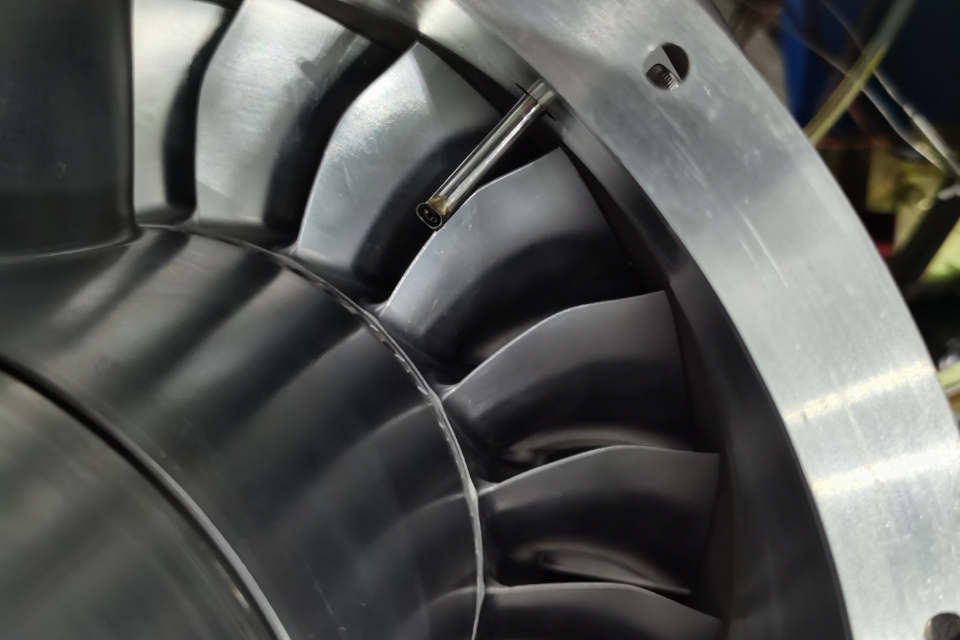
Developed specifically for low-altitude environments and next-generation aircraft platforms, the WTN-5A100 Five-Hole Differential Airspeed Probe delivers comprehensive aerodynamic data through a compact five-hole configuration. Within a single probe, it measures flight altitude, airspeed, angle of attack, sideslip angle, dynamic pressure, static pressure, total air temperature, and static temperature.
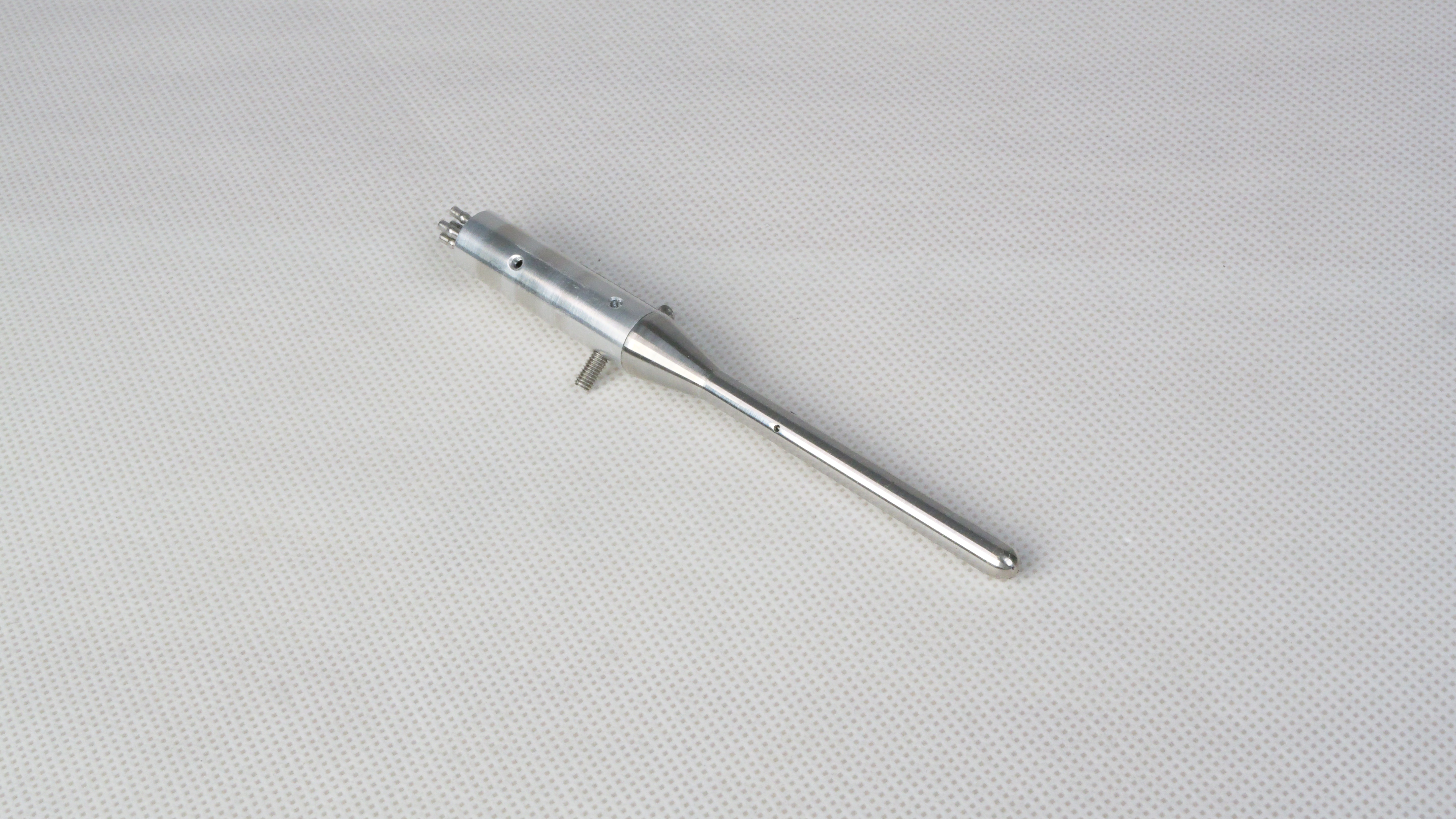
Windtuner’s Five-Hole Differential Airspeed Probe
Windtuner integrates pressure sensors, temperature sensors, airflow temperature sensors, drainage ports, and heating elements directly into the probe structure. This highly integrated architecture replaces traditional multi-sensor assemblies, significantly reducing wiring complexity, system weight, and installation space while improving data synchronization and response accuracy. For eVTOLs and UAVs—platforms that are extremely sensitive to mass, volume, and system reliability—this integration directly simplifies airframe design and enhances overall system robustness during both testing and validation phases.
Intelligent Anti-Icing and Temperature Compensation for Complex Low-Altitude Conditions
Low-altitude flight environments are defined by rapid weather changes, high humidity, rain, fog, and cloud penetration. Probe icing in such conditions can immediately distort airspeed data and, in extreme cases, trigger flight control failures. To address this critical safety challenge, Windtuner equips its five-hole differential airspeed probe with an intelligent heating and temperature compensation system engineered specifically for low-altitude operations.
The system dynamically regulates heating power using adaptive PID algorithms, automatically matches optimal temperature rise curves based on airspeed and ambient temperature, and prevents both icing and thermal overload. With a maximum heating power of 280 W, support for 9–30 VDC wide-range power input, and PWM-based power modulation, the system improves energy efficiency by approximately 30 percent compared with conventional heating methods. Whether operating in rain, fog, low temperatures, cloud layers, or marine salt spray environments, the probe maintains stable and accurate measurement performance, forming a critical layer of reliability for low-altitude flight safety.
From Sensor to System: A Complete Airspeed Measurement Solution
By combining integrated sensor architecture, intelligent anti-icing technology, and end-to-end data processing capability, Windtuner delivers not merely a probe, but a customized airspeed measurement system tailored for the low-altitude economy. This system-level approach remains uncommon across the industry.
Backed by years of expertise in flow field measurement and control, Windtuner positions the Five-Hole Differential Airspeed Probe as a cornerstone product for low-altitude aviation development. Windtuner pressure scanners, airspeed probes, and supporting measurement systems provide trustworthy aerodynamic data that engineers and researchers rely on when validating flight performance, optimizing control algorithms, and advancing the next generation of low-altitude aircraft.
As low-altitude aviation takes step up from just concept, Windtuner will continue to work on this field and deliver accurate, reliable, and application-driven airspeed measurement solutions—supporting safer flight and accelerating innovation across the low-altitude economy.
The low-altitude economy has become one of the most closely watched emerging industries by the modern world. The emphasis of low-air economy has been highlighted in proposals for the 15th Chinese Five-Year Plan and many American government agendas, Among all its applications, electric vertical takeoff and landing aircraft (eVTOL) stand out as the most commercially promising platforms. At the 8th China International Import Expo, several OEMs even recreated complete eVTOL passenger terminals on site. These terminals demonstrated ticketing, boarding, and takeoff procedures, turning the vision of ‘air taxis’ into something much more tangible for viewers. At the same time, manufacturers continue to announce large-scale eVTOL orders, often numbering in the hundreds of aircraft and valued at billions of RMB, reflecting both market momentum and strong industry confidence.
Regardless of how rapidly the low-altitude economy expands, or how eVTOLs, UAVs, and general aviation aircraft evolve, we cannot tolerate rash launches and marketization. Flight safety is non-negotiable. The most critical parameter for flight safety is airspeed measurement. Inaccurate measurement cause flight control algorithms to lose stability, and critical functions such as attitude control, thrust management, and landing strategies are directly compromised. A reliable airspeed measurement system is therefore not just a component, but the technological bedrock of large-scale low-altitude aviation deployment.
Against this backdrop, Windtuner’s Five-Hole Differential Airspeed Probe has evolved beyond a conventional aerodynamic instrument into a fully integrated airspeed measurement system purpose-built for low-altitude flight scenarios.
Designed for Low-Altitude Aircraft: High Integration with Multi-Parameter Capability
Developed specifically for low-altitude environments and next-generation aircraft platforms, the WTN-5A100 Five-Hole Differential Airspeed Probe delivers comprehensive aerodynamic data through a compact five-hole configuration. Within a single probe, it measures flight altitude, airspeed, angle of attack, sideslip angle, dynamic pressure, static pressure, total air temperature, and static temperature.
Windtuner integrates pressure sensors, temperature sensors, airflow temperature sensors, drainage ports, and heating elements directly into the probe structure. This highly integrated architecture replaces traditional multi-sensor assemblies, significantly reducing wiring complexity, system weight, and installation space while improving data synchronization and response accuracy. For eVTOLs and UAVs—platforms that are extremely sensitive to mass, volume, and system reliability—this integration directly simplifies airframe design and enhances overall system robustness during both testing and validation phases.
Intelligent Anti-Icing and Temperature Compensation for Complex Low-Altitude Conditions
Low-altitude flight environments are defined by rapid weather changes, high humidity, rain, fog, and cloud penetration. Probe icing in such conditions can immediately distort airspeed data and, in extreme cases, trigger flight control failures. To address this critical safety challenge, Windtuner equips its five-hole differential airspeed probe with an intelligent heating and temperature compensation system engineered specifically for low-altitude operations.
The system dynamically regulates heating power using adaptive PID algorithms, automatically matches optimal temperature rise curves based on airspeed and ambient temperature, and prevents both icing and thermal overload. With a maximum heating power of 280 W, support for 9–30 VDC wide-range power input, and PWM-based power modulation, the system improves energy efficiency by approximately 30 percent compared with conventional heating methods. Whether operating in rain, fog, low temperatures, cloud layers, or marine salt spray environments, the probe maintains stable and accurate measurement performance, forming a critical layer of reliability for low-altitude flight safety.
From Sensor to System: A Complete Airspeed Measurement Solution
By combining integrated sensor architecture, intelligent anti-icing technology, and end-to-end data processing capability, Windtuner delivers not merely a probe, but a customized airspeed measurement system tailored for the low-altitude economy. This system-level approach remains uncommon across the industry.
Backed by years of expertise in flow field measurement and control, Windtuner positions the Five-Hole Differential Airspeed Probe as a cornerstone product for low-altitude aviation development. Windtuner pressure scanners, airspeed probes, and supporting measurement systems provide trustworthy aerodynamic data that engineers and researchers rely on when validating flight performance, optimizing control algorithms, and advancing the next generation of low-altitude aircraft.
As low-altitude aviation takes step up from just concept, Windtuner will continue to work on this field and deliver accurate, reliable, and application-driven airspeed measurement solutions—supporting safer flight and accelerating innovation across the low-altitude economy.