
Commonly referred to as a pitot tube, total pressure probe, or total-static probe, the airspeed probe measures total pressure and static pressure in the surrounding airflow. From these parameters, the aircraft derives key flight data such as airspeed and altitude, which are transmitted to the air data computer and cockpit instruments. In more advanced configurations, airspeed probes also support measurements of angle of attack and sideslip angle, making them foundational sensors within the flight control system.
At a fundamental level, the probe's forward-facing port captures total pressure generated by the airflow impact, while static ports along the probe body measure ambient static pressure. According to Bernoulli's principle, the difference between these two values yields dynamic pressure, from which airspeed is calculated. Static pressure, combined with standard atmospheric models, allows the system to compute flight altitude. These parameters form the baseline data that pilots rely on to perceive aircraft state and that flight control systems use to perform real-time calculations and decisions. Their accuracy is directly tied to flight safety.
During the prototype flight-test phase, data accuracy requirements are exceptionally high. A long nose-mounted airspeed probe is deliberately positioned far ahead of the fuselage to minimize aerodynamic interference from the airframe. This configuration provides highly reliable reference data, which engineers use to validate and refine the aircraft's onboard air data algorithms. Only when these models and sensor fusion systems mature can designers reduce dependence on such external probes.
This context helps explain why recent clear images of the low-altitude test flights of the Chinese 'sixth-generation' J-50 fighter have drawn intense attention. Compared with earlier test configurations, the latest prototype no longer carries a nose-mounted airspeed probe. While visually subtle, this change carries significant implications. The removal of the probe strongly suggests that the aircraft has entered a mid-to-late stage of development, where the flight control system and internal sensors have reached a level of maturity sufficient to operate without an external reference probe.
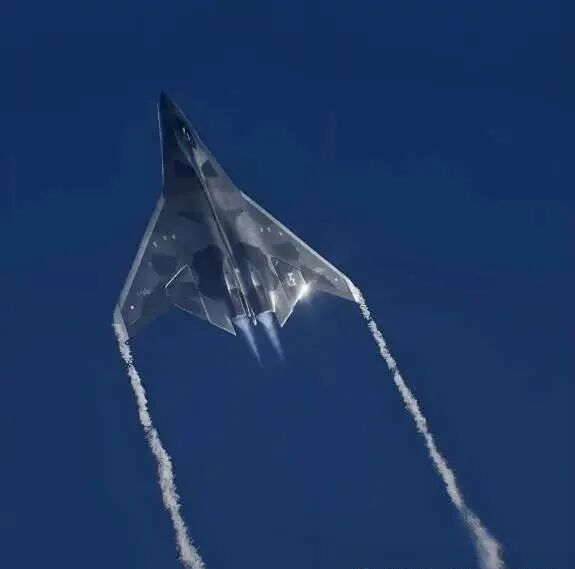
If the testing in late 2024 is considered the J-50's first flight, then achieving probe removal in roughly nine months points to an exceptionally rapid development cycle. Historically, both the J-20 and J-35 prototypes retained nose-mounted airspeed probes during early testing, with later variants relocating them to less prominent positions along the fuselage. Against this backdrop, the J-50's transition stands out as a strong indicator of accelerated system validation.
While frontline fighters may ultimately reduce visible reliance on external probes, the role of high-accuracy airspeed measurement remains indispensable throughout research, testing, and verification. Compared with conventional pitot tubes, Windtuner's Five-Hole Differential Airspeed Probe represents a more advanced and comprehensive airspeed measurement system. By combining multi-hole probe aerodynamics with differential pressure sensing, the probe delivers accurate airspeed, flow angle, and pressure data even in complex or off-axis flow conditions.
Windtuner integrates intelligent temperature compensation and active anti-icing capabilities into the probe design. An adaptive PID algorithm dynamically adjusts heating power based on real-time airspeed and ambient temperature, following an optimized temperature-rise curve that prevents ice accretion while avoiding thermal deformation. With a maximum heating power of 280 W and PWM-based power modulation, Windtuner's airspeed probe achieves approximately 30% lower energy consumption compared with traditional resistive heating solutions.
For experimental aircraft programs, wind tunnel laboratories, and advanced flight test platforms that demand trustworthy air data under challenging conditions, Windtuner airspeed probes provide a robust, calibrated solution. Clients with specialized requirements are encouraged to contact Windtuner to discuss customized configurations and application-specific solutions.
As aircraft development continues to push toward higher integration and intelligence, the evolution—and eventual disappearance—of the nose-mounted pitot is not the end of airspeed measurement. It is a clear sign that accurate flow field data has moved deeper into the aircraft system architecture. Whithin this integrated and upgraded system, precision, calibration, and reliability of course matter more than ever.