
Accurate Measurement Enhances Research Efficiency
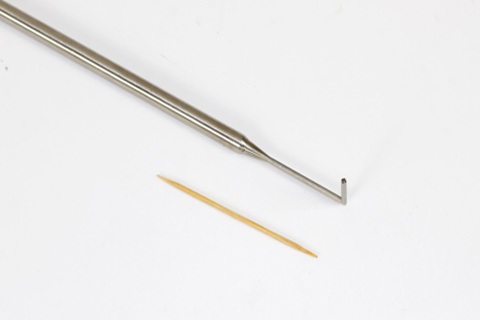
By means of five precisely positioned pressure ports, Windtuner’s five-hole differential airspeed probe measures total pressure, static pressure, angle of attack (AOA), and angle of sideslip (AOS) simultaneously. This multidimensional measurement capability allows researchers to acquire a complete set of aerodynamic field data in a single experiment, reducing the need for repetitive testing.
Compared with traditional pitot tubes, the combined design of Windtuner’s five-hole probe and airspeed probe delivers superior spatial resolution and directional sensitivity. Even under unsteady flow conditions or complex attack angles, the probe maintains excellent measurement stability—an essential feature for aerodynamic shape optimization, wing design, and vortex structure analysis.
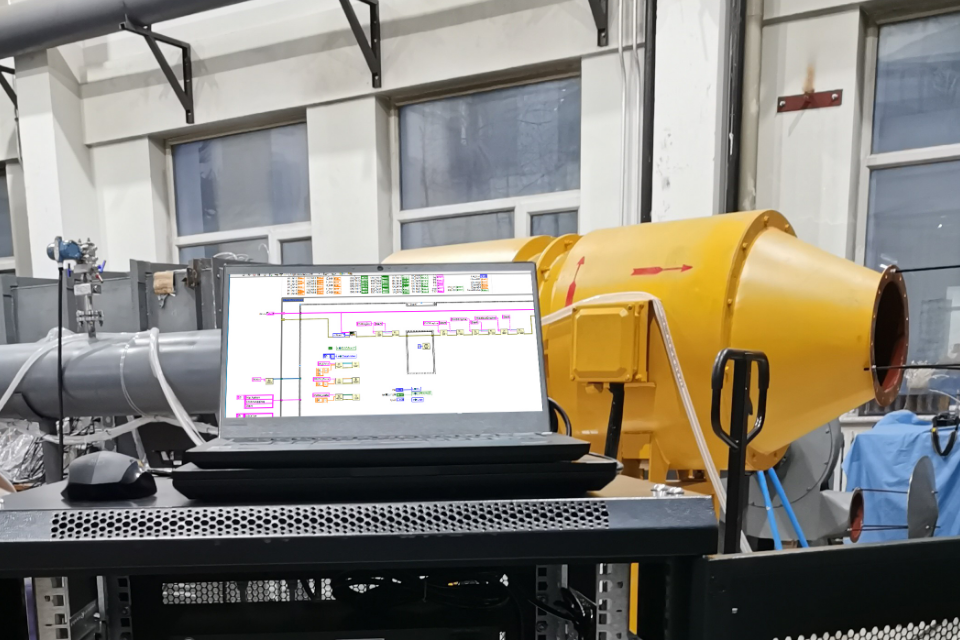
The latest models integrate high-precision pressure sensors and intelligent data acquisition modules, enabling real-time signal capture and digital data output. Researchers no longer need to perform tedious multi-channel analog calibrations, significantly improving data processing efficiency and shortening experiment cycles.
Integrated Structure and Intelligent Anti-Icing for Reliable Operation
Experimental conditions often involve fluctuating temperatures, humidity, or icing risks, particularly in wind tunnel or real-flight testing. Windtuner’s five-hole differential airspeed probe bodies outstanding stability and environmental adaptability far more than a conventional airspeed tube—it is a fully integrated airspeed measurement system that combines heating elements, temperature sensors, pressure sensors, and atmospheric temperature modules within a single compact body.
Its built-in PID-controlled temperature compensation and anti-icing system automatically adjusts heating power according to real-time airspeed and ambient temperature. With a maximum heating capacity of 280 W and PWM modulation, energy consumption is reduced by approximately 30% compared with traditional heating methods. In low-temperature or high-humidity tests, this intelligent thermal system effectively prevents icing-induced measurement errors, ensuring continuous and accurate data output.
Such an intelligent and reliable structure makes the probe suitable not only for low-altitude aircraft development but also for harsh real-flight environments, enhancing both research reliability and flight safety.
Value Proven in Civil Aircraft Flight Testing
Beyond laboratory research, Windtuner’s five-hole differential airspeed probe plays a critical role in civil aviation flight testing and flight control system verification. Flight testing is the most decisive phase of aircraft development, requiring real-time monitoring of aerodynamic characteristics, attitude control, and overall flight performance.
Through Windtuner’s probe, flight engineers can obtain key parameters such as altitude (Hp), true airspeed (TAS), angle of attack (AOA), angle of sideslip (AOS), and total air temperature (TAT) in real time. These data provide essential support for flight control system tuning and aerodynamic model refinement.
Under complex meteorological conditions or in low-altitude test flights, the probe’s intelligent anti-icing system ensures continuous, reliable data. Its highly integrated design simplifies onboard installation and maintenance, greatly improving testing efficiency and operational safety.
Precision and Reliability Driving Research and Flight Innovation
With its exceptional accuracy, intelligent anti-icing capability, integrated structure, and flexible customization options, Windtuner’s five-hole differential airspeed probe has become a cornerstone in advancing aerodynamic measurement and control. University laboratories, wind tunnel test facilities, or flight testing programs alike deploy it with full expectations of obtaining precise data and dependable performance—fueling innovation in both scientific research and aviation safety.