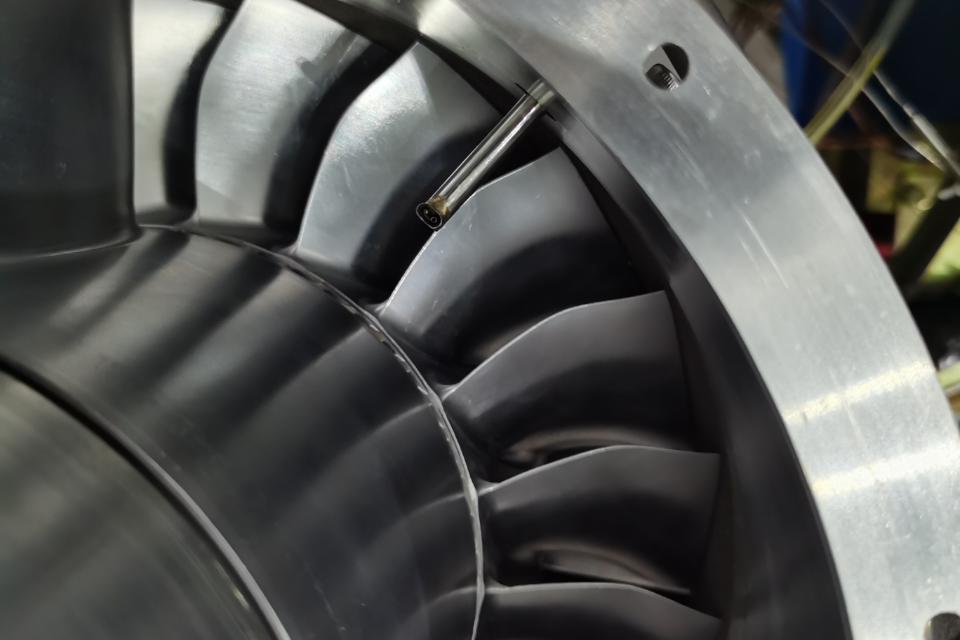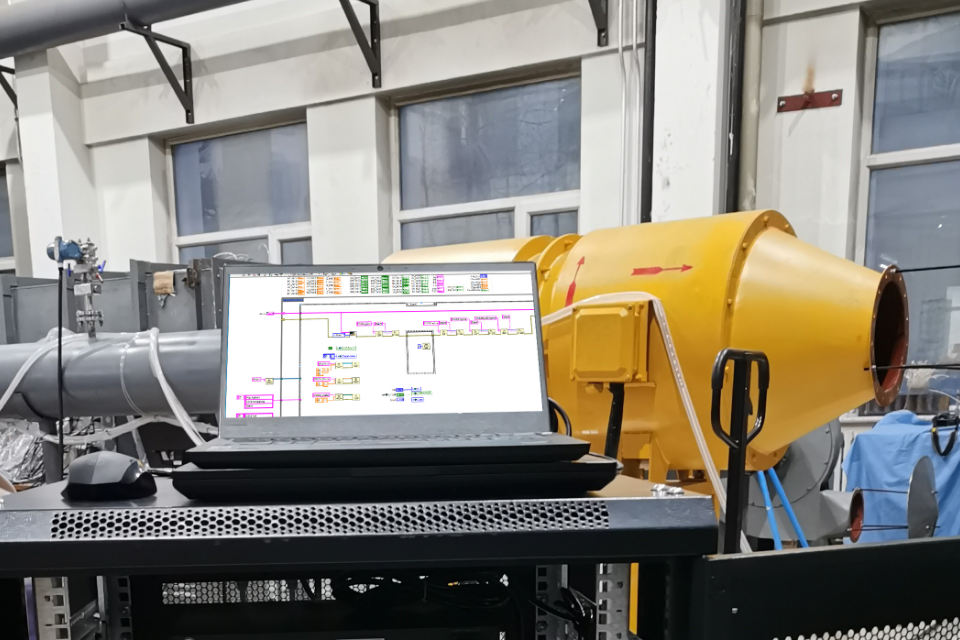

A pitot-static probe supplies total and static pressure for calculating airspeed during flight. It does not produce a speed reading simply by sensing how strong the airflow feels. Pressure measurement and processing equipment use its pressure signals to determine airspeed. WINDTUNER pitot-static probes are intended for in-flight measurement on UAVs and other aircraft, where pressure sensing, installation, pneumatic connections, and operating conditions all need attention.
Separate Ports Sense Total and Static Pressure
A pitot-static probe typically has a total pressure port facing the incoming flow and static pressure ports on its sides. Separate pressure lines carry the two signals out of the probe. Air slows near the total pressure port, changing its pressure, while the side ports sense the local static pressure. 'Static' does not mean that the air has to be motionless. Moving air has static pressure too.
The WINDTUNER pitot-static probe combines total and static pressure sensing in a single head. The two signals serve different purposes, so their connections must be kept distinct. Reversing them, or allowing a leak in either pressure line, affects the calculation. A system that continues to output data is not necessarily measuring correctly.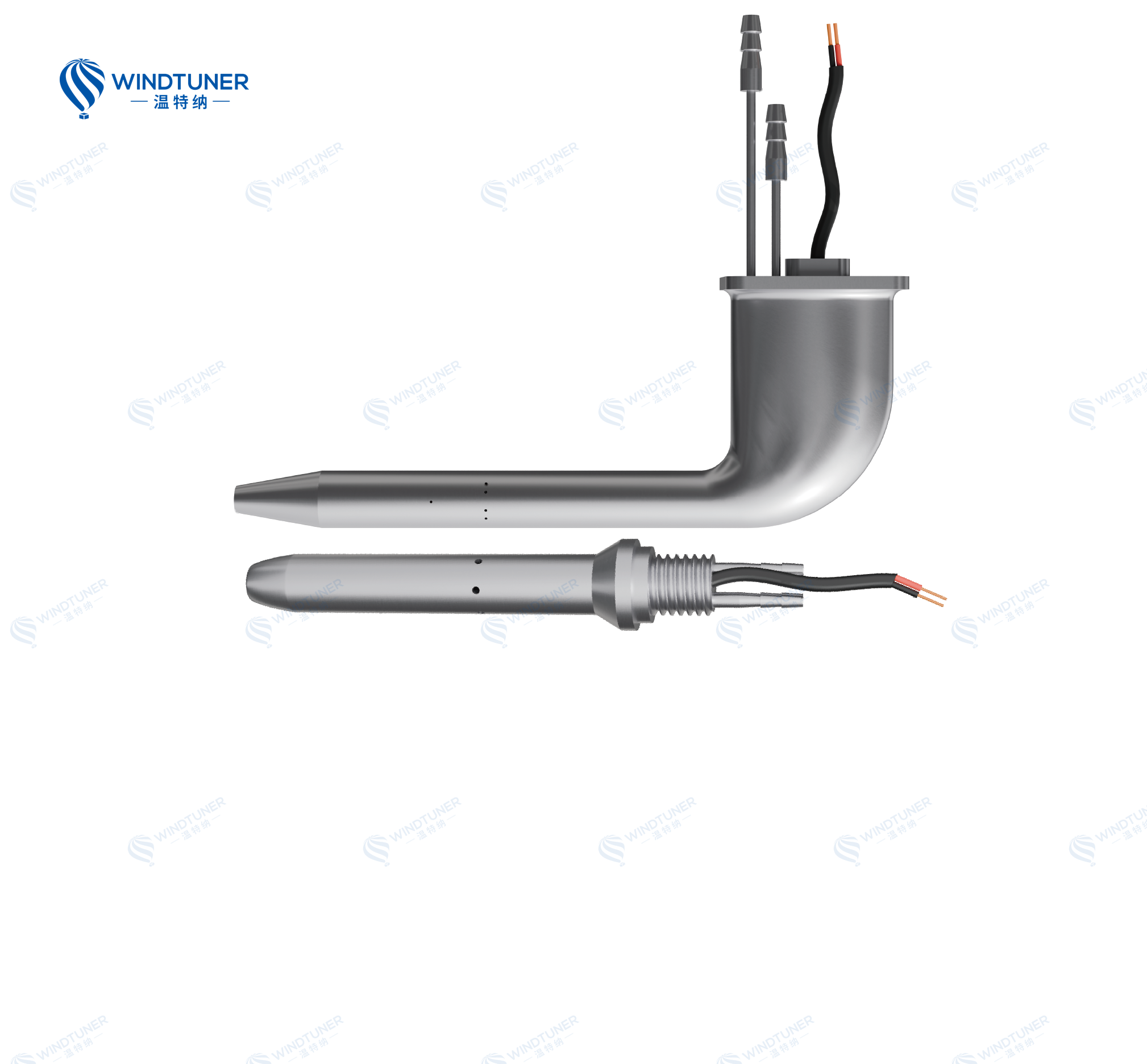
The WINDTUNER pitot-static probe combines total and static pressure sensing in a single head. The two signals serve different purposes, so their connections must be kept distinct. Reversing them, or allowing a leak in either pressure line, affects the calculation. A system that continues to output data is not necessarily measuring correctly.
Using the Pressure Difference to Calculate Airspeed
The difference between total and static pressure is an important input to the airspeed calculation. At low speeds, where air compressibility can be neglected, this difference corresponds to dynamic pressure. Together with air density, it can be used to calculate the speed of the airflow relative to the probe. As flight speed increases, the appropriate compressible-flow relationships are needed. A low-speed calculation cannot be applied across all conditions.
This is also why a pressure difference alone does not define a unique true airspeed without information about the air conditions. The calculation depends on those conditions and on which type of airspeed is required. Calibrated airspeed and true airspeed have different definitions. A project specification should identify the required output rather than ask only for airspeed.
This is also why a pressure difference alone does not define a unique true airspeed without information about the air conditions. The calculation depends on those conditions and on which type of airspeed is required. Calibrated airspeed and true airspeed have different definitions. A project specification should identify the required output rather than ask only for airspeed.
The Air Data Computer Processes the Signals
Pressure lines carry the probe's signals to the connected measurement equipment. An air data computer acquires and processes the pressure measurements and, where configured, uses temperature data to calculate the required flight parameters. WINDTUNER air data computers paired with pitot-static probes can output calibrated airspeed, true airspeed, Mach number, and pressure altitude, among other parameters. The required outputs should be confirmed when configuring the system.
Each component has its own role. The probe supplies total and static pressure, a temperature sensor supplies temperature information, and the computer performs the calculations and outputs the data. Those two pressure signals do not themselves provide angle of attack or sideslip angle. Projects that need flow-angle information require a suitable measurement arrangement to be confirmed separately.
Each component has its own role. The probe supplies total and static pressure, a temperature sensor supplies temperature information, and the computer performs the calculations and outputs the data. Those two pressure signals do not themselves provide angle of attack or sideslip angle. Projects that need flow-angle information require a suitable measurement arrangement to be confirmed separately.
Installation and Pressure Lines Affect the Reading
The probe must be positioned where it can obtain suitable pressure measurements from the incoming flow. If local flow around the airframe or airflow from the propulsion system strongly affects the mounting location, the measured pressures may not directly represent the intended flight condition. Probe location and orientation therefore need to be considered alongside the aircraft layout, with measurement performance checked during integration and testing.
The pressure ports and connecting lines matter as well. Blocked ports, kinked tubing, or leaking fittings can change the pressure that reaches the sensors. WINDTUNER pitot-static probes include heating for anti-icing and a drainage design to help address these environmental effects. These features do not replace correct installation or guarantee fault-free operation under every condition.
The pitot-static probe works with the rest of the system, from sensing pressure at the probe head to producing flight parameters in the computer. WINDTUNER supplies pitot-static probes, matching air data computers, and temperature sensors for configuration around an aircraft's mounting and data interface requirements. Defining the measurement range, airspeed output, and operating environment helps ensure that pressure data from the pitot-static probe is used correctly.