
1. The Challenges of Traditional Pressure Measurement
Traditional pressure measurement equipment, especially in high-precision aerodynamic testing, often faces a number of challenges. Conventional pressure sensors can be affected by temperature, humidity, airflow fluctuations, and other factors during measurement, leading to inaccurate data. In complex flow fields, rapidly changing airflow makes traditional sensors especially vulnerable to environmental interference, which can create significant measurement error. Even minor pressure fluctuations can throw the entire measurement system out of calibration and compromise the usefulness of the data.
In addition, pressure sensors often develop zero drift or span error after long periods of use. Frequent calibration and manual adjustment not only increase maintenance cost, but also make it harder to guarantee stable and reliable results, especially in high-frequency or long-duration test programs.
Traditional single-point pressure measurement also struggles to capture pressure changes across the entire flow field. As a result, the data can be incomplete and may miss pressure fluctuations in critical regions, limiting a full assessment of engine aerodynamic performance. This weakness is particularly obvious in aero engine development, where complex airflow patterns under different operating conditions can only be evaluated accurately through multi-point, synchronized pressure acquisition.
2. The Risks of Inaccurate or Out-of-Calibration Testing
Pressure measurement accuracy is essential in aero engine development. Inaccurate or out-of-calibration testing can directly distort aerodynamic design decisions and ultimately affect total engine performance. For example, if the airflow distribution in the combustor is not measured accurately, combustion efficiency may drop or emissions control may be misjudged. That can reduce overall engine efficiency and even lead to emissions noncompliance.
Loss of calibration can also create safety risks. In high-pressure environments, pressure changes are closely tied to component thermal loading and stress distribution. If pressure data are inaccurate, potential failure risks in critical parts may go unnoticed, compromising engine safety. Under extreme conditions, pressure measurement error can even contribute to engine failure and put flight safety at risk.
3. The Pressure Scanner Solution
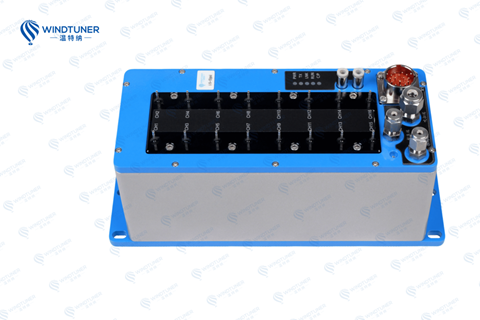
To address the shortcomings of traditional pressure measurement technology, the pressure scanner has become an ideal tool for precise pressure measurement in aero engine development. Compared with conventional sensors, a pressure scanner can acquire pressure data from multiple measurement points at the same time, providing comprehensive coverage of complex flow fields. This multi-point synchronized measurement capability allows it to reflect pressure changes more accurately and prevents critical data gaps that single-point methods often miss.
For example, the pneumatic valve manifold inside a WINDTUNER pressure scanner supports automatic zeroing, full-scale calibration, and custom multi-point calibration, helping the instrument stay stable and reliable across different test environments. This design solves the common problems of difficult calibration and high maintenance cost in traditional equipment, while greatly improving measurement accuracy and long-term operating stability.
WINDTUNER pressure scanners also support high-accuracy time synchronization, ensuring that data from multiple measurement points line up precisely and eliminating inconsistencies caused by time offsets. That makes them especially valuable in complex multi-sensor applications. In aero engine testing, this capability synchronizes data from different locations with high precision, protecting the integrity and comparability of the test data.
With advantages such as high precision, multi-point measurement, and automatic calibration, WINDTUNER pressure scanners effectively solve the calibration and accuracy problems common in traditional pressure measurement. They help aero engine development teams obtain more precise and reliable test data, providing strong support for performance optimization and safety evaluation.