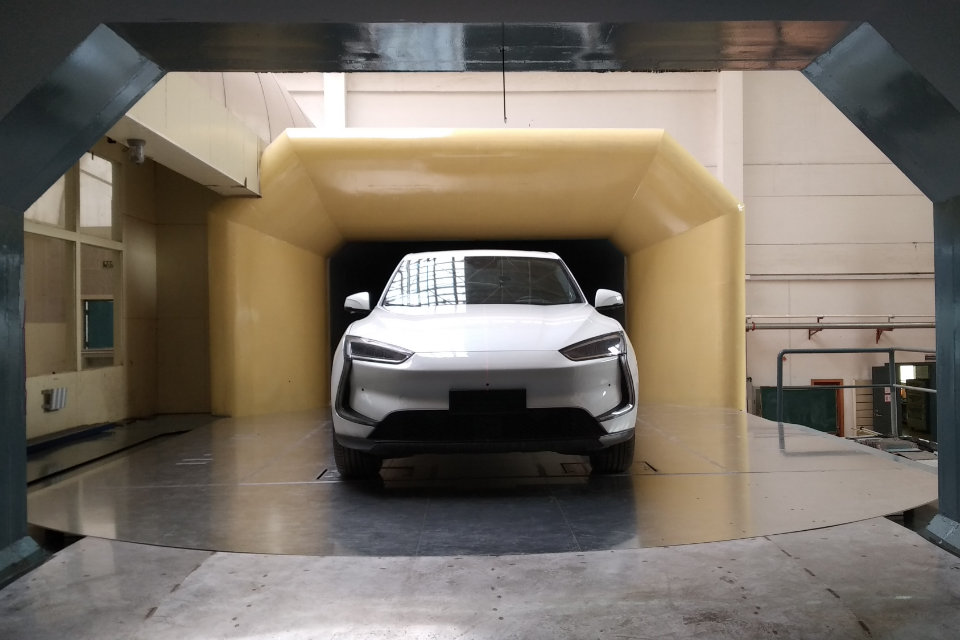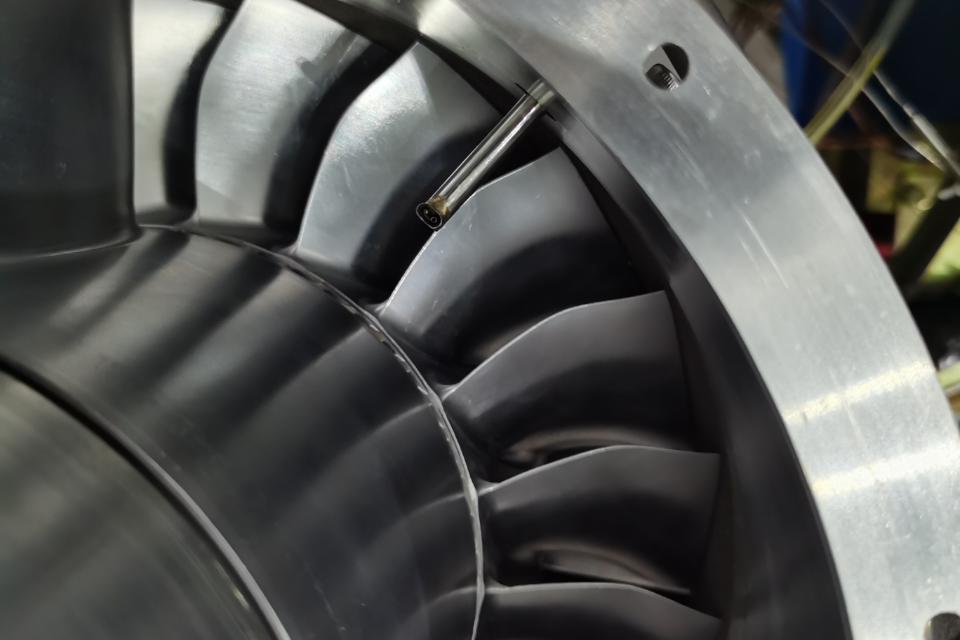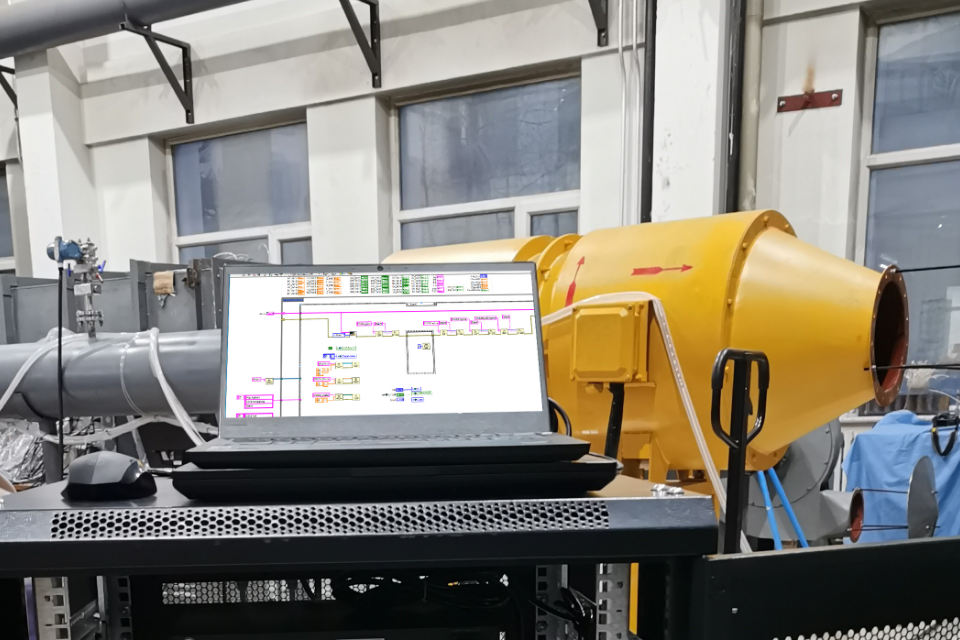

A miniature five-hole probe anemometer is useful in wind tunnel tests that require both airspeed and flow direction. The WINDTUNER instrument uses its five-hole probe head to sense pressure at different ports. The measurement unit acquires these pressures and uses calibration data to calculate velocity and flow direction. Intended for local flow measurements during research and development, it gives engineers more information about a measurement point than a speed reading alone.
Decide what you need to know at the measurement point
Around a model or in its wake, two locations can have similar airspeeds but different flow directions. Recording speed alone misses that difference. A five-hole probe uses the pressure responses at its ports, together with calibration relationships, to calculate flow angles in two perpendicular planes. These angles show how the incoming flow is inclined relative to the probe head.
The WINDTUNER miniature five-hole probe anemometer measures flow pressure, velocity, and direction. It integrates pressure sensor modules and also measures atmospheric pressure and ambient temperature. The probe and measurement unit form one instrument, reducing the work required to assemble separate pressure acquisition and calculation components. The applicable measurement range depends on the selected range and the probe calibration conditions. Capabilities listed for different configurations should not be combined and treated as those of a single instrument.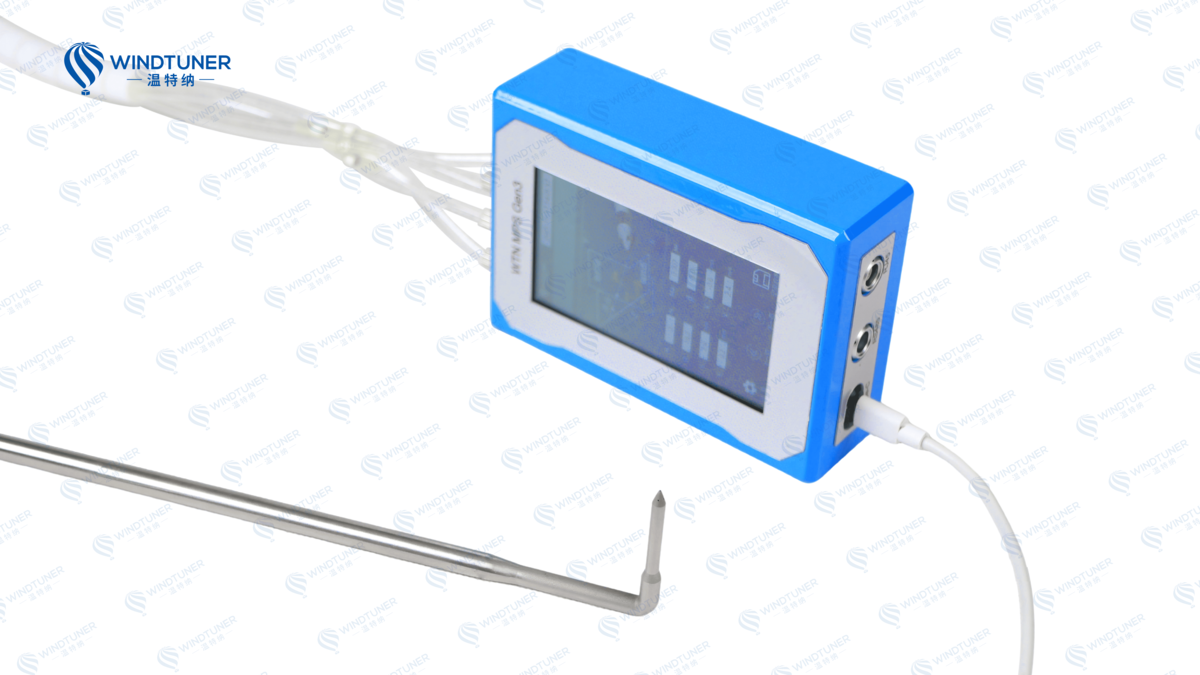
The WINDTUNER miniature five-hole probe anemometer measures flow pressure, velocity, and direction. It integrates pressure sensor modules and also measures atmospheric pressure and ambient temperature. The probe and measurement unit form one instrument, reducing the work required to assemble separate pressure acquisition and calculation components. The applicable measurement range depends on the selected range and the probe calibration conditions. Capabilities listed for different configurations should not be combined and treated as those of a single instrument.
Position the probe before collecting data
Before testing, confirm that the head can reach the measurement point and that there is enough space for the stem and mounting hardware. Orient the probe to match the angle convention used for the test, and avoid unnecessary interference from the support or nearby structures. After securing the probe, connect the pressure tubing as required and check the connections and tubing condition.
Five-hole probe measurements depend on suitable calibration data. Flow speed and angles must stay within the corresponding valid range. If the actual flow falls outside that range, a number on the display does not establish that the result is valid. For measurement points where large changes in flow direction are expected, check with WINDTUNER before testing to confirm that the head and measurement range are suitable.
Five-hole probe measurements depend on suitable calibration data. Flow speed and angles must stay within the corresponding valid range. If the actual flow falls outside that range, a number on the display does not establish that the result is valid. For measurement points where large changes in flow direction are expected, check with WINDTUNER before testing to confirm that the head and measurement range are suitable.
Review speed and direction together
The WINDTUNER miniature five-hole probe anemometer has a touchscreen for viewing measurement results. After adjusting wind tunnel conditions, engineers can watch how the speed and direction at the measurement point change. This helps show whether the local flow responds to the new conditions. Interpret the readings with the probe position and operating conditions in mind. Data from one point do not represent an entire test cross-section.
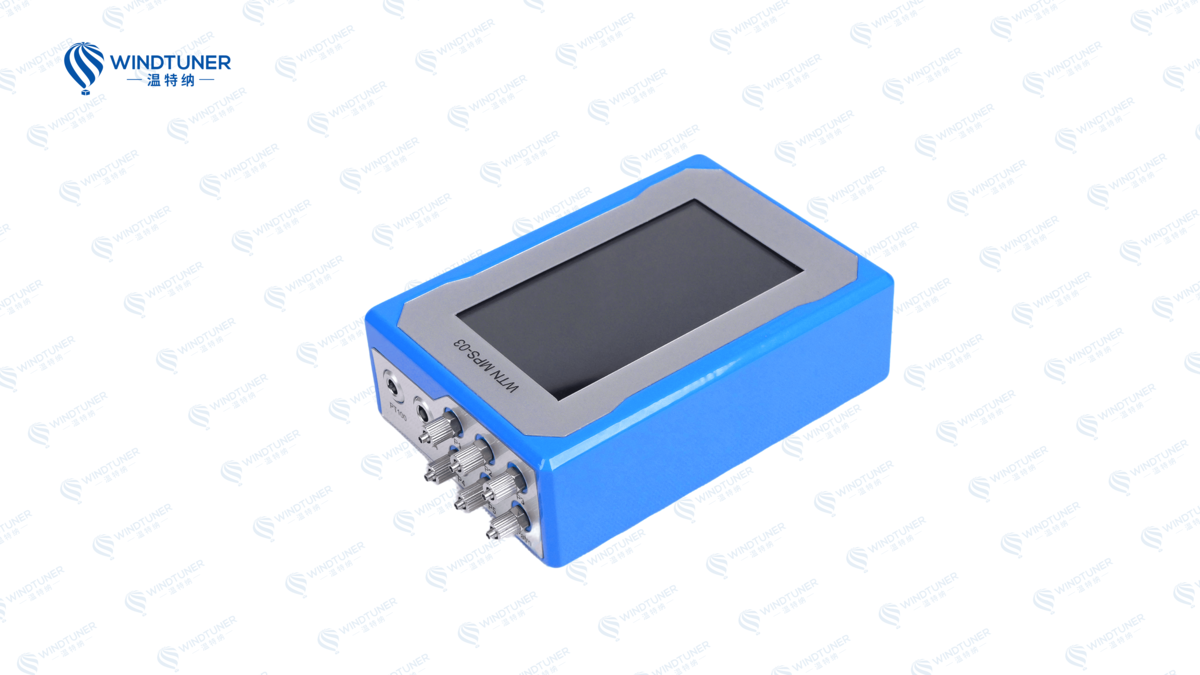
For data acquisition and recording on a host computer, software can be configured to suit the instrument's communication interface. WINDTUNER WindLabX measurement and control software provides device management, data acquisition, and data storage and review. The connection and functions should be confirmed for the test task. This allows results to be viewed during testing and retained for later comparisons between operating conditions.
For data acquisition and recording on a host computer, software can be configured to suit the instrument's communication interface. WINDTUNER WindLabX measurement and control software provides device management, data acquisition, and data storage and review. The connection and functions should be confirmed for the test task. This allows results to be viewed during testing and retained for later comparisons between operating conditions.
Move the probe to measure a flow distribution
To measure the flow distribution across a section, move the probe to a series of measurement points and take readings at each one. Positioning can follow the test plan manually or use a suitable traverse system. Record the location and conditions for each reading so that local velocity and direction can be assembled into a spatial distribution. The ability to measure three-dimensional flow parameters does not allow a stationary probe to capture the flow throughout a whole volume.
A miniature five-hole probe anemometer serves a different purpose from an airspeed probe used in flight. In this application, the anemometer measures local flow during wind tunnel development tests. An in-flight airspeed measurement system needs to be configured for the aircraft installation, data interface, and operating environment. WINDTUNER offers the miniature five-hole probe anemometer along with related probes, calibration, and measurement and control equipment to help engineers plan tests around their measurement locations, operating range, and required parameters.
A miniature five-hole probe anemometer serves a different purpose from an airspeed probe used in flight. In this application, the anemometer measures local flow during wind tunnel development tests. An in-flight airspeed measurement system needs to be configured for the aircraft installation, data interface, and operating environment. WINDTUNER offers the miniature five-hole probe anemometer along with related probes, calibration, and measurement and control equipment to help engineers plan tests around their measurement locations, operating range, and required parameters.