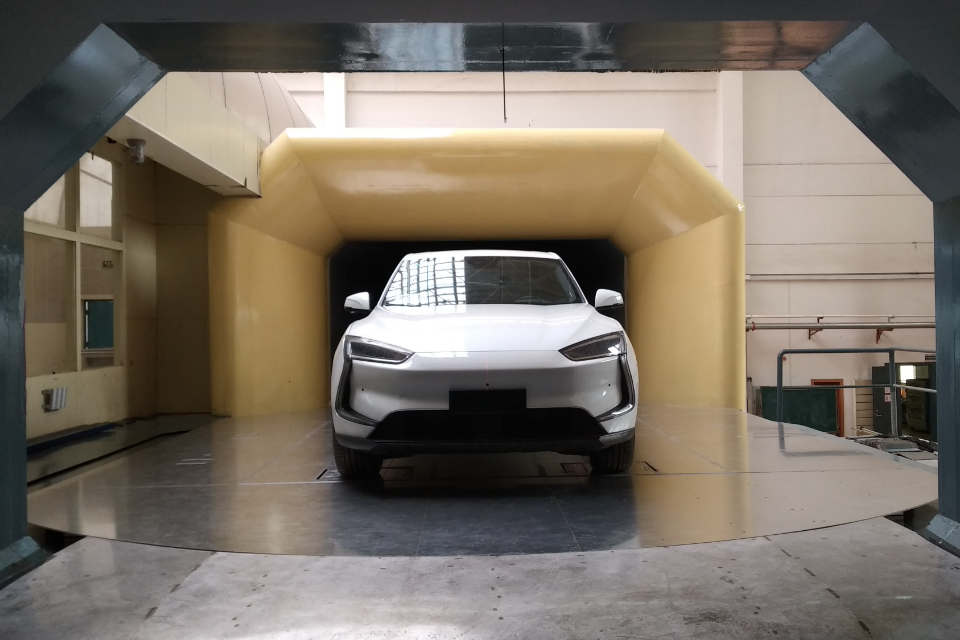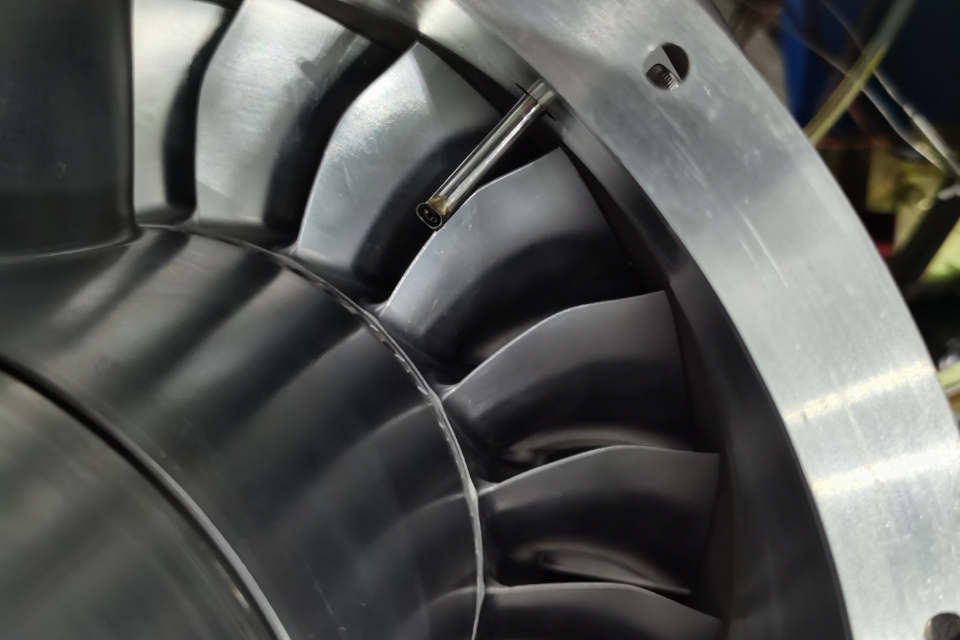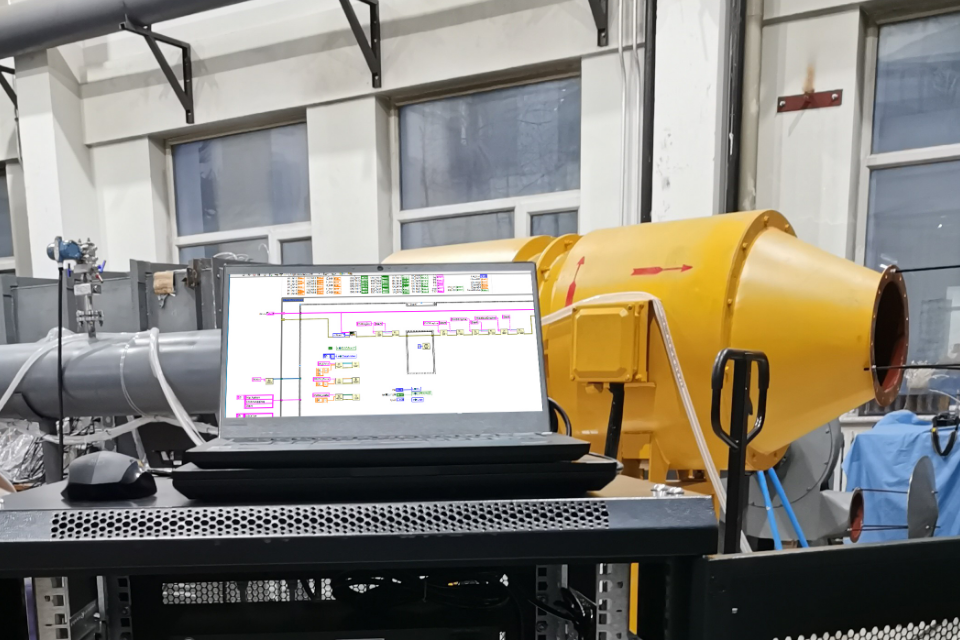

The engineer must balance aerodynamic performance against mechanical survival, installation restrictions and manufacturing feasibility. A probe that works well in an open calibration jet may be unsuitable for a narrow compressor passage. A highly compact probe may reduce flow disturbance, yet its small passages can be more vulnerable to contamination and more difficult to manufacture.
That is why effective customization begins with the intended measurement rather than a preferred shape.
The basic principle is well established. Pressures at the five ports change according to the orientation and magnitude of the incoming flow. An aerodynamic calibration maps combinations of those pressures to quantities such as pitch, yaw, total pressure, static pressure and velocity.
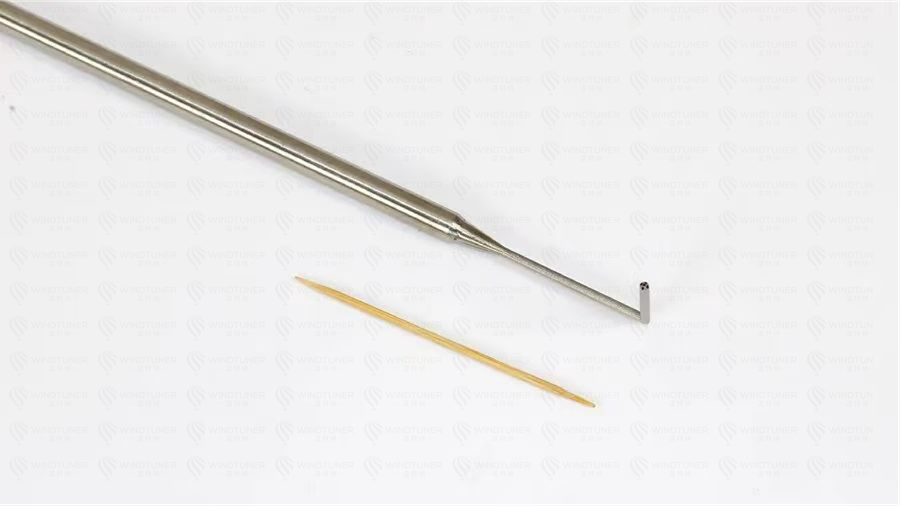
NASA research describes both nulling and non-nulling methods for using five-hole probes. In a nulling method, the probe is rotated until selected pressures balance and the mechanical orientation supplies part of the flow-angle measurement. A non-nulling—or stationary—method uses the simultaneous port pressures and a calibration model to calculate flow properties without continuously aligning the probe with the flow.
The stationary approach is valuable when rapid mapping or mechanical access makes probe rotation impractical. It also places heavy demands on calibration. The relationship between port pressures and flow quantities is not universal; it depends on the individual probe’s tip geometry and its operating conditions.
WINDTUNER offers customized pneumatic-probe design and manufacturing, including five-hole configurations. Its website also states that standardized and customized five-hole differential-pressure airspeed probes are available for applications ranging from low to high altitude.
For a buyer, a useful design brief should address at least five areas.
First is the flow regime. Expected velocity or Mach number, pressure, temperature, density and flow-angle envelope determine the required calibration space. A probe calibrated around a narrow angular range should not be assumed to retain the same uncertainty in highly separated or strongly swirling flow.
Second is spatial resolution. The sensing head must be small enough to resolve the features of interest without averaging across an excessive area. At the same time, reducing port and passage dimensions may make the probe harder to clean and may lengthen pneumatic response.
Third is installation geometry. Shaft length, diameter, bend angle, mounting interface and pressure-tube routing should be designed around the test article. Turbomachinery applications may require a probe to pass through a casing and reach a confined annulus, while automotive and wind-tunnel work may favor straight traversing probes.
Fourth is the operating environment. High temperature may require alternative materials, cooling arrangements or greater separation between the probe and pressure transducers. Vibration, moisture, dust and particles can affect durability and port condition. These requirements must be disclosed before the geometry is finalized.
Fifth is the acquisition system. The probe’s expected differential pressures should be matched to suitable scanner ranges. WINDTUNER’s 16-channel scanner, with stated ±0.05% full-scale accuracy, can accommodate multiple five-port probes or additional pressure measurements, depending on channel allocation. But the uncertainty of the complete system—not the probe or scanner in isolation—is what matters.
A responsible supplier should ultimately deliver more than a metal component. The package should define port numbering, coordinate conventions, calibration conditions, valid angle and speed ranges, pressure coefficients, data-reduction method and uncertainty. Documentation is particularly important because reversing pressure lines or applying the wrong calibration dataset can produce plausible-looking but incorrect results.
Customization, in other words, is not cosmetic engineering. It is the process of aligning probe geometry, materials, calibration and data acquisition with a specific flow field. When those choices are made together, a five-hole probe becomes more than a sensor: it becomes a measurement system designed around the question the experiment is meant to answer.