
Ethernet Intelligent Pressure Scanners Replace Analog Cable Clutter
Analog cables have been the classic and default method for pressure measurement. For the most part, this method works, but each new channel means more wire. And more wire means more noise, more potential failure points, and more time troubleshooting when something acts up. Windtuner pressure scanners cut the analog mess by applying digital data sent straight over standard ethernet, using one network cable to replace a bundle of analog lines. Engineers mount units closer to the model without sweating signal degradation. The built-in valve system runs zero and full-scale calibration automatically. No one touches the scanner between runs, yet accuracy holds.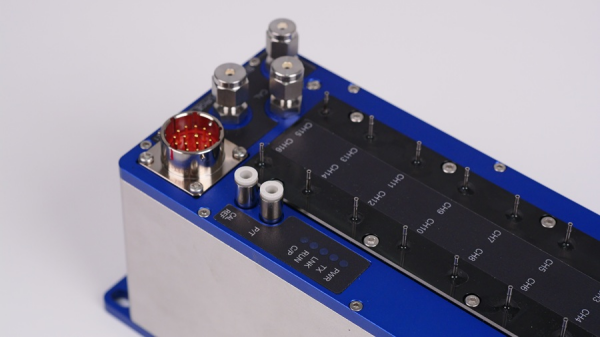
Windtuner's 16-channel pressure scanner
Modular Design for Scalable Test Setups
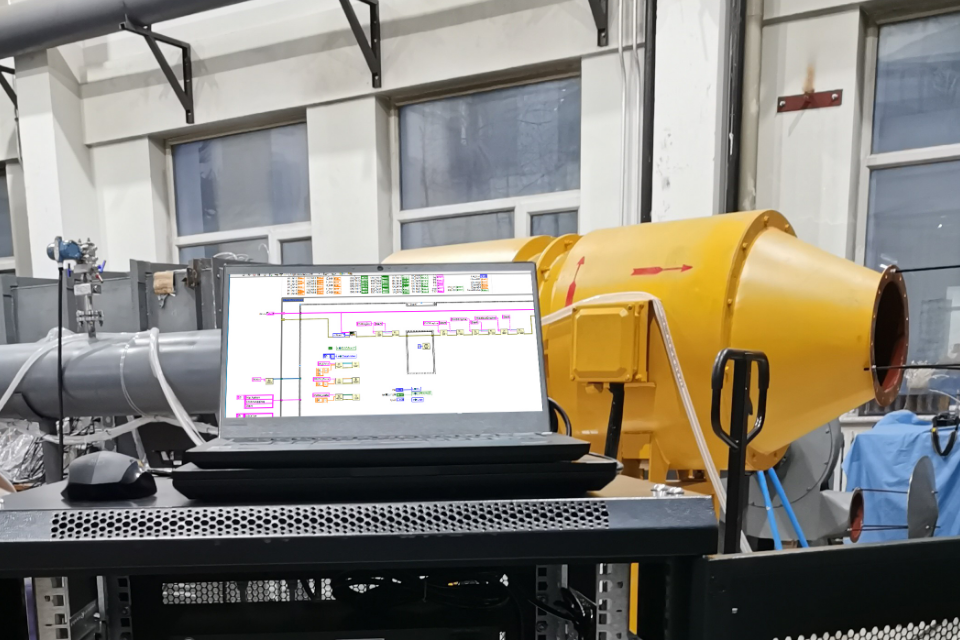
Windtuner pressure scanners ship in sixteen-channel units. Multiple pressure scanners can be applied to sync into higher arrays. Another strategy is to start small, and add channels later when the budget allows. The compact housing slips into tight spots in crowded wind tunnels. TCP/IP or UDP carries the data. LabVIEW integration happens without proprietary protocol headaches. Custom acquisition code hooks in the same way. Optional modules and multi-channel connectors adapt the hardware to whatever mounting constraints the wind tunnel demands.Time-Synchronized Data You Can Trust
Accurate data quickly acquired can save time and help push the project forward promptly. That's why Windtuner pressure scanners are set to reach the accuracy of ±0.05% FS. 24-bit A/D resolution and temperature compensation keep readings steady across the range. Multi-unit setups use IEEE 1588V2 to lock sample timestamps together. When correlating pressure events at separated taps, that synchronization matters. Reconstructing transient flow phenomena depends on it too. Every scanner leaves the factory calibrated in Windtuner's own wind tunnel. The credibility of our calibration is backed up by CNAS accreditation. Our products arrive ready to deploy. Certificates are provided upon demand.Built for Real Test Conditions
Wind tunnel environments are rough on equipment. Temperature swings, vibration, and electromagnetic interference are constant. Windtuner pressure scanners operate from 0°C to 60°C as standard. For harsher environments, an extended -30°C to 60°C range is available. Triggering options include software commands, external digital signals, or timed schedules. The hardware manages steady-state measurements and 500 Hz transient captures. The valve system needs no maintenance, so downtime between test series shrinks. Before any pressure scanner is put into mass production, prototypes undergo over ten thousand hours of durability testing. By the time hardware reaches your facility, it has already taken a beating and kept working.Windtuner enters the European and North American markets with pressure scanners that match the performance of established competitors while offering shorter delivery cycles and responsive technical support. Our calibration wind tunnel validates every unit we ship, and our engineering team works directly with clients to adapt configurations to specific test requirements. For research teams that demand accurate, time-aligned pressure data without infrastructure headaches, Windtuner pressure scanners deliver results that hold up to scrutiny.