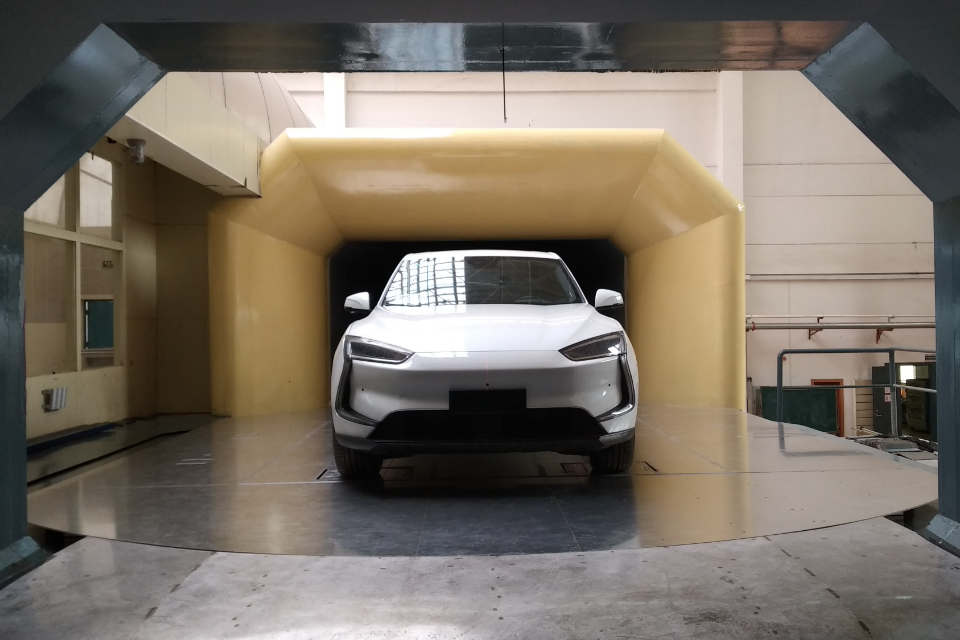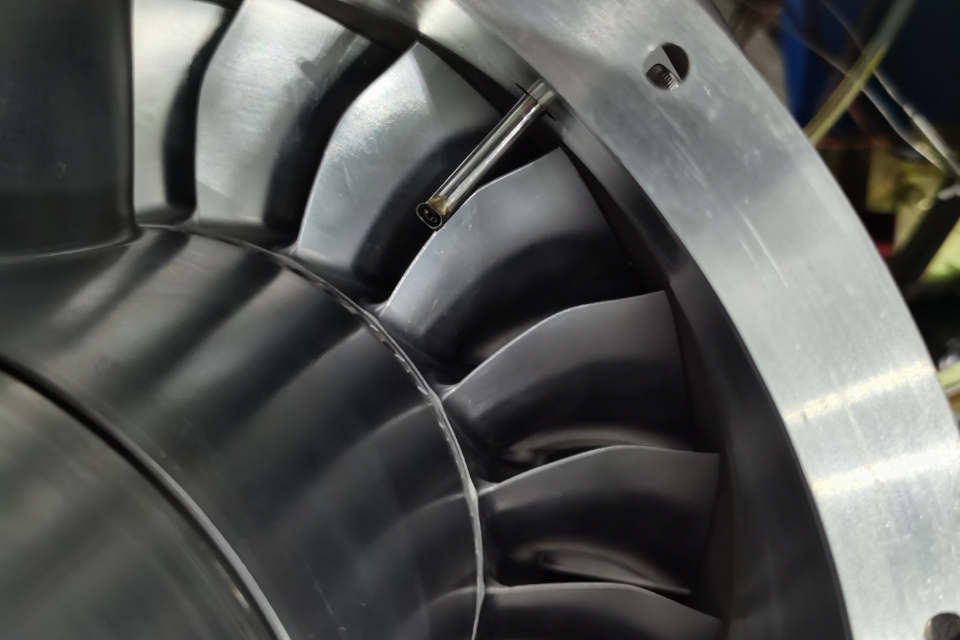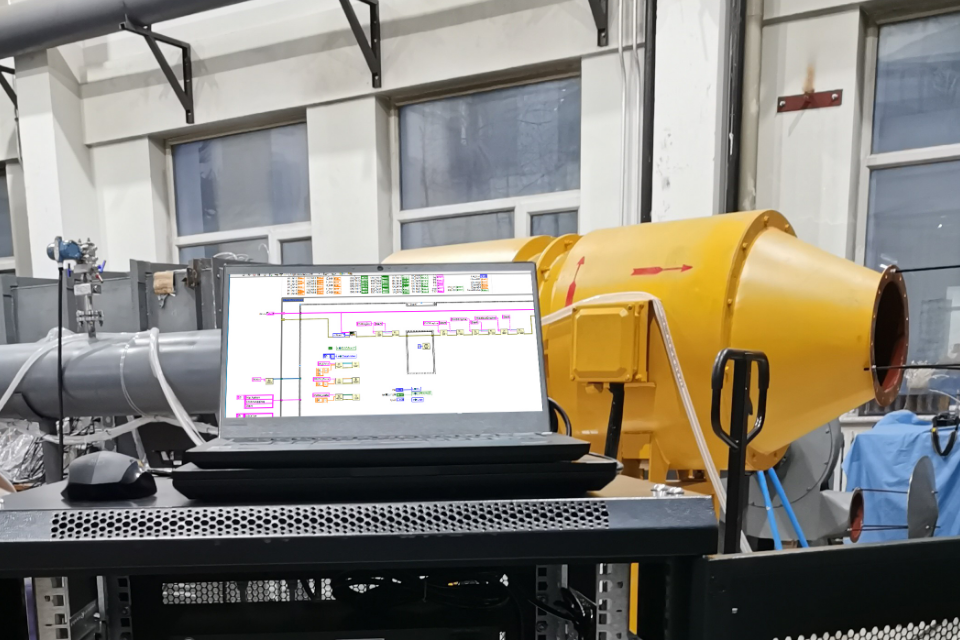

The three-hole probe is a good example of this kind of “quiet workhorse.”
It does not have the analytical breadth of a five-Hole Probe, nor does it aim to reconstruct full three-dimensional flow fields like advanced multi-hole probe systems. Yet in the majority of low-speed wind tunnel experiments—where the flow is predominantly two-dimensional, budgets are constrained, and test campaigns are time-sensitive—it remains one of the most practical and widely used directional measurement tools.
One of the most common entry points for a three-hole probe is airfoil wake measurement.
At first glance, the task sounds straightforward: after the flow passes over an airfoil, engineers want to know how the wake evolves—how velocity drops, and how the flow direction is deflected.
The working principle of the probe is equally straightforward. The center port measures total pressure, while the two side ports respond to pressure differences caused by flow angularity. Once a calibration relationship is established in a calibration wind tunnel, these pressure differences can be translated into flow direction and velocity within a two-dimensional plane.
No complex multi-axis traversing system is strictly required. No full 3D orientation reconstruction is needed. What matters most is the ability to scan a plane efficiently and consistently.
In practical applications at Windtuner, a well-manufactured probe with a 0.2 mm minimum port diameter can maintain stable angular response within approximately ±30°, making it suitable for detailed wake mapping in low-speed conditions.
The picture becomes more “engineering-driven” when moving to cascade testing.
Unlike single-point wake measurements, cascade experiments are fundamentally about spatial reconstruction. Engineers are not interested in one location—they are interested in a structured field: inlet, outlet, and multiple spanwise positions across the blade passage.
In other words, it is a stitching problem
The challenge here is not only measurement accuracy, but also geometric adaptability. Many low-speed cascade wind tunnels have narrow test sections, and probe intrusion itself can alter the flow if the geometry is not carefully designed.
This is where customization becomes critical.
Windtuner addresses this requirement through micro-scale metal additive manufacturing, enabling complex probe geometries to be formed in a single manufacturing step. Combined with application-specific probe support designs, the system can be adapted to very constrained geometries, including blade passages narrower than 10 mm.
In these cases, the probe is not just a sensor—it becomes part of a carefully balanced flow-access strategy.
Boundary layer measurement pushes the requirements even further.
Here, the issue is no longer about capturing direction or velocity in a general sense. It is about not disturbing what you are trying to measure.
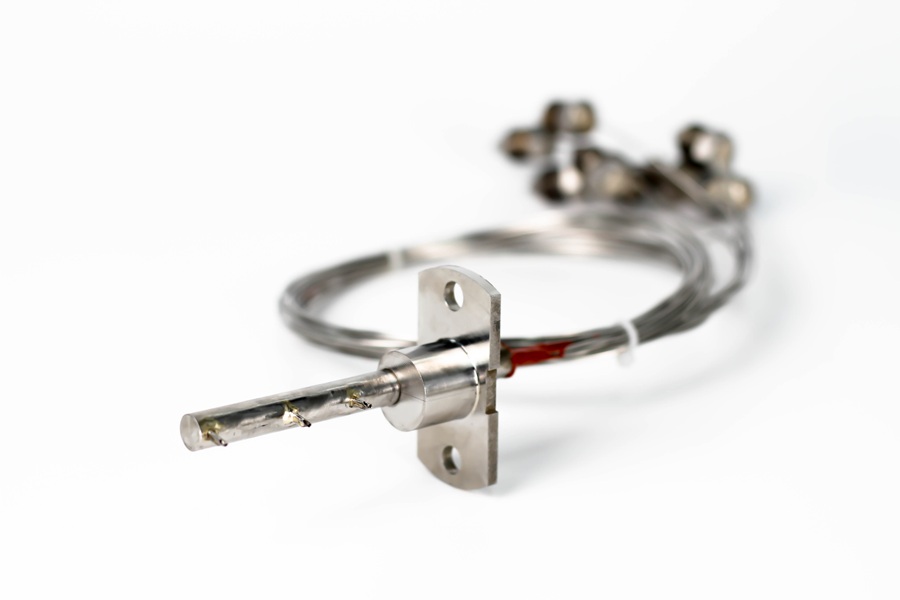
Boundary layers in low-speed wind tunnels can be only a few millimeters thick. Any probe that is too large effectively averages across multiple velocity gradients, destroying the physical meaning of the measurement.
Compared with a five-Hole Probe, the three-hole configuration offers a structural advantage: fewer ports, smaller probe head, and therefore less flow intrusion.
But geometry alone is not enough. Manufacturing precision becomes decisive.
In Windtuner’s implementation, micro-manufacturing techniques achieve positional accuracy on the order of ±1 μm, with surface roughness controlled between Ra 0.8 and 1 μm. In boundary layer work, these are not just specifications—they are directly tied to data validity.
Looking across these scenarios, one practical reality becomes clear: in low-speed wind tunnel testing, the dominant source of inefficiency is often not measurement itself, but system fragmentation.
Probe systems, pressure acquisition devices, calibration workflows, and data processing software are frequently sourced from different suppliers. Each interface introduces time cost, calibration uncertainty, and operational friction.
An integrated measurement chain significantly reduces this overhead.
Within Windtuner’s ecosystem, the three-hole probe is typically used together with a calibration wind tunnel, Ethernet Intelligent Pressure Scanner, pressure scanner, and measurement and control software. The result is a continuous workflow from calibration to acquisition to final data output, without unnecessary system switching.
In time-constrained test campaigns, this integration often translates directly into more usable data per wind tunnel run.
The three-hole probe is not a glamorous instrument
It does not solve fully three-dimensional aerodynamics. It does not operate in extreme regimes. Its angular range is limited compared to more advanced multi-hole systems.
But in the two-dimensional world of low-speed wind tunnel testing, it occupies a very specific and valuable position.
It is simple, robust, easy to deploy, and aligned with the actual needs of most experiments.
In engineering practice, that kind of “just enough” capability is often not a compromise—it is the optimal point between complexity, reliability, and cost.